
Introduction
What does it take to craft a textile that protects astronauts in the vacuum of space or keeps Arctic explorers warm at –50°C? The answer lies in one of the most fascinating frontiers of textile engineering—technical fabrics for extreme environments. As human ambition pushes boundaries—from polar expeditions to space colonization—our need for textiles that can perform in these hostile conditions has never been greater.
These high-performance textiles combine multiple layers of innovation: from smart temperature regulation to abrasion resistance, from radiation shielding to breathability. This article delves into how textile science meets the challenge of extreme environments, exploring the materials, methods, and future trends that make these fabrics not just protective, but essential to survival.
A Brief History of Textiles in Harsh Environments
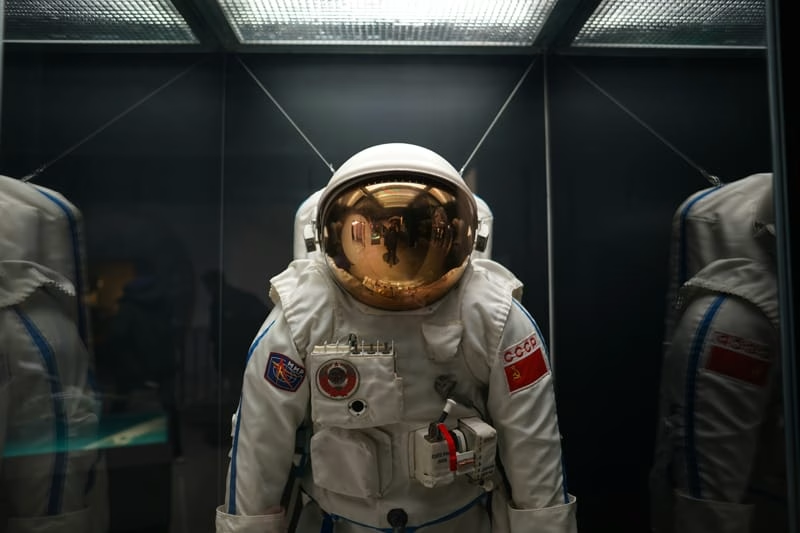
The use of specialized textiles in extreme conditions dates back to early polar explorations and high-altitude military gear. In the 20th century, NASA’s Apollo missions marked a turning point, introducing multi-layered suits capable of resisting micrometeorites, cosmic radiation, and thermal extremes.
Similarly, the development of Arctic military uniforms during World War II introduced wool-insulated and windproof garments that balanced warmth with mobility. Since then, textile development has evolved rapidly with the advancement of synthetic fibers, nanotechnology, and intelligent materials.
Today, the needs of astronauts, mountaineers, researchers, and rescue teams continue to push the limits of textile functionality.
Functional Requirements of Extreme Environment Textiles
Textiles for harsh conditions must go beyond basic warmth and comfort. Depending on the application—spacewalks, sub-zero expeditions, or nuclear sites—fabrics must provide:
| Requirement | Description |
|---|---|
| Thermal Insulation | Resist heat loss or excessive heat buildup |
| UV and Radiation Protection | Shield from UV rays and cosmic radiation |
| Abrasion and Puncture Resistance | Withstand mechanical stress and impact |
| Flame Retardancy | Prevent ignition in oxygen-rich environments |
| Breathability | Allow sweat and moisture to escape |
| Lightweight and Mobility | Ensure wearability without fatigue |
| Pressure Resistance (Space) | Maintain structural integrity in vacuum |
These criteria demand a multi-disciplinary approach combining chemistry, engineering, physics, and garment design.
Materials and Fiber Technologies
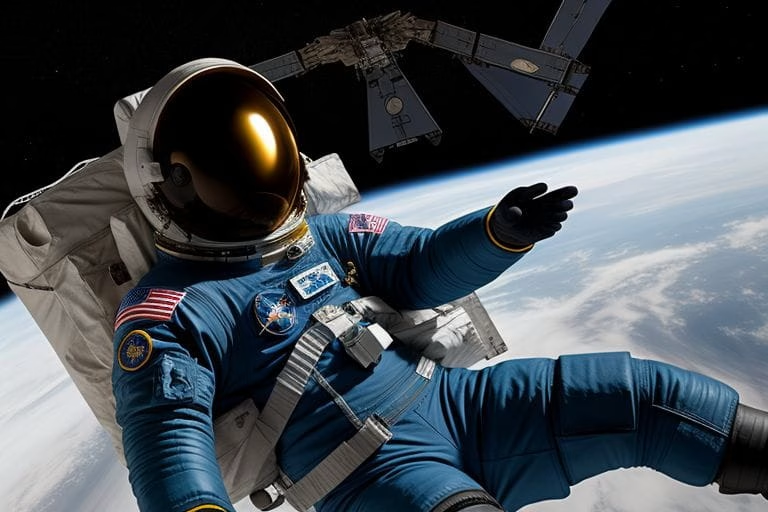
The foundation of these fabrics lies in their fibers. Extreme environment textiles often use a composite structure, blending performance materials.
Space-Grade Materials
- Kevlar®: High tensile strength, used in impact-resistant layers
- Nomex®: Flame-resistant fiber
- PTFE (Teflon®): Outer layer for chemical and UV resistance
- Aluminized Mylar: Reflects radiation and heat
- Vectran®: Cut-resistant, used in spacesuit gloves
Arctic and Polar Materials
- Gore-Tex®: Waterproof and breathable membrane
- Aerogel-Infused Fabrics: Extremely low thermal conductivity
- Synthetic Down (e.g., PrimaLoft®): Lightweight thermal insulation
- Merino Wool: Natural temperature regulation and moisture wicking
- Cordura®: Durable, abrasion-resistant outerwear
Layering these materials allows garment engineers to achieve balanced performance across extreme conditions.
Textile Structures and Fabric Construction
Textile function is enhanced not just by fiber choice, but also by how the fabric is constructed:
| Fabric Structure | Functional Role |
|---|---|
| Woven | High strength and stability |
| Knitted | Flexibility and comfort |
| Laminated | Combines protective membranes with durability |
| Quilted | Traps air for insulation |
| Spacer Fabrics | 3D textiles for impact absorption and airflow |
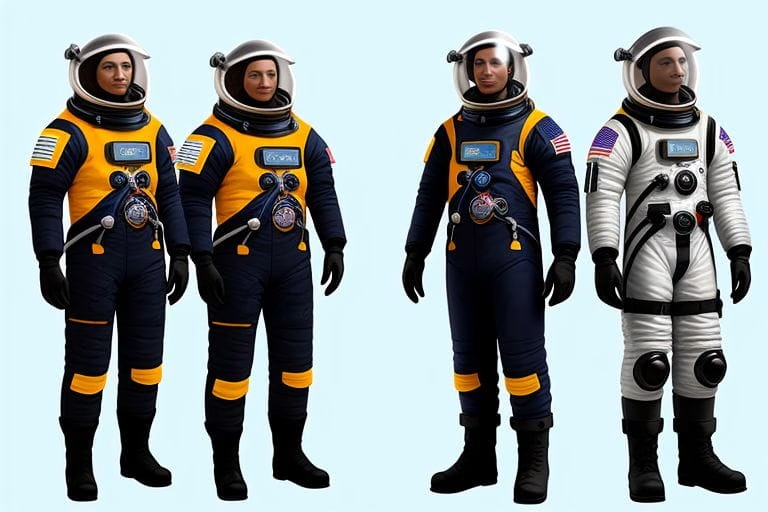
Space suits, for example, typically include 10–14 layers of various weaves and laminates, each fulfilling a specific task.
Production Process and Engineering Workflow
Creating these textiles follows a rigorous R&D pipeline:
- Needs Assessment: What are the thermal, mechanical, and environmental hazards?
- Material Selection: Fibers and coatings are chosen for function and weight.
- Prototype Development: Garments or panels are constructed using layered materials.
- Testing: Extreme simulations test performance (thermal chambers, vacuum tests, etc.)
- Iteration and Scaling: Fabric refinements made before production scaling.
Smart Textiles for Extreme Environments
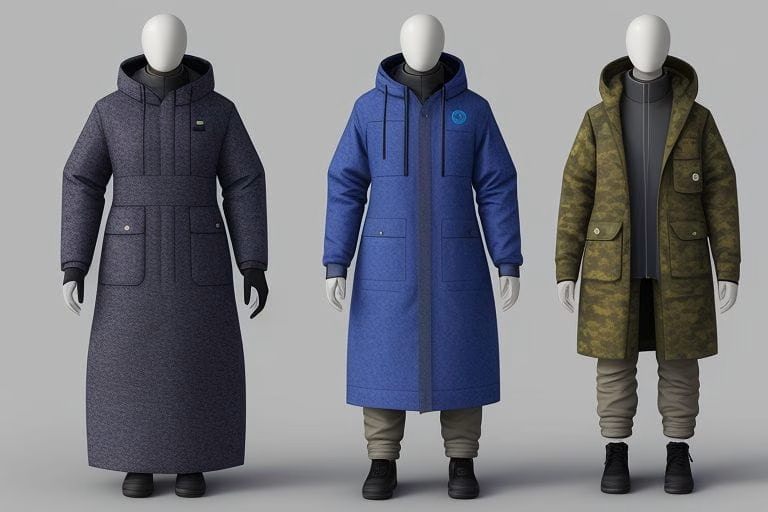
As demands rise, passive protection is giving way to smart textiles that sense and respond to conditions in real time:
- Phase Change Materials (PCMs): Absorb or release heat at preset temperatures
- Textile Sensors: Monitor body temperature, hydration, or movement
- Electrically Heated Fabrics: Carbon fiber yarns that warm on demand
- RFID & GPS Integration: Track position in remote areas
- Color-Changing Fibers: Indicate exposure to UV or radiation thresholds
In space and polar gear, integrating these elements improves safety and adaptability.
Use Cases and Field Applications
1. NASA and Commercial Space Missions
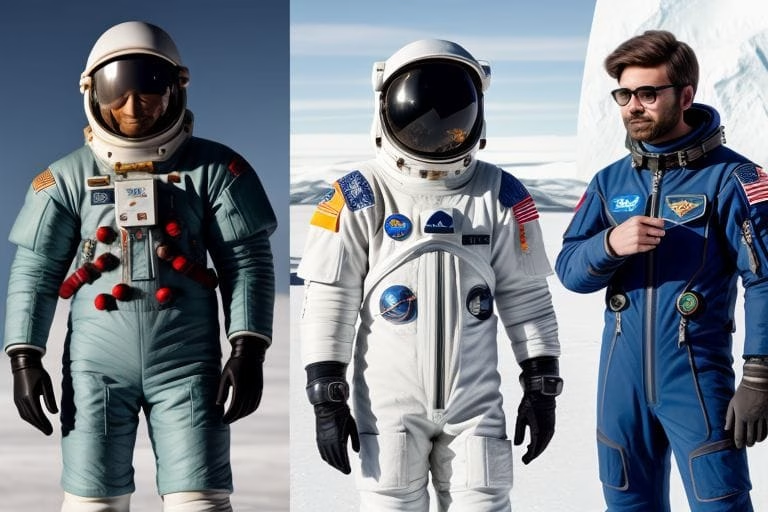
Spacesuits like the EMU (Extravehicular Mobility Unit) and the upcoming Artemis suits include 14+ layers, balancing micrometeoroid protection with mobility.
2. Antarctic Research Stations
Personnel wear triple-layered garments featuring Gore-Tex outer shells, synthetic insulation, and wool base layers. Smart gloves monitor oxygen saturation and skin temperature.
3. Military Arctic Units
Extreme cold gear integrates windproof shells, IR camouflage, and modular designs allowing rapid adjustments to activity level.
4. High-Altitude Expeditions
Mountaineers rely on smart base layers, ultralight outerwear, and oxygen-integrated textiles to survive the “death zone.”
Challenges in Designing for Extremes
Despite progress, challenges remain:
- Weight vs. Protection Trade-offs: Heavier suits limit mobility
- Bulkiness of Layers: Multiple layers restrict motion
- Material Degradation: UV and thermal stress wear down fabrics over time
- Cost: Advanced fabrics can be prohibitively expensive for some applications
- Power Needs: Smart textiles require energy sources
Addressing these challenges will involve innovation in nanomaterials, energy efficiency, and bio-inspired design.
Innovations on the Horizon
Textile R&D is pushing boundaries with:
- Graphene Coatings: Ultra-thin layers for strength and conductivity
- Self-Healing Polymers: Textiles that repair minor tears automatically
- Bioengineered Spider Silk: Lightweight and stronger than Kevlar
- Aerogel Yarn Blends: Better insulation without weight penalty
- 3D Printed Fabrics: Customizable textures and embedded circuits
These materials promise a new generation of garments that can adapt, protect, and perform like never before.
End-Users and Market Landscape
Markets include:
- Space Agencies and Private Space Firms: NASA, SpaceX, Blue Origin
- Defense Ministries: Specialized forces and cold-climate troops
- Scientific Research: Arctic and Antarctic institutions
- Adventure and Survival Brands: The North Face, Arc’teryx, Columbia
- Emergency Responders: Firefighters, disaster response, polar medics
According to market research, the technical textile market for extreme environments is expected to exceed $25 billion by 2030.
Environmental and Ethical Considerations
The production of high-performance textiles can be resource-intensive. Ethical innovation now emphasizes:
- Recyclable Materials: Multi-layer fabrics that can be disassembled
- Biodegradable Coatings: Reduce landfill pollution
- Closed-Loop Systems: Especially important for space missions with finite supplies
- Responsible Sourcing: Avoiding conflict minerals in textile electronics
Balancing performance with sustainability is critical as climate change increases both extreme environments and ecological responsibility.
Future Directions
Looking ahead, we may see:
- Martian-Ready Textiles: Dust-repellent, oxygen-integrated suits for space colonization
- AI-Enhanced Wearables: Predictive diagnostics and automated comfort adjustments
- Reusable Protective Layers: Regenerative materials that renew after exposure
- Open-Source Textile Blueprints: For community-led Arctic survival gear
These developments will not only serve astronauts and scientists but may also influence everyday gear as climate instability grows.
Summary
Textiles for space and Arctic conditions are more than fabrics—they are life-support systems. Through advanced fiber technologies, intelligent design, and multi-layered construction, the textile industry is meeting the challenge of crafting materials for the most unforgiving environments on Earth and beyond.
As exploration and climate extremes accelerate, the future will be woven not from tradition alone, but from a seamless blend of science, sustainability, and survival.
From vacuum-resistant space suits to Arctic-ready thermal gear, this comprehensive article explores the fabric technologies enabling human survival in the most hostile environments. Learn about materials, use cases, challenges, and the future of technical textiles.
Citations
- NASA Spacesuit Design Guide: https://www.nasa.gov/suitup
- MIT Textile Research Lab – Smart Fabrics: https://textile.mit.edu
- ScienceDirect – Technical Textiles for Extreme Environments: https://www.sciencedirect.com/science/article/pii/S0048969721015849


