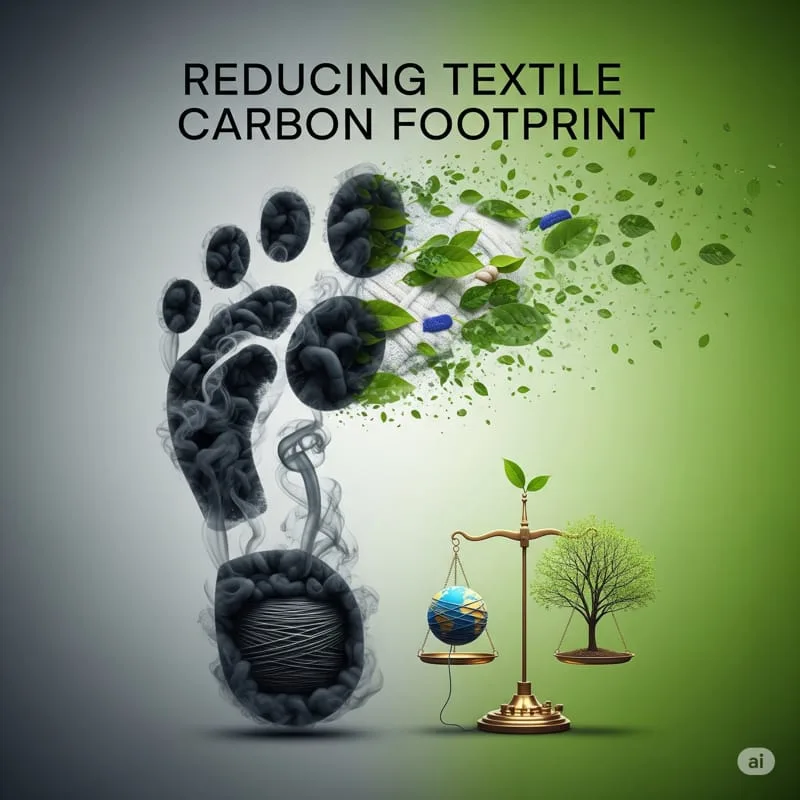
A textile’s carbon footprint builds up at every stage of its life: fiber production, dyeing and finishing, transport and disposal. Cutting it means choosing lower-carbon fibers such as organic cotton, hemp, lyocell or recycled polyester over virgin synthetics, reducing energy use in manufacturing and switching to renewable power, designing for circularity, and optimizing the supply chain. Each stage offers its own opportunities to reduce greenhouse gas emissions.
The textile industry, a cornerstone of global commerce, is a significant contributor to environmental degradation, accounting for approximately 10% of global carbon emissions, according to the United Nations Environment Programme (https://www.unep.org/news-and-stories/story/tackling-textile-industrys-environmental-footprint). From fiber sourcing to manufacturing, distribution, and end-of-life disposal, every stage of the textile lifecycle presents opportunities to reduce greenhouse gas emissions. As consumer demand for sustainability grows and regulatory pressures intensify, the industry is adopting innovative strategies to lower its carbon footprint. This article provides a comprehensive analysis of these strategies, integrating global and regional perspectives, including India’s efforts, and addressing challenges and future directions for a greener textile industry.
The Carbon Footprint of Textiles
The textile industry’s carbon footprint stems from resource-intensive processes across its lifecycle. Fiber production, particularly for synthetics like polyester, is a major contributor, with one ton of polyester emitting around 9.5 tons of CO₂ compared to 3.75 tons for organic cotton (https://textilelearner.net/carbon-footprint-in-textile-industry/). Manufacturing processes, such as dyeing and finishing, consume vast amounts of energy and water, while transportation and end-of-life disposal further amplify emissions. The Ellen MacArthur Foundation notes that the linear “take-make-waste” model exacerbates these issues, with less than 1% of textiles recycled into new garments (https://ellenmacarthurfoundation.org/a-new-textiles-economy). Reducing the carbon footprint requires rethinking each stage, from material selection to disposal, to align with circular economy principles.
Sustainable Fiber Selection
Fiber choice is foundational to reducing textile emissions. Natural fibers like organic cotton, hemp, and lyocell have lower embodied energy than synthetics like polyester and nylon, which are derived from fossil fuels. Organic cotton, grown without synthetic pesticides, emits significantly less CO₂ and reduces soil degradation. Hemp, a fast-growing crop, requires minimal water and chemicals, making it a low-carbon alternative. Lyocell, produced from sustainably sourced wood pulp in a closed-loop process, is biodegradable and energy-efficient (https://www.global-standard.org/).
Recycled fibers offer another low-carbon option. Recycled polyester, sourced from post-consumer plastic bottles, reduces the demand for virgin petroleum-based fibers. Patagonia has championed recycled polyester, cutting emissions in its supply chain (https://www.patagonia.com/stories/recycled-polyester/). Similarly, recycled cotton, though challenging due to fiber degradation, is being explored by brands like Eileen Fisher through take-back programs (https://www.eileenfisher.com/renew). In India, initiatives in the Garo Hills repurpose agricultural byproducts like banana and pineapple fibers into low-carbon, biodegradable textiles, supporting sustainable livelihoods (https://www.nesfas.org/).
Innovative Manufacturing Processes
Textile manufacturing, particularly dyeing and finishing, is energy- and water-intensive, contributing significantly to emissions. Innovations like low-liquor ratio dyeing machines reduce water use by up to 90%, while cold pad batch dyeing minimizes thermal energy requirements. Foam-based dyeing, which uses air instead of water to apply dyes, can cut energy use by 50% and eliminate wastewater (https://www.airdyesolutions.com/). Enzyme-based treatments, which replace harsh chemicals in fabric processing, further reduce environmental impact.
Digital printing is another low-carbon innovation, applying dyes precisely to minimize waste and support small-batch production. These technologies align with the circular economy by reducing resource consumption and pollution, making textiles more recyclable. Companies like Aditya Birla Fashion and Retail in India are adopting such innovations to lower their manufacturing footprint (https://textilevaluechain.in/in-depth-analysis/articles/carbon-footprint-in-textile-industry).
Renewable Energy and Efficiency Upgrades
Transitioning to renewable energy sources, such as solar and wind, is critical for reducing emissions in textile factories. Mills powered by renewable energy can cut greenhouse gas emissions by significant margins—some manufacturers report reductions of over 150,000 metric tons annually (https://sciencebasedtargets.org/). Retrofitting equipment with high-efficiency motors, heat recovery systems, and LED lighting further enhances energy efficiency. For example, solar-heated water systems for dyeing processes reduce reliance on fossil fuels, while heat recovery systems capture and reuse energy from manufacturing processes.
In India, the National Technical Textiles Mission promotes renewable energy adoption in textile production, aligning with global initiatives like the Science Based Targets (https://texmin.nic.in/). Brands like H&M have committed to 100% renewable energy by 2030, setting a benchmark for the industry (https://hmgroup.com/sustainability/circularity/).
Circular Design and Recycling
Circular design minimizes emissions by extending garment lifespans and facilitating recycling. Mono-material garments, made from a single fiber type, simplify recycling by eliminating the need to separate blends. Zero-waste pattern cutting optimizes fabric use, reducing pre-consumer waste. Designers like Zero Waste Daniel use this technique to create garments from scraps, minimizing emissions at the production stage (https://zerowastedaniel.com/).
Recycling technologies play a key role in circularity. Mechanical recycling, which shreds textiles into fibers, is energy-efficient but limited by fiber degradation, producing lower-quality outputs. Chemical recycling, which breaks down polymers into high-quality fibers, is more versatile but involves higher emissions and costs. Innovations like enzymatic recycling, developed by companies like Carbios, offer a low-carbon alternative by using biological processes (https://www.carbios.com/). Take-back programs, such as those by Patagonia and Nudie Jeans, encourage recycling and reuse, reducing end-of-life emissions (https://www.nudiejeans.com/sustainability/repair).
Supply Chain Transparency and Localization
Transportation accounts for a significant portion of the textile industry’s carbon footprint. Localizing production—sourcing materials closer to manufacturing hubs—reduces emissions from logistics. Life Cycle Assessments (LCAs) help identify emission hotspots, guiding brands to prioritize low-carbon suppliers. For example, Everlane’s transparent supply chain model highlights low-carbon practices, fostering consumer trust (https://www.everlane.com/about).
Blockchain technology is being explored to enhance supply chain traceability, ensuring accountability and reducing greenwashing. In India, companies like Aditya Birla Fashion and Retail are collaborating with suppliers to adopt low-carbon practices, supported by development agencies (https://carbonvaluechain.com/carbon-offsets/carbon-reduction-in-textile-manufacturing-industry/).
Regional Initiatives: India’s Role in Carbon Reduction
India, a global textile powerhouse, is integrating carbon reduction strategies into its industry. Waste-to-wealth programs in the Garo Hills repurpose banana and pineapple fibers into low-carbon textiles, reducing emissions while creating economic opportunities (https://www.nesfas.org/). Organizations like Saahas Zero Waste manage textile waste through recycling and upcycling, diverting materials from landfills (https://saahaszerowaste.com/waste-types/textile-cloth-waste-management/).
The Indian government’s Solid Waste Management Rules 2016 and National Technical Textiles Mission promote sustainable practices, including renewable energy and recycling (https://cpcb.nic.in/solid-waste-management-rules-2016/). These initiatives position India as a leader in regional efforts to lower the textile industry’s carbon footprint.
Policy Frameworks and EPR
Policy frameworks are essential for scaling carbon reduction efforts. Extended Producer Responsibility (EPR) schemes hold manufacturers accountable for the lifecycle emissions of their products, incentivizing sustainable design and recycling. The European Union’s Strategy for Sustainable and Circular Textiles sets targets for reducing emissions and waste by 2030 (https://ec.europa.eu/environment/strategy/textiles-strategy_en). In India, policies like the Solid Waste Management Rules 2016 emphasize source segregation and certified recycling partnerships, laying the groundwork for EPR.
Sustainability reporting, as practiced by brands like Reformation, ensures transparency and accountability, aligning with consumer demand for low-carbon products (https://www.thereformation.com/pages/sustainability). These frameworks drive systemic change across the industry.
Challenges to Carbon Reduction
Reducing the textile industry’s carbon footprint faces several challenges. The high cost of low-carbon technologies, such as chemical and enzymatic recycling, limits scalability. Infrastructure gaps, particularly in developing regions, hinder the adoption of renewable energy and advanced recycling systems. Blended fabrics and contamination from dyes complicate recycling, increasing emissions.
Consumer behavior is another barrier. While demand for sustainable fashion is growing, many prioritize affordability, fueling fast fashion’s high-carbon model. Educating consumers about low-carbon choices, such as supporting repair programs or second-hand platforms like ThredUp, is critical (https://www.thredup.com/).
The Role of Consumers and Brands
Consumers play a pivotal role in reducing the textile carbon footprint. By choosing brands with sustainable practices, supporting rental platforms like Rent the Runway, and embracing repair services, consumers can drive demand for low-carbon textiles (https://www.renttherunway.com/). Campaigns like Fashion Revolution’s “Who Made My Clothes?” raise awareness and encourage accountability (https://www.fashionrevolution.org/).
Brands must lead by investing in low-carbon materials, manufacturing innovations, and transparent supply chains. Collaborations with organizations like the Sustainable Apparel Coalition, which developed the Higg Index, help brands measure and reduce emissions (https://apparelcoalition.org/higg-index/). By prioritizing carbon reduction, brands can set industry standards.
The Future of Low-Carbon Textiles
The future of textile carbon reduction lies in innovation and collaboration. Emerging technologies, such as lab-grown fibers from Bolt Threads, offer low-carbon alternatives with minimal resource use (https://boltthreads.com/). 3D knitting technologies enable on-demand production, reducing waste and emissions. AI-driven sorting systems, like those from Greyparrot, improve recycling efficiency by enhancing material recovery (https://greyparrot.ai/).
Policy interventions, such as EPR and incentives for renewable energy, will accelerate progress. Consumer demand, particularly among Gen Z and Millennials, is driving the growth of sustainable models like resale and rental. As brands, policymakers, and consumers collaborate, the textile industry can transition to a low-carbon, circular future.
Conclusion
Reducing the carbon footprint of the textile industry requires a holistic approach, integrating sustainable fiber selection, innovative manufacturing, renewable energy, circular design, and supply chain optimization. Global and regional initiatives, such as India’s waste-to-wealth programs, demonstrate the potential for systemic change. Despite challenges like cost, infrastructure, and consumer behavior, advancements in technology and policy offer a path forward. By embracing these strategies, the textile industry can significantly lower its environmental impact, paving the way for a sustainable, low-carbon future in fashion.
Citations
- United Nations Environment Programme. “Tackling the Textile Industry’s Environmental Footprint.” UNEP, www.unep.org/news-and-stories/story/tackling-textile-industrys-environmental-footprint. Accessed 18 July 2025.
- Ellen MacArthur Foundation. “A New Textiles Economy: Redesigning Fashion’s Future.” Ellen MacArthur Foundation, www.ellenmacarthurfoundation.org/a-new-textiles-economy. Accessed 18 July 2025.
- Textile Learner. “Carbon Footprint in Textile Industry.” Textile Learner, textilelearner.net/carbon-footprint-in-textile-industry/. Accessed 18 July 2025.
- Global Organic Textile Standard. “GOTS: The Leading Organic Textile Standard.” GOTS, www.global-standard.org/. Accessed 18 July 2025.
- Patagonia. “Recycled Polyester.” Patagonia, www.patagonia.com/stories/recycled-polyester/. Accessed 18 July 2025.
- Eileen Fisher. “Renew: Circular Design.” Eileen Fisher, www.eileenfisher.com/renew. Accessed 18 July 2025.
- North East Slow Fashion Network. “Sustainable Textiles in India.” NESFAS, www.nesfas.org/. Accessed 18 July 2025.
- AirDye Solutions. “Eco-Friendly Dyeing Technology.” AirDye, www.airdyesolutions.com/. Accessed 18 July 2025.
- Science Based Targets. “Corporate Climate Action.” Science Based Targets, sciencebasedtargets.org/. Accessed 18 July 2025.
- H&M Group. “Sustainability: Circularity.” H&M Group, hmgroup.com/sustainability/circularity/. Accessed 18 July 2025.
- Zero Waste Daniel. “Zero Waste Fashion.” Zero Waste Daniel, zerowastedaniel.com/. Accessed 18 July 2025.
- Carbios. “Enzymatic Recycling Technology.” Carbios, www.carbios.com/. Accessed 18 July 2025.
- Nudie Jeans. “Sustainability: Repair Program.” Nudie Jeans, www.nudiejeans.com/sustainability/repair. Accessed 18 July 2025.
- Everlane. “Transparency in Fashion.” Everlane, www.everlane.com/about. Accessed 18 July 2025.
- Carbon Value Chain. “Carbon Reduction in Textile Manufacturing Industry.” Carbon Value Chain, carbonvaluechain.com/carbon-offsets/carbon-reduction-in-textile-manufacturing-industry/. Accessed 18 July 2025.
- Saahas Zero Waste. “Textile and Cloth Waste Management.” Saahas Zero Waste, saahaszerowaste.com/waste-types/textile-cloth-waste-management/. Accessed 18 July 2025.
- Central Pollution Control Board. “Solid Waste Management Rules 2016.” CPCB, cpcb.nic.in/solid-waste-management-rules-2016/. Accessed 18 July 2025.
- European Commission. “EU Strategy for Sustainable and Circular Textiles.” European Commission, ec.europa.eu/environment/strategy/textiles-strategy_en. Accessed 18 July 2025.
- Reformation. “Sustainability at Reformation.” Reformation, www.thereformation.com/pages/sustainability. Accessed 18 July 2025.
- ThredUp. “Secondhand Fashion Marketplace.” ThredUp, www.thredup.com/. Accessed 18 July 2025.
- Fashion Revolution. “Who Made My Clothes?” Fashion Revolution, www.fashionrevolution.org/. Accessed 18 July 2025.
- Sustainable Apparel Coalition. “Higg Index.” Sustainable Apparel Coalition, apparelcoalition.org/higg-index/. Accessed 18 July 2025.
- Bolt Threads. “Bioengineered Fibers.” Bolt Threads, boltthreads.com/. Accessed 18 July 2025.
- Rent the Runway. “Fashion Rental for Sustainability.” Rent the Runway, www.renttherunway.com/. Accessed 18 July 2025.
- Greyparrot. “AI-Driven Waste Sorting Solutions.” Greyparrot, greyparrot.ai/. Accessed 18 July 2025.
- Ministry of Textiles, Government of India. “National Technical Textiles Mission.” Texmin, texmin.nic.in/. Accessed 18 July 2025.