This in-depth guide explores the rising world of conductive threads and their pivotal role in wearable technology. Learn how they’re made, where they’re used, and what the future holds for smart fabrics.
Introduction
The boundary between textiles and electronics is rapidly dissolving. As the world moves toward smarter, more responsive garments, conductive threads are emerging as the backbone of wearable technology. These intelligent fibers have the potential to power everything from heart-monitoring shirts and self-heating jackets to clothing that responds to environmental changes.
Once confined to research labs and high-tech military gear, conductive threads are now making their way into mainstream fashion, healthcare, sportswear, and industrial apparel. As demand grows for lightweight, flexible electronics, these threads are poised to become a key component in the future of smart textiles.
Historical Context: The Evolution of Smart Textiles
The idea of integrating electronics into fabric dates back to the 1980s when NASA explored heated suits for astronauts. However, early smart garments were bulky and lacked durability. The evolution of conductive polymers and nano-coatings in the late 1990s made it possible to embed electronics directly into threads.
With the rise of e-textiles, conductive threads began to gain traction. These fibers enabled fabric-based circuits without relying on rigid or breakable wires. In 2004, MIT’s Media Lab pioneered the integration of conductive yarns into woven structures, signaling a turning point. Since then, innovation in materials science and miniaturized electronics has dramatically expanded their potential.
Understanding Conductive Threads: Composition and Function
Conductive threads are engineered to carry electrical current like traditional wires but with the flexibility and softness of textile fibers. They are typically composed of:
| Type | Description |
|---|---|
| Metal-Coated Threads | Traditional threads coated with silver, copper, or stainless steel |
| Intrinsically Conductive Polymers (ICPs) | Fibers made from inherently conductive polymers like polyaniline or polypyrrole |
| Hybrid Threads | Combination of metal nanoparticles and synthetic fibers like nylon or polyester |
Each type offers different levels of conductivity, durability, and washability. For instance, silver-coated threads have high conductivity but may tarnish, while conductive polymers provide flexibility with slightly lower electrical performance.
Production Techniques: From Lab to Loom
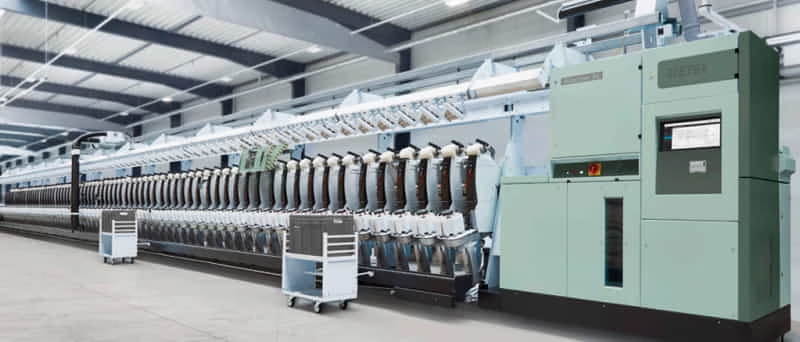
The creation of conductive threads requires precision and compatibility with standard textile processes. Key production techniques include:
- Electroplating: Threads are passed through a metal solution and electrically coated.
- Chemical Vapor Deposition (CVD): Deposits thin conductive layers on fibers using gas-phase chemicals.
- Coaxial Spinning: Wraps a conductive material around a core yarn for structural strength.
- Nanocomposite Coating: Applies a solution of conductive nanoparticles that bond with textile fibers.
Once treated, these threads are woven, knitted, or embroidered into fabrics while retaining electrical functionality. Many are engineered to withstand washing, bending, and friction.
Innovations Driving the Conductive Thread Industry
Recent breakthroughs have pushed conductive thread technology to new levels:
- Self-Healing Threads: Repair micro-cracks automatically to preserve conductivity.
- Stretchable Electronics: Threads maintain performance under strain, ideal for sportswear.
- Low-Power Microcircuit Integration: Threads act as both conductors and sensors.
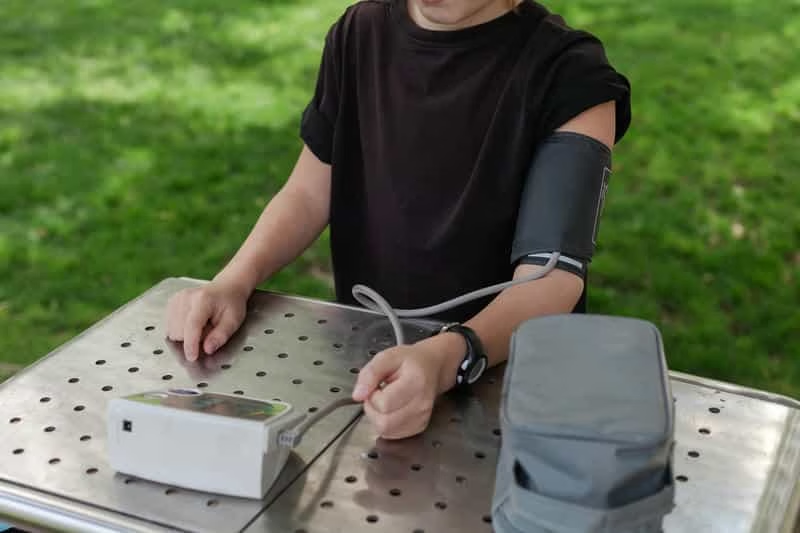
- Biocompatible Materials: Safe for direct skin contact, used in medical wearables.
These innovations are enabling more complex and functional wearable systems without sacrificing comfort.
Types and Applications of Conductive Threads
Conductive threads support a wide variety of applications. Here are the key categories:
- Sensor Integration: For ECG, temperature, motion, and humidity sensing
- Data Transmission: Connecting sensors to processing units and wireless modules
- Heating Elements: Used in cold-weather gear or therapeutic clothing
- Lighting (EL and LED): Threads that transmit power to embedded lights
- Touch Interface: Enabling touch control on sleeves or pant legs
| Application | Description |
|---|---|
| Health Monitoring | Tracks heart rate, respiration, or muscle activity |
| Athletic Apparel | Measures performance metrics like steps, posture, or hydration |
| Smart Fashion | Enables touch or gesture control, dynamic aesthetics |
| Industrial PPE | Enhances worker safety with status indicators or alarms |
Real-World Use Cases
Conductive threads are already being adopted by forward-thinking brands and research institutions:
- Levi’s x Google Jacquard: Denim jackets with capacitive threads for gesture control.
- Xenoma: Smart compression shirts with embedded electrodes for full-body motion capture.
- MIT Media Lab: Developed thread-based microfluidic systems for sweat analysis.
- Nadi X: Yoga leggings with sensors to correct posture via smartphone feedback.
These cases demonstrate the versatility and commercial readiness of conductive thread technology.
Market Overview and End-User Segments
The global smart textile market is projected to exceed $13 billion by 2027, with conductive threads as a key enabler. End-user segments include:
- Consumer Electronics: Integrating fashion and functionality
- Healthcare Providers: Offering real-time patient monitoring
- Military and Defense: Creating adaptive camouflage and health diagnostics
- Automotive: Seating textiles with biometric sensors or heating functions
Asia-Pacific leads in manufacturing capacity, while North America and Europe drive innovation and adoption.
Sustainability and Environmental Impact
Conductive threads also play a role in building sustainable textiles:
- Energy Efficiency: Enable passive sensing with minimal power draw
- Recyclability: Advancements in recoverable metal coatings improve circularity
- Resource Reduction: Eliminate the need for plastic circuits or heavy batteries
However, concerns remain about:
- Nano-metal residues in wastewater
- Difficult disassembly of hybrid garments for recycling
Ongoing research focuses on bio-based conductors and recyclable thread compositions to address these challenges.
Technical Challenges and Limitations
Despite their promise, conductive threads face technical hurdles:
- Durability in Washing: Repeated laundering can degrade conductivity
- Interference and Signal Loss: Thread resistance affects data fidelity
- Connector Integration: Linking soft textiles to hard electronics requires innovation
- Scalability: Production costs remain high for certain advanced threads
These issues are being addressed through material innovation, design optimization, and collaboration between tech and textile sectors.
Certification and Testing Standards
As wearable tech goes mainstream, industry standards are emerging:
- ASTM D7027: Measures resistance change in stretchable electronics
- IEC 60601-1: Safety compliance for wearable medical devices
- ISO 6330: Washability and durability of electronic textiles
- OEKO-TEX®: Ensures non-toxicity for skin-contact applications
Certifications improve trust and help fast-track regulatory approval for wearable products.
Future Trends in Conductive Thread Development
The future of conductive threads includes:
- Graphene-Based Threads: Ultra-light, high-conductivity, and antimicrobial
- Wireless Powering: Threads that can receive energy via NFC or RF
- AI Integration: Threads as neural input for real-time biofeedback systems
- Programmable Textiles: Garments that change conductivity based on temperature or environment
These trends highlight the merging of electronics, AI, and fashion into seamless, intelligent systems.
Summary
Conductive threads are no longer futuristic novelties—they are foundational components in the expanding world of smart textiles. From remote patient monitoring to interactive clothing and intelligent sportswear, these fibers are weaving the future of wearable technology.
As breakthroughs continue in material science, manufacturing, and design, conductive threads will evolve from experimental prototypes to ubiquitous tools in fashion, health, and industrial applications. The thread that once stitched seams will soon power entire systems.
Citations:
- MIT Media Lab – Textile Electronics: https://www.media.mit.edu/projects/textile-electronics/overview/
- ScienceDirect – Conductive Textiles: https://www.sciencedirect.com/science/article/abs/pii/S2352940717301149
- Nature – Smart Textile Review: https://www.nature.com/articles/s41528-021-00103-2
FAQ
Conductive threads are specially engineered fibers that can conduct electricity, enabling them to transmit power or data in textiles. They are often made by blending traditional fibers like cotton or polyester with conductive materials such as silver, copper, or stainless steel.
They are used to integrate electronics directly into fabrics—powering sensors, LEDs, heating elements, or communication systems in clothing, sports gear, medical devices, and fashion accessories.
Yes. High-quality conductive threads are designed to be skin-safe, flexible, and durable. Manufacturers often coat or insulate them to prevent skin irritation and electrical hazards.
Flexibility: Maintains comfort and drape of fabrics.
Integration: Eliminates bulky wiring.
Aesthetics: Seamlessly blends technology with design.
Durability: Can withstand bending, stretching, and washing (with proper care).
Healthcare: Remote patient monitoring, smart bandages.
Sports & Fitness: Activity tracking, injury prevention.
Fashion: Light-up garments, interactive designs.
Military: Wearable communications, biometric monitoring.
Key challenges include washability, long-term durability, cost of production, and maintaining conductivity over time without corrosion.
Some are, but it depends on the manufacturing process and materials used. Many require gentle washing, low temperatures, and avoidance of harsh detergents to maintain conductivity.
In many applications, yes. They offer a more seamless integration, but for high-power applications, traditional wiring may still be necessary.
Sustainability varies. Some use recyclable metals, while others blend with synthetic fibers that are harder to recycle. Research is ongoing to develop eco-friendly conductive fibers.
We can expect:
Improved washability and durability.
Lower production costs.
Wider adoption in everyday clothing.
Integration with flexible batteries and self-powered textiles.