1. Introduction
The construction industry has evolved far beyond bricks, mortar, and steel. Today’s buildings, bridges, roads, and infrastructure demand materials that are lighter, stronger, more adaptable, and sustainable. Technical textiles have emerged as a game-changing category in this transformation, and within them, Buildtech—short for Building and Construction Textiles—has become an indispensable segment.
Buildtech includes textile-based materials used in construction, civil engineering, transportation infrastructure, and urban landscaping. These textiles are engineered to provide reinforcement, protection, filtration, drainage, and aesthetic appeal in a variety of structural and functional applications.
From geotextiles beneath highways to PTFE-coated architectural fabrics spanning stadium roofs, Buildtech products are helping designers, engineers, and contractors achieve cost savings, faster installation, improved performance, and sustainable outcomes.
2. What is Buildtech?
Buildtech is one of the 12 recognized categories of technical textiles, defined as textile materials and products used for construction, civil engineering, and related applications. Unlike decorative interior fabrics, Buildtech products are performance-focused and often work behind the scenes, hidden within the structure yet vital for its safety and durability.
Key characteristics of Buildtech textiles:
- High tensile strength
- Resistance to UV, moisture, and chemicals
- Dimensional stability under load
- Durability against weathering and abrasion
- Controlled porosity for filtration and drainage
3. Functions of Buildtech Textiles
Buildtech materials serve a variety of functions, often combining several in a single product:
- Reinforcement – Strengthening concrete, asphalt, and soil structures.
- Filtration – Allowing water to pass through while retaining soil particles.
- Separation – Preventing mixing of different soil layers.
- Drainage – Directing water away from structural foundations.
- Protection – Shielding materials from mechanical damage and environmental effects.
- Aesthetics – Providing architectural membranes and façade coverings.
- Environmental control – Regulating temperature, sound, and light within structures.
4. Categories of Buildtech Products
Buildtech products can be broadly grouped into two categories: structural and non-structural.
4.1 Structural Buildtech
Used in load-bearing and stability-enhancing applications.
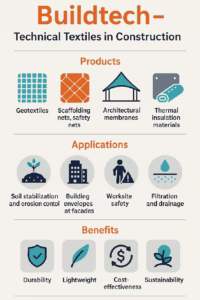
- Geotextiles – Woven, nonwoven, or knitted fabrics for soil stabilization.
- Geogrids – Polymer grid structures to reinforce soil and aggregate.
- Geonets – Mesh-like structures for drainage applications.
- Geocomposites – Multi-layer combinations (e.g., geotextile + geogrid) for combined functions.
4.2 Non-Structural Buildtech
Used for protective, decorative, and functional purposes.
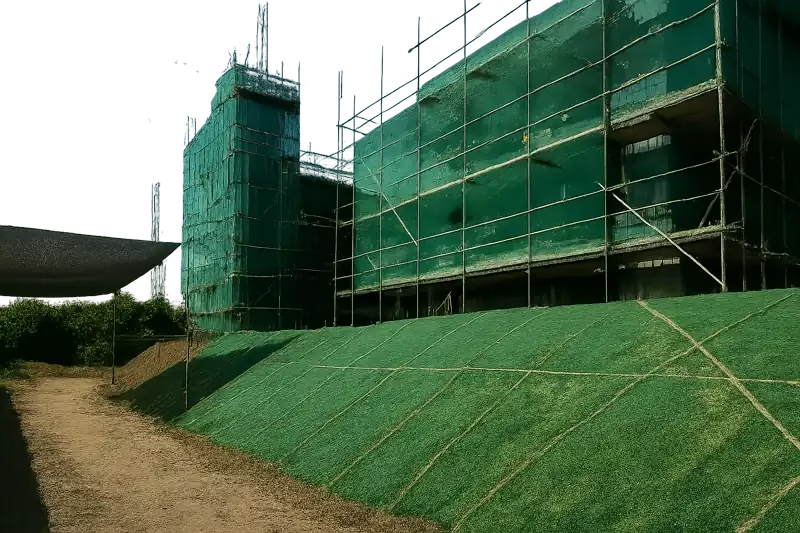
- Scaffolding nets and safety nets – Protecting workers and pedestrians from falling debris.
- Tarpaulins – Temporary covers for construction materials and work areas.
- Architectural membranes – Tensile structures, roofing, and façade coverings.
- Noise barriers – Sound-absorbing fabrics for highways and urban construction.
- Thermal insulation fabrics – Maintaining energy efficiency in buildings.
5. Key Buildtech Applications
Here’s a detailed breakdown of where Buildtech materials are used:
| Application Area | Examples of Products | Purpose |
|---|---|---|
| Civil Engineering | Geotextiles, geogrids, geonets | Soil stabilization, erosion control, road reinforcement |
| Transport Infrastructure | Asphalt reinforcement grids, drainage composites | Extend road life, prevent rutting, manage water |
| Water Management | Geomembranes, filter fabrics | Prevent seepage, filter sediments |
| Building Envelopes | Architectural membranes, façade meshes | Aesthetic design, climate control |
| Worksite Safety | Safety nets, scaffolding covers | Worker and pedestrian protection |
| Environmental Protection | Landfill liners, silt fences | Pollution prevention, soil containment |
6. Manufacturing Techniques
Buildtech products are produced using high-performance textile manufacturing technologies:
- Weaving – Produces durable, stable geotextiles and meshes.
- Knitting – Flexible fabrics for safety nets and façade coverings.
- Nonwoven Production – Needle-punched or heat-bonded fabrics for filtration and separation.
- Coating and Laminating – Adding protective layers for UV resistance, waterproofing, or flame retardancy.
- Extrusion – Creating geogrids and geomembranes directly from polymer materials.
7. Materials Used in Buildtech
Material selection is driven by mechanical strength, durability, and resistance to environmental factors.
Synthetic Fibers and Polymers:
- Polypropylene (PP) – Lightweight, chemical-resistant, widely used in geotextiles.
- Polyester (PET) – High tensile strength and dimensional stability.
- Polyethylene (PE) – UV-resistant, used in geomembranes and nets.
- Polyvinyl Chloride (PVC) – Flexible, durable coating material.
- PTFE (Polytetrafluoroethylene) – High-performance coating for architectural membranes.
Natural Fibers:
- Jute, coir – Used in temporary erosion control mats and eco-friendly geotextiles.
8. Advantages of Buildtech Textiles
- Durability – Extended lifespan in harsh outdoor conditions.
- Lightweight – Easier handling and faster installation.
- Cost-Effectiveness – Reduced material and labor costs.
- Performance – Enhanced load distribution, filtration, and stability.
- Sustainability – Options for recyclable or biodegradable materials.
- Versatility – Applicable to roads, buildings, dams, landfills, and more.
9. Global Market Overview
The Buildtech market is expanding rapidly due to urbanization and infrastructure development.
- Market size (2024): Estimated USD 25–28 billion globally.
- Projected CAGR: 6–7% over the next decade.
- Growth drivers: Rapid urban growth, government infrastructure projects, demand for sustainable building solutions.
- Leading regions: Asia-Pacific (China, India), Europe (Germany, France), North America (USA, Canada).
10. Sustainability in Buildtech
Sustainability is becoming a central theme:
- Recyclable geotextiles reduce landfill waste.
- Natural fiber erosion mats biodegrade, leaving no environmental footprint.
- Energy-efficient architectural membranes reduce building heating and cooling loads.
- Water-permeable pavements with geotextile layers improve stormwater management.
11. Challenges in Buildtech Adoption
- Higher initial costs compared to traditional materials.
- Need for skilled installation to ensure performance.
- Lack of awareness in developing markets.
- Disposal of synthetic products at end-of-life.
12. Case Study: Geotextiles in Road Construction
In a national highway project in India, woven polypropylene geotextiles were used under the asphalt layer to prevent rutting and extend road life. The result:
- 40% reduction in maintenance costs.
- Increased lifespan from 5 to 8 years.
- Improved resistance to monsoon-related damage.
13. Future of Buildtech
The future will see smart and multifunctional Buildtech textiles:
- Sensor-embedded geotextiles for real-time monitoring of soil movement.
- Self-cleaning architectural membranes using nanotechnology.
- Fully biodegradable erosion control mats for eco-sensitive projects.
- 3D-printed textile composites for custom structural elements.
14. Conclusion
Buildtech textiles have moved from being niche construction aids to essential engineering components. They not only strengthen and protect structures but also contribute to sustainability, safety, and design innovation. As urbanization accelerates and sustainability goals tighten, Buildtech will remain at the forefront of construction technology, redefining the way we build and protect our world.
FAQ
Buildtech refers to textile-based materials used in construction, civil engineering, and infrastructure projects. These include geotextiles, safety nets, architectural membranes, and other engineered fabrics designed for reinforcement, protection, filtration, drainage, and aesthetic purposes in buildings and infrastructure.
Common examples include:
Geotextiles for soil stabilization
Geogrids and geonets for reinforcement and drainage
Scaffolding nets for safety
Architectural membranes for roofs and façades
Thermal insulation fabrics for energy efficiency
Typical materials include:
Synthetic fibers: Polypropylene (PP), Polyester (PET), Polyethylene (PE), PVC-coated fabrics, PTFE-coated glass fiber.
Natural fibers: Jute and coir for temporary erosion control.
They provide:
Longer structural lifespan
Improved safety on construction sites
Reduced maintenance costs
Faster installation compared to traditional materials
Enhanced sustainability through recyclable and eco-friendly options
Geotextiles are woven, nonwoven, or knitted fabrics used in civil engineering. They stabilize soil, prevent erosion, improve drainage, and separate soil layers in applications like road construction, embankments, retaining walls, and landfills.
Yes, many Buildtech solutions now use recyclable polymers, biodegradable natural fibers, and energy-efficient coatings. These contribute to lower environmental impact in both the construction and operational phases of a building or infrastructure project.
The service life depends on material type and exposure:
Geotextiles: 10–25 years or more
Architectural membranes: 15–30 years
Safety nets: 3–7 years depending on usage conditions
Emerging trends include:
Sensor-embedded smart geotextiles for real-time structural monitoring
Self-cleaning and pollution-neutralizing façade fabrics
Fully biodegradable erosion control mats
3D-printed textile composites for custom architectural elements