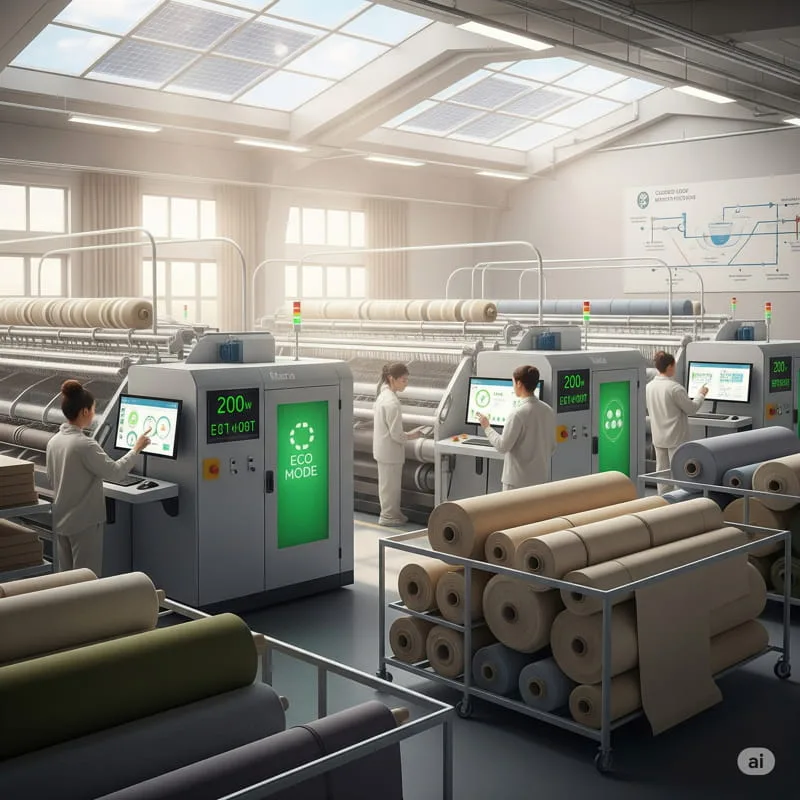
This article explores energy-efficient textile production, focusing on strategies like energy management systems, low-energy wet processing, renewable energy integration, and smart analytics. It highlights global and regional initiatives, including India’s sustainable practices, and addresses challenges like high costs and infrastructure gaps, emphasizing the role of innovation and policy in creating a low-energy textile industry.
The textile industry, a cornerstone of global manufacturing, is energy-intensive, contributing significantly to greenhouse gas emissions and resource depletion. With processes like spinning, weaving, dyeing, finishing, and logistics consuming vast amounts of energy, the industry accounts for approximately 10% of global carbon emissions, according to the United Nations Environment Programme (https://www.unep.org/news-and-stories/story/tackling-textile-industrys-environmental-footprint). As sustainability becomes a priority, energy-efficient textile production offers a path to reduce environmental impact, lower costs, and maintain product quality. This article provides a comprehensive analysis of energy-saving strategies, integrating global innovations, regional efforts like India’s initiatives, and addressing challenges and future directions for a greener textile industry.
The Energy Challenge in Textile Production
Textile manufacturing is inherently energy-intensive, with each stage—fiber production, spinning, weaving, wet processing, and logistics—requiring significant electricity and thermal energy. Wet processing, including dyeing and finishing, is particularly demanding, accounting for up to 60% of a textile factory’s energy use due to reliance on heated water and steam. The linear “take-make-waste” model exacerbates energy consumption, with less than 1% of textiles recycled into new garments, as noted by the Ellen MacArthur Foundation (https://ellenmacarthurfoundation.org/a-new-textiles-economy). Energy-efficient production seeks to minimize consumption while aligning with circular economy principles, reducing the industry’s carbon footprint and operational costs.
Energy Management Systems (EnMS)
Energy Management Systems (EnMS), such as ISO 50001, are critical tools for optimizing energy use in textile manufacturing. These systems enable factories to monitor consumption, identify inefficiencies, and set performance targets. By implementing continuous improvement plans, manufacturers can achieve significant energy savings. For example, installing high-efficiency motors and variable frequency drives in spinning and weaving units can reduce electricity use by up to 30%, according to the Energy Star Guidebook for the Textile Industry (https://www.energystar.gov/sites/default/files/buildings/tools/EE_Guidebook_for_Textile_industry.pdf). Automated controls further enhance efficiency by adjusting machinery operations in real-time, ensuring energy is used only when necessary.
In India, textile hubs like Tirupur are adopting EnMS to comply with sustainability standards, supported by initiatives like the National Technical Textiles Mission (https://texmin.nic.in/). These systems provide a structured approach to energy efficiency, making them accessible to both large and small manufacturers.
Low-Energy Wet Processing
Wet processing, including dyeing, scouring, and finishing, is the most energy-intensive stage of textile production due to its reliance on thermal energy for heating water and generating steam. Innovations like low-liquor ratio dyeing machines reduce water and energy use by applying dyes with minimal liquid, cutting consumption by up to 50%. Cold pad batch dyeing, which eliminates the need for heated dye baths, further reduces thermal energy requirements. Foam finishing, pioneered by companies like Colorep, uses air to apply finishes, minimizing water and energy use while reducing chemical discharge (https://www.textilelearner.net/cost-effective-energy-efficiency-in-textile-industry/).
Heat recovery systems are another key innovation, capturing and reusing steam or wastewater heat. In composite plants that combine spinning, weaving, and processing, these systems can save significant energy by recycling heat across processes. Brands like Levi Strauss & Co. have implemented heat recovery in their facilities, achieving measurable reductions in energy use (https://www.levistrauss.com/sustainability/planet/water/).
Renewable Energy Integration
Transitioning to renewable energy sources is a cornerstone of energy-efficient textile production. Solar thermal systems for heating water and photovoltaic panels for electricity generation reduce reliance on fossil fuels, cutting carbon emissions. Biomass boilers and biogas systems, which use organic waste to generate energy, are gaining traction in textile parks, particularly in India. For example, some manufacturers in Gujarat have integrated solar and biomass energy into dyeing units, aligning with sustainability goals (https://www.scirp.org/pdf/ojbm_2022072015405553.pdf).
The Science Based Targets initiative encourages textile companies to adopt renewable energy, with brands like H&M committing to 100% renewable energy by 2030 (https://sciencebasedtargets.org/). These efforts not only reduce emissions but also enhance long-term cost stability by reducing dependence on volatile fossil fuel markets.
Lighting and HVAC Optimization
Lighting and Heating, Ventilation, and Air Conditioning (HVAC) systems offer significant energy-saving potential in textile factories. Switching to LED lighting can reduce electricity consumption by up to 50% compared to traditional systems. In spinning units, where humidification is critical, optimizing HVAC systems with smart sensors and automated climate controls maintains ideal conditions while minimizing energy waste. These upgrades also improve worker comfort, boosting productivity.
In India, textile manufacturers in Coimbatore have adopted LED lighting and energy-efficient HVAC systems, achieving significant cost savings (https://textilevaluechain.in/news-insights/energy-efficiency-in-textile-production-reducing-costs-while-boosting-output). These low-cost interventions are scalable and effective across various production scales.
Data Analytics and Smart Energy Contracts
Data analytics is transforming energy management in textile manufacturing. Real-time monitoring platforms track energy usage across departments, identifying inefficiencies and enabling dynamic adjustments. Predictive analytics can forecast peak energy loads, allowing manufacturers to optimize processes and avoid spikes. For example, platforms like DataCalculus provide actionable insights for energy optimization, helping mills reduce consumption without compromising output (https://www.datacalculus.com/).
Smart energy contracts, which offer flexible pricing based on usage patterns, further enhance efficiency. By aligning energy procurement with production schedules, manufacturers can manage costs effectively. These tools are particularly valuable in energy-intensive processes like dyeing, where precise control can yield significant savings.
Circular Design and Recycling
Circular design principles support energy efficiency by reducing waste and extending material lifespans. Mono-material garments, made from a single fiber type, simplify recycling and reduce energy-intensive processing. Zero-waste pattern cutting, as practiced by designers like Zero Waste Daniel, optimizes fabric use, minimizing pre-consumer waste (https://zerowastedaniel.com/). Take-back programs, such as those by Patagonia and Eileen Fisher, encourage recycling and reuse, reducing the need for energy-intensive virgin material production (https://www.patagonia.com/stories/worn-wear/; https://www.eileenfisher.com/renew).
Recycling technologies also contribute to energy efficiency. Mechanical recycling, which shreds textiles into fibers, is energy-efficient but produces lower-quality outputs. Chemical recycling, developed by companies like Worn Again Technologies, regenerates high-quality fibers but requires more energy (https://wornagain.co.uk/). Emerging enzymatic recycling, pioneered by Carbios, offers a low-energy alternative by using biological processes (https://www.carbios.com/). These technologies align with circular economy goals, reducing the industry’s energy footprint.
Regional Initiatives: India’s Energy-Saving Efforts
India, a global textile hub, is implementing energy-efficient practices to address its energy-intensive industry. In regions like Tamil Nadu, manufacturers are adopting renewable energy and energy management systems, supported by the National Technical Textiles Mission (https://texmin.nic.in/). Waste-to-wealth programs in the Garo Hills repurpose agricultural byproducts like banana and pineapple fibers into low-energy textiles, reducing reliance on energy-intensive fibers (https://www.nesfas.org/).
Organizations like Saahas Zero Waste promote recycling and upcycling, minimizing energy use in waste management (https://saahaszerowaste.com/waste-types/textile-cloth-waste-management/). These initiatives combine environmental and economic benefits, positioning India as a leader in sustainable textile production.
Policy Frameworks and Industry Standards
Policy frameworks are essential for scaling energy-efficient practices. Extended Producer Responsibility (EPR) schemes, such as those in the European Union’s Strategy for Sustainable and Circular Textiles, incentivize manufacturers to reduce energy use throughout the product lifecycle (https://ec.europa.eu/environment/strategy/textiles-strategy_en). In India, the Bureau of Energy Efficiency (BEE) promotes energy-saving technologies through incentives and certifications, aligning with the Solid Waste Management Rules 2016 (https://cpcb.nic.in/solid-waste-management-rules-2016/).
Industry standards like the Global Organic Textile Standard (GOTS) ensure that energy-intensive processes meet environmental criteria, fostering accountability (https://www.global-standard.org/). Sustainability reporting, as practiced by brands like Reformation, enhances transparency and drives energy efficiency (https://www.thereformation.com/pages/sustainability).
Challenges to Energy Efficiency
Energy-efficient textile production faces several challenges. High initial costs for technologies like low-liquor ratio dyeing machines and renewable energy systems can deter adoption, particularly for small manufacturers. Infrastructure gaps, especially in developing regions, limit access to advanced equipment and renewable energy sources. Regulatory disparities across countries complicate global adoption, with regions like the EU advancing faster than others.
Consumer behavior also poses a challenge. While demand for sustainable fashion is growing, many prioritize affordability, sustaining energy-intensive fast fashion models. Educating consumers about the benefits of energy-efficient textiles is critical to driving change.
The Role of Consumers and Brands
Consumers play a pivotal role in promoting energy-efficient textiles. By supporting brands with sustainable practices, choosing second-hand platforms like ThredUp, or embracing repair programs like Nudie Jeans’ services, consumers can reduce demand for energy-intensive products (https://www.thredup.com/; https://www.nudiejeans.com/sustainability/repair). Campaigns like Fashion Revolution’s “Who Made My Clothes?” raise awareness and encourage accountability (https://www.fashionrevolution.org/).
Brands must invest in energy-saving technologies and transparent supply chains. Collaborations with organizations like the Sustainable Apparel Coalition, which developed the Higg Index, help brands measure and reduce energy use (https://apparelcoalition.org/higg-index/). By prioritizing efficiency, brands can set industry standards.
The Future of Energy-Efficient Textiles
The future of energy-efficient textile production lies in innovation and collaboration. Emerging technologies, such as enzymatic recycling and 3D knitting, reduce energy use by streamlining processes. Lab-grown fibers, like those from Bolt Threads, offer low-energy alternatives to traditional materials (https://boltthreads.com/). AI-driven energy management systems, like those from Greyparrot, optimize resource use and enhance recycling efficiency (https://greyparrot.ai/).
Policy interventions, such as EPR and incentives for renewable energy, will accelerate adoption. Consumer demand, particularly among Gen Z and Millennials, is driving growth in sustainable models like rental platforms (https://www.renttherunway.com/). Collaborative efforts across brands, policymakers, and consumers will shape a low-energy textile industry.
Conclusion
Energy-efficient textile production is essential for reducing the industry’s environmental impact and aligning with sustainable fashion goals. Strategies like energy management systems, low-energy wet processing, renewable energy integration, and circular design offer practical solutions, while regional initiatives like India’s waste-to-wealth programs demonstrate scalable impact. Despite challenges like cost and infrastructure gaps, innovation, policy, and consumer engagement provide a path forward. By embracing these strategies, the textile industry can achieve a low-energy, sustainable future, balancing environmental responsibility with economic viability.
Citations
- United Nations Environment Programme. “Tackling the Textile Industry’s Environmental Footprint.” UNEP, www.unep.org/news-and-stories/story/tackling-textile-industrys-environmental-footprint. Accessed 18 July 2025.
- Ellen MacArthur Foundation. “A New Textiles Economy: Redesigning Fashion’s Future.” Ellen MacArthur Foundation, www.ellenmacarthurfoundation.org/a-new-textiles-economy. Accessed 18 July 2025.
- Energy Star. “Energy Efficiency Guidebook for the Textile Industry.” Energy Star, www.energystar.gov/sites/default/files/buildings/tools/EE_Guidebook_for_Textile_industry.pdf. Accessed 18 July 2025.
- Textile Learner. “Cost-Effective Energy Efficiency in Textile Industry.” Textile Learner, textilelearner.net/cost-effective-energy-efficiency-in-textile-industry/. Accessed 18 July 2025.
- Textile Value Chain. “Energy Efficiency in Textile Production.” Textile Value Chain, textilevaluechain.in/news-insights/energy-efficiency-in-textile-production-reducing-costs-while-boosting-output. Accessed 18 July 2025.
- Open Journal of Business and Management. “Energy Efficiency in Textile Industry.” Scirp, www.scirp.org/pdf/ojbm_2022072015405553.pdf. Accessed 18 July 2025.
- Levi Strauss & Co. “Sustainability: Water Conservation.” Levi Strauss, www.levistrauss.com/sustainability/planet/water/. Accessed 18 July 2025.
- DataCalculus. “Data Analytics for Industrial Efficiency.” DataCalculus, www.datacalculus.com/. Accessed 18 July 2025.
- Zero Waste Daniel. “Zero Waste Fashion.” Zero Waste Daniel, zerowastedaniel.com/. Accessed 18 July 2025.
- Patagonia. “Worn Wear: Repair and Reuse.” Patagonia, www.patagonia.com/stories/worn-wear/. Accessed 18 July 2025.
- Eileen Fisher. “Renew: Circular Design.” Eileen Fisher, www.eileenfisher.com/renew. Accessed 18 July 2025.
- Worn Again Technologies. “Chemical Recycling for Textiles.” Worn Again, wornagain.co.uk/. Accessed 18 July 2025.
- Carbios. “Enzymatic Recycling Technology.” Carbios, www.carbios.com/. Accessed 18 July 2025.
- North East Slow Fashion Network. “Sustainable Textiles in India.” NESFAS, www.nesfas.org/. Accessed 18 July 2025.
- Saahas Zero Waste. “Textile and Cloth Waste Management.” Saahas Zero Waste, saahaszerowaste.com/waste-types/textile-cloth-waste-management/. Accessed 18 July 2025.
- Ministry of Textiles, Government of India. “National Technical Textiles Mission.” Texmin, texmin.nic.in/. Accessed 18 July 2025.
- European Commission. “EU Strategy for Sustainable and Circular Textiles.” European Commission, ec.europa.eu/environment/strategy/textiles-strategy_en. Accessed 18 July 2025.
- Central Pollution Control Board. “Solid Waste Management Rules 2016.” CPCB, cpcb.nic.in/solid-waste-management-rules-2016/. Accessed 18 July 2025.
- Global Organic Textile Standard. “GOTS: The Leading Organic Textile Standard.” GOTS, www.global-standard.org/. Accessed 18 July 2025.
- Reformation. “Sustainability at Reformation.” Reformation, www.thereformation.com/pages/sustainability. Accessed 18 July 2025.
- ThredUp. “Secondhand Fashion Marketplace.” ThredUp, www.thredup.com/. Accessed 18 July 2025.
- Fashion Revolution. “Who Made My Clothes?” Fashion Revolution, www.fashionrevolution.org/. Accessed 18 July 2025.
- Sustainable Apparel Coalition. “Higg Index.” Sustainable Apparel Coalition, apparelcoalition.org/higg-index/. Accessed 18 July 2025.
- Bolt Threads. “Bioengineered Fibers.” Bolt Threads, boltthreads.com/. Accessed 18 July 2025.
- Rent the Runway. “Fashion Rental for Sustainability.” Rent the Runway, www.renttherunway.com/. Accessed 18 July 2025.
- Greyparrot. “AI-Driven Waste Sorting Solutions.” Greyparrot, greyparrot.ai/. Accessed 18 July 2025.
- H&M Group. “Sustainability: Circularity.” H&M Group, hmgroup.com/sustainability/circularity/. Accessed 18 July 2025.
- Nudie Jeans. “Sustainability: Repair Program.” Nudie Jeans, www.nudiejeans.com/sustainability/repair. Accessed 18 July 2025.