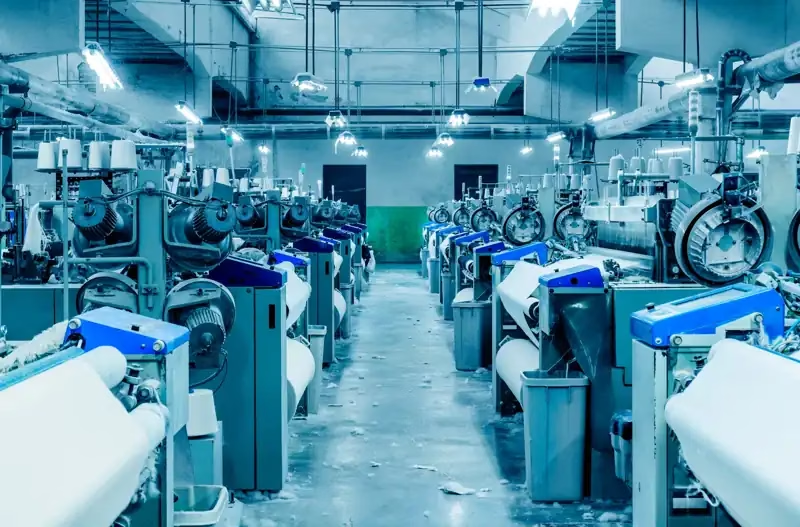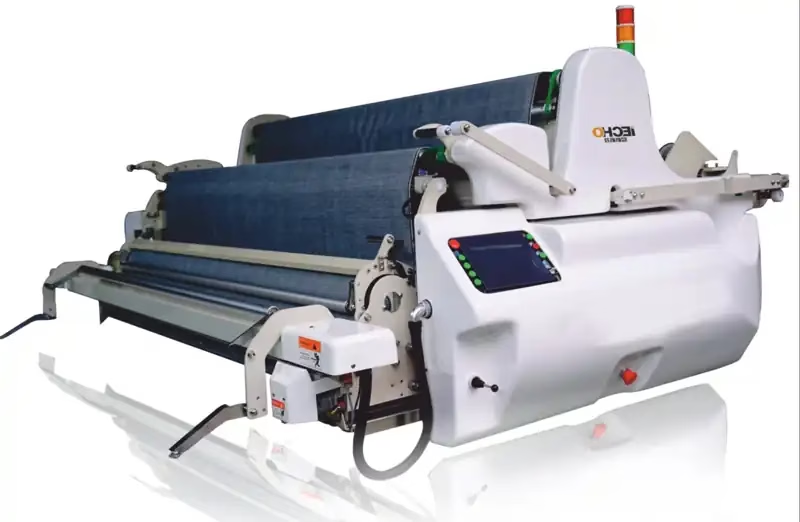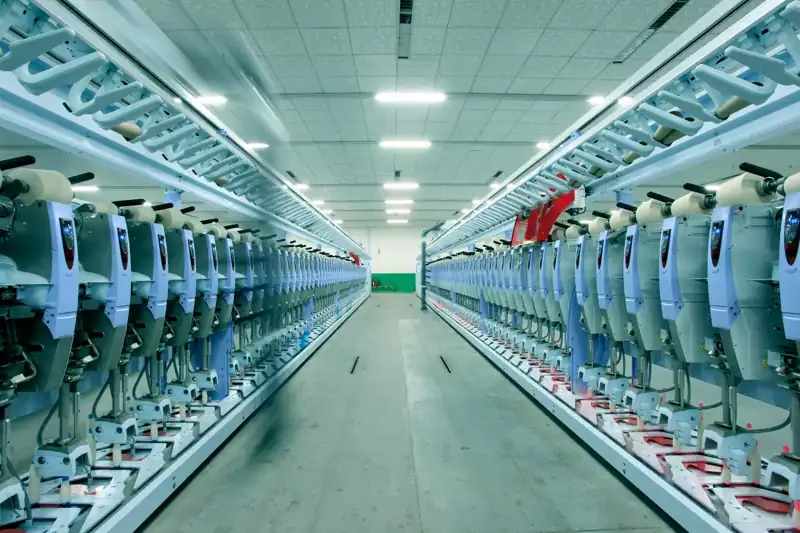
This comprehensive article examines the top six spinning machinery manufacturers worldwide in 2025, emphasizing their roles in advancing sustainable textiles. Companies including Rieter from Switzerland, Saurer from Switzerland, Trützschler from Germany, Murata Machinery from Japan, Savio Macchine from Italy, and Lakshmi Machine Works from India are highlighted for their innovative technologies in ring, rotor, air-jet, and vortex spinning. These leaders offer specialized features like energy-efficient designs, automation, and digital integration, setting them apart from competitors. The global spinning machinery market is valued at USD 6.20 billion in 2025, driven by demand for sustainable practices and high-performance textiles. The piece covers major machine types, unique features, registered office countries, contact links, market trends, challenges, and future outlook, providing valuable insights for textile professionals.
Introduction to Spinning Machinery in the Textile Industry
The textile industry remains a vital component of global manufacturing, with spinning machinery at its core, converting raw fibers into durable yarns essential for fabrics, apparel, and technical textiles. In 2025, the emphasis on sustainable textiles has intensified, pushing manufacturers to adopt eco-friendly processes that minimize environmental impact while maximizing efficiency. Sustainable textiles, incorporating renewable materials like organic cotton, recycled polyester, and bio-based fibers, are gaining traction due to consumer preferences for green products. Spinning machinery facilitates this shift by enabling precise control over yarn quality, reducing waste, and optimizing energy use.
The global textile market is expected to surpass USD 1.5 trillion by 2025, fueled by rising demand in fashion, home furnishings, and industrial applications. Spinning technologies dominate, with ring spinning holding about 65% market share for its versatility in producing fine yarns, rotor spinning at 30% for cost-effective bulk production, and air-jet spinning at 2-5% for specialized, high-speed operations. Leading manufacturers are integrating Industry 4.0 elements, such as IoT and AI, to enhance productivity and sustainability. This article profiles the top six spinning machinery manufacturers, detailing their major machine types, special features, registered office countries, and contact information, while exploring how they contribute to sustainable textile production.
The Importance of Spinning Machinery in Sustainable Textile Production
Spinning machinery is indispensable for transforming fibers into yarns, influencing the entire textile value chain. In the era of sustainable textiles, these machines must support low-carbon operations, water conservation, and circular economy principles. Energy-efficient spinning reduces greenhouse gas emissions, while advanced features like automated waste recycling promote resource efficiency. For instance, modern machines can process recycled fibers without compromising yarn strength, aligning with global sustainability goals.
The push for sustainable textiles is evident in regulations like the EU’s Green Deal, which mandates reduced environmental footprints. Manufacturers investing in green technologies gain competitive edges, such as lower operational costs and enhanced market appeal. Key monetizable aspects include organic yarn production for premium apparel and technical textiles for automotive and medical sectors. By focusing on durability and eco-friendliness, spinning machinery helps meet the demand for high-value products, driving industry growth.
Top Spinning Machinery Manufacturers in 2025
1. Rieter AG (Winterthur, Switzerland)
Rieter AG, established in 1795, is headquartered in Winterthur, Switzerland, and stands as a pioneer in spinning systems. The company’s registered office is in Switzerland, a hub for precision engineering. For inquiries, visit their contact page at https://www.rieter.com/general-contacts.
Rieter specializes in a wide array of spinning machinery, including blowroom equipment, carding machines, drawframes, combers, speed frames, ring frames, rotor spinning machines, air-jet spinning machines, and automatic winders. Major types include ring spinning (G 36 machine), rotor spinning (R 66), and air-jet spinning (J 26), covering the entire short-staple fiber process.
Special features set Rieter apart from competitors. The Flexidraft system in ring spinning allows electronic drafting control for unparalleled flexibility, while SERVOgrip prevents under-winding, reducing fiber waste by up to 20% compared to traditional methods. In rotor spinning, AEROpiecing ensures seamless yarn joins, improving tenacity and consistency. The J 26’s Com4 jet technology produces unique yarn structures with adjustable softness, ideal for sustainable textiles like recycled blends. Rieter’s COOLnozzle minimizes fiber damage, enhancing longevity and eco-friendliness.
Compared to competitors like Saurer, Rieter excels in integrated digital solutions via the Rieter Digital Spinning Suite, offering real-time monitoring that reduces energy consumption by 15-25%. Sustainability initiatives include switching to renewable energy by 2030 and using the SEED database for tracking environmental impacts, positioning Rieter as a leader in circular textile economies. Their machinery supports processing of sustainable fibers like hemp and viscose, contributing to reduced carbon footprints in mills worldwide.
Rieter’s global presence ensures comprehensive after-sales support, with innovations driving productivity in emerging markets like Asia. In 2025, Rieter continues to invest in R&D, focusing on automation to minimize labor-intensive processes, further enhancing sustainability.
2. Saurer Intelligent Technology AG (Arbon, Switzerland)
Saurer Intelligent Technology AG, founded in 1853, has its registered office in Arbon, Switzerland, blending Swiss precision with global operations. Contact them via https://saurer.com/en/contacts for sales and service inquiries.
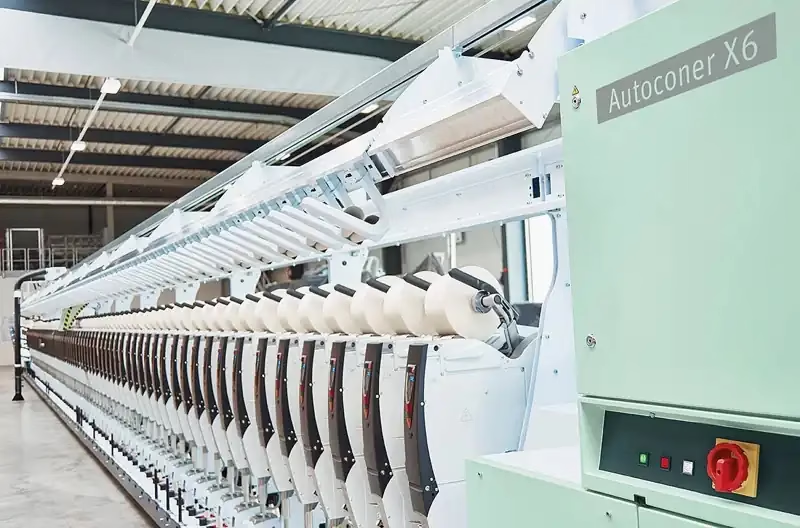
Saurer deals in ring spinning, rotor spinning, winding, and twisting machines. Key types include the Zinser 351 ring spinning machine and Autocoro 9 rotor spinning machine, alongside the Autoconer 6 winder.
Unique features include the Autocoro 9’s rotor speeds up to 180,000 RPM and take-off speeds of 300 m/min, surpassing competitors’ averages by 10-15%, enabling larger packages and reduced downtime. The Zinser 351’s FancyDraft allows customizable yarn effects, while CoWeMat ensures precise doffing. Saurer’s Eco-Drum-Drive in winders optimizes energy, cutting consumption by 25% versus standard models.
Against rivals like Rieter, Saurer’s individual spinning position technology and SynchroPiecing provide superior yarn quality control, ideal for sustainable textiles requiring minimal defects. Sustainability efforts focus on energy-efficient designs and recycled material compatibility, with machines supporting low-impact production. Saurer’s global service network and digital tools like the Saurer Customer Portal offer predictive maintenance, reducing waste.
In 2025, Saurer’s emphasis on automation aligns with Industry 4.0, making it a preferred choice for high-volume, eco-conscious mills.
3. Trützschler Group SE (Mönchengladbach, Germany)
Trützschler Group SE, dating back to 1888, is registered in Mönchengladbach, Germany, known for engineering excellence. Reach out at https://www.truetzschler.com/en/spinning/contact/contactdirections/truetzschler-group-se-moenchengladbach/.
Trützschler excels in spinning preparation machinery, including blowroom lines, carding machines, drawframes, and combers for cotton and synthetic fibers.
Special features include high-production cards with integrated digitalization for real-time optimization, reducing energy use by 20% compared to older models. Their drawframes feature precise sliver control, enhancing yarn uniformity.
Compared to others, Trützschler’s Industry 4.0 integration via My Mill software provides advanced analytics, outperforming competitors in data-driven efficiency. Sustainability is core, with machines designed for minimal waste and energy, supporting recycled fiber processing.
Trützschler’s global footprint ensures tailored solutions for sustainable textile needs in 2025.
4. Murata Machinery, Ltd. (Kyoto, Japan)
Murata Machinery, Ltd., founded in 1935, is based in Kyoto, Japan, innovating in automation. Contact: https://www.muratec.net/corp/support/.
Major machines: Vortex spinning systems and automatic winders like PROCESS CONER II QPRO Plus.
Vortex spinning is a standout, eliminating traditional frames for energy savings of up to 40% versus ring spinning. The STS ensures stable tension.
Versus competitors, Murata’s Vortex tech offers pilling-resistant yarns, ideal for sustainable apparel. Their focus on automation reduces labor, enhancing eco-efficiency.
In 2025, Murata leads in sustainable innovation for technical textiles.
5. Savio Macchine Tessili S.p.A. (Pordenone, Italy)
Savio Macchine Tessili S.p.A., established in 1911, is registered in Pordenone, Italy. Contact: https://saviospa.com/en/contact.
Types: Rotor, air-jet, twisting, and winding machines like FlexirotorS 3000.
Features: Dual-front design for flexibility, high-speed performance with minimal waste.
Compared to peers, Savio’s energy-efficient units reduce consumption by 15%, supporting sustainable operations.
6. Lakshmi Machine Works Limited (Coimbatore, India)
Lakshmi Machine Works Limited (LMW), started in 1962, is in Coimbatore, India. Contact: https://www.lmwglobal.com/contact-us.
Major: Ring spinning (LR60 series) and winders.
Features: Cost-effective with suction compact systems, reduced air consumption.
Vs competitors, LMW’s affordability and local support make it accessible for emerging markets, with energy savings of 10-15%.
Market Trends and Innovations in Spinning Machinery
In 2025, the spinning machinery market values USD 6.20 billion, with trends toward automation, sustainability, and digitalization. Innovations include AI for predictive maintenance and eco-friendly gear oils reducing energy by 10%.
Asia-Pacific dominates with 40% share, driven by China and India.
Challenges and Opportunities in the Spinning Machinery Market
Challenges: High costs, skilled labor shortages. Opportunities: Sustainable textiles growth, technical applications.
The Future of Spinning Machinery and Sustainable Textiles
Future focuses on circularity, AI integration, and bio-fibers. Leaders like Rieter will drive zero-waste production.
Conclusion
These top manufacturers advance sustainable textiles through innovation. For more, visit textileschool.com.
Citations
- Precedence Research. “Spinning Machinery Market Size to Hit USD 9.78 Billion by 2034.” precedenceresearch.com, 17 July 2025.
- DataIntelo. “Spinning Machinery Market Report | Global Forecast From 2025 To 2032.” dataintelo.com.
- Mordor Intelligence. “Spinning Market – Size, Share & Trends.” mordorintelligence.com, 6 Mar. 2025.
- Textile Learner. “Top 6 Spinning Machinery Manufacturers in the World.” textilelearner.net, 17 Oct. 2021.
- Rieter. “Sustainability and Yarn Recycling in the Spinning Mill.” rieter.com.