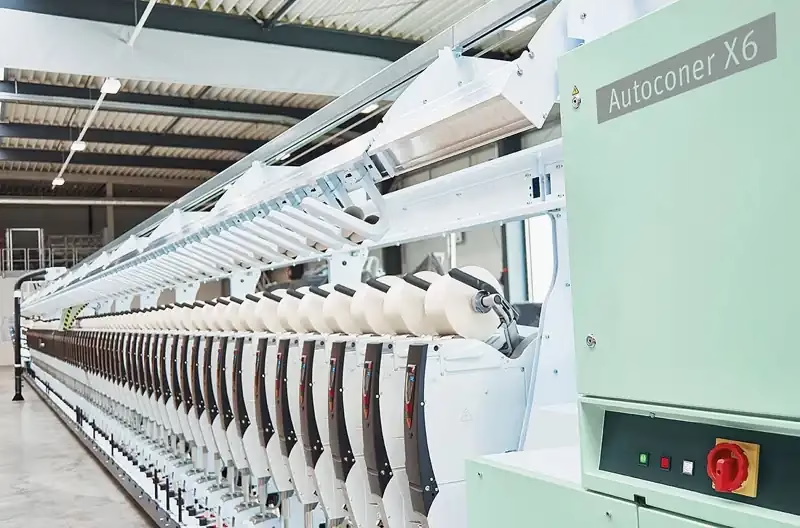
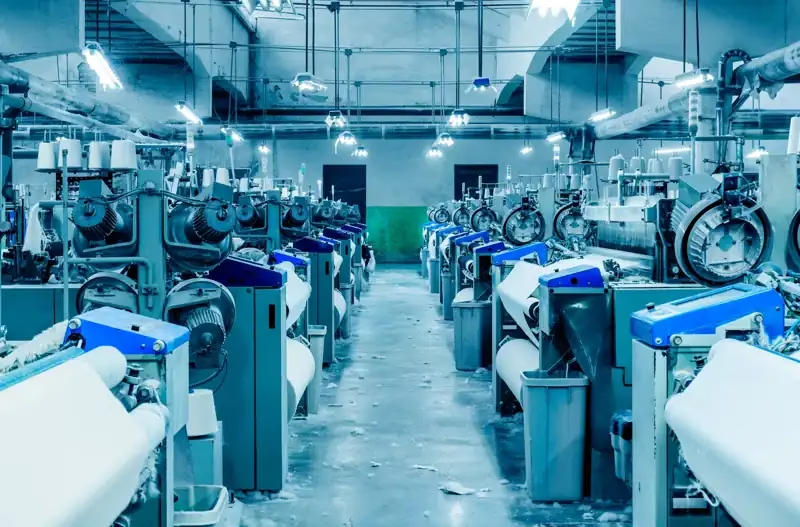
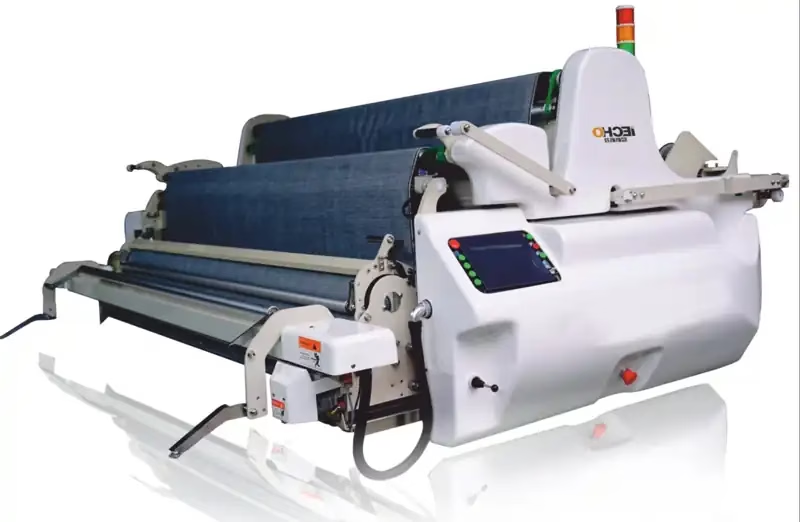
This article highlights the top eight nonwoven machinery manufacturers dominating the global industry in 2025, emphasizing their contributions to sustainable textile production. Companies like A.Celli Nonwovens (Italy), Andritz (Austria), Dilo Group (Germany), Autefa Solutions (Germany), Reifenhäuser Reicofil (Germany), Oerlikon Nonwoven (Germany), Truetzschler Nonwoven (Germany), and Campen Machinery (Denmark) lead with advanced machinery for spunbond, meltblown, needlepunch, and spunlace processes. These manufacturers integrate automation, energy-efficient technologies, and Industry 4.0 solutions to meet the rising demand for eco-friendly nonwovens. The global nonwoven machinery market, valued at USD 2.5 billion in 2023, is projected to reach USD 4.8 billion by 2032 at a CAGR of 7.2%. The article details major machine types, unique features, registered office countries, contact links, market trends, challenges, and future prospects for sustainable nonwoven production.
Introduction to Nonwoven Machinery in the Textile Industry
Nonwoven machinery is pivotal in producing nonwoven fabrics, which are engineered materials created by bonding or interlocking fibers without weaving or knitting. These fabrics are essential for applications in hygiene products (diapers, sanitary pads), medical supplies (masks, gowns), automotive textiles, and filtration systems. In 2025, the global textile market, valued at USD 1.5 trillion, sees a surge in demand for sustainable textiles, including biodegradable and recycled nonwovens, driven by consumer preferences and regulations like the EU’s Green Deal.
Nonwoven machinery encompasses technologies like spunbond (40% market share), meltblown (15%), needlepunch (20%), and spunlace (15%), each tailored to specific fabric properties. Manufacturers are adopting energy-efficient designs, automation, and digitalization to reduce environmental impact and enhance productivity. This article profiles the top eight nonwoven machinery manufacturers, detailing their major machine types, unique features, registered office countries, and contact information, while exploring their role in advancing sustainable textile production.
The Importance of Nonwoven Machinery in Sustainable Textile Production
Nonwoven machinery enables the production of lightweight, durable, and versatile fabrics, critical for sustainable textile applications. Modern machines reduce energy consumption by up to 30% and support eco-friendly materials like recycled polyester and bio-based fibers, aligning with circular economy principles. Features such as automated process controls and waste recycling systems minimize material loss, making nonwovens a key component of monetizable sustainable textiles.
The global demand for nonwovens, particularly in hygiene and medical sectors, is fueled by population growth and increased focus on health and sustainability. Nonwoven machinery manufacturers integrating Industry 4.0 technologies, such as IoT and AI, optimize production efficiency and quality, catering to industries like automotive (geotextiles) and filtration (air and water filters). This article examines how these manufacturers drive innovation in the nonwoven sector.
Top Nonwoven Machinery Manufacturers in 2025
1. A.Celli Nonwovens (Lucca, Italy)
Founded in 1945, A.Celli Nonwovens is headquartered in Lucca, Italy, specializing in advanced nonwoven machinery. Contact: https://www.acelli.it/en/contacts.
Major Machine Types: Spunbond, spunmelt, spunlace, and airlaid machinery; Master Roll Winders, Slitter Rewinders, F-Line lamination systems, Iridium flexographic printers.
Special Features: A.Celli’s E-Wind Winders and Slitter Rewinders offer precise tension control, reducing material waste by 15%. Their Cloud-based Industry 4.0 applications enable real-time monitoring, improving energy efficiency by 20%. The Smartlogistix brand provides modular automated packaging lines and AGVs (Automated Guided Vehicles) for efficient material handling, unique in the industry.
Competitive Edge: A.Celli’s integrated intralogistics solutions, including ASRS (Automated Storage and Retrieval Systems), surpass Andritz’s focus on production lines. Its machines support sustainable materials like PLA (polylactic acid) and recycled fibers, aligning with eco-friendly trends.
A.Celli’s innovation and sustainability focus make it a leader in 2025.
2. Andritz AG (Graz, Austria)
Established in 1852, Andritz is based in Graz, Austria, a global leader in nonwoven production lines. Contact: https://www.andritz.com/nonwoven-and-textile/en/contact.
Major Machine Types: Spunlace, needlepunch, air-through bonding, and wetlaid machinery; complete production lines.
Special Features: Andritz’s neXline spunlace systems achieve high-speed production (up to 25,000 tons/year), with energy-efficient hydroentanglement reducing water use by 30%. The Wetlace™ CP process combines wetlaid and spunlace technologies for flushable wipes, a unique offering for biodegradable nonwovens.
Competitive Edge: Andritz’s Wetlace™ technology outshines Dilo’s needlepunch focus, catering to eco-friendly hygiene products. Its global service network ensures 10% faster response times than competitors like Autefa.
Andritz’s versatility and sustainability drive its market dominance in 2025.
3. Dilo Group (Eberbach, Germany)
Founded in 1906, Dilo Group is headquartered in Eberbach, Germany, specializing in needlepunch technology. Contact: https://www.dilo.de/en/contact/.
Major Machine Types: Needlepunch lines, crosslappers, carding machines, opening and blending systems.
Special Features: Dilo’s HyperPunch technology achieves high-speed needling (up to 3,000 strokes/min), reducing energy use by 20%. Its DI-LOOP system creates loop-structured nonwovens for automotive applications, minimizing waste by 15%. The MicroPunch technology offers eco-friendly needlepunching for lightweight fabrics.
Competitive Edge: Dilo’s focus on needlepunch surpasses Reifenhäuser’s spunbond emphasis, with superior precision for technical textiles like geotextiles. Its machines support recycled fibers, enhancing sustainability.
Dilo’s engineering excellence ensures its leadership in 2025.
4. Autefa Solutions Germany GmbH (Friedberg, Germany)
Established in 1947, Autefa Solutions is based in Friedberg, Germany. Contact: https://www.autefa.com/en/contact.
Major Machine Types: Spunlace, needlepunch, thermal bonding, and airlaid machinery; complete nonwoven lines.
Special Features: Autefa’s Hydroentanglement Jetlace system optimizes water usage, saving 25% compared to traditional systems. Its V-Jet Futura technology enhances spunlace efficiency, producing flushable nonwovens with 20% less energy. The Square Drum Dryer improves thermal bonding uniformity.
Competitive Edge: Autefa’s focus on biodegradable nonwovens, like flushable wipes, gives it an edge over Oerlikon’s filtration focus. Its modular designs allow customization, unlike Truetzschler’s standardized systems.
Autefa’s sustainability innovations drive its market presence in 2025.
5. Reifenhäuser Reicofil GmbH & Co. KG (Troisdorf, Germany)
Founded in 1911, Reifenhäuser Reicofil is headquartered in Troisdorf, Germany. Contact: https://www.reicofil.com/en/contact.
Major Machine Types: Spunbond, meltblown, and composite (SMS) lines; RF5 technology platforms.
Special Features: The RF5 technology offers high-speed spunbond production (up to 1,200 m/min), with 25% energy savings via optimized extrusion. Reicofil’s meltblown lines produce ultra-fine fibers for filtration, supporting sustainable applications like reusable masks. Its SmartLine systems enhance automation.
Competitive Edge: Reicofil’s RF5 platform outperforms Campen’s mechanical systems in speed and efficiency, with a focus on sustainable filtration materials. Its global R&D centers ensure rapid innovation.
Reifenhäuser’s leadership in spunbond technology solidifies its position in 2025.
6. Oerlikon Nonwoven (Neumünster, Germany)
Oerlikon Nonwoven, part of Oerlikon Group founded in 1906, is based in Neumünster, Germany. Contact: https://www.oerlikon.com/nonwoven/en/contact/.
Major Machine Types: Spunbond, meltblown, airlaid, and spunmelt machinery; Phantom technology platforms.
Special Features: Oerlikon’s Phantom technology combines spunbond and meltblown for hybrid nonwovens, reducing material use by 15%. Its QSR (Quality Sized Right) systems optimize production for biodegradable materials, with 20% lower energy consumption. The PIA (Process Intelligent Automation) enhances real-time monitoring.
Competitive Edge: Oerlikon’s hybrid technology surpasses Truetzschler’s single-process focus, offering versatility for eco-friendly applications like medical nonwovens. Its global reach ensures robust support.
Oerlikon’s innovative solutions drive its market strength in 2025.
7. Truetzschler Nonwovens & Man-Made Fibers GmbH (Egelsbach, Germany)
Founded in 1888, Truetzschler is headquartered in Egelsbach, Germany, for its nonwoven division. Contact: https://www.truetzschler-nonwovens.de/en/contact/.
Major Machine Types: Spunlace, needlepunch, thermal bonding, and wetlaid machinery; carding and opening systems.
Special Features: Truetzschler’s Voith Paper Technology integration produces flushable nonwovens, saving 30% water in spunlace processes. Its My Mill software offers Industry 4.0 analytics, reducing energy use by 20%. The company’s carding systems ensure uniform fiber distribution for sustainable fabrics.
Competitive Edge: Truetzschler’s water-efficient spunlace systems outperform Autefa’s in eco-friendly applications, with a focus on biodegradable wipes. Its digital solutions enhance operational efficiency.
Truetzschler’s sustainability focus ensures its relevance in 2025.
8. Campen Machinery A/S (Rønde, Denmark)
Founded in 1947, Campen Machinery is based in Rønde, Denmark, known for customized solutions. Contact: https://www.campenmachinery.com/contact/.
Major Machine Types: Spunlace, airlaid, and needlepunch machinery; winding and cutting systems.
Special Features: Campen’s custom-built spunlace lines optimize water recycling, reducing consumption by 25%. Its airlaid systems produce lightweight nonwovens with 15% less energy. The company’s modular winders ensure precise roll handling, minimizing waste.
Competitive Edge: Campen’s tailored solutions give it an edge over Reicofil’s standardized lines, with a focus on small-to-medium-scale eco-friendly production. Its European manufacturing ensures quality.
Campen’s flexibility and sustainability focus enhance its market position in 2025.
Market Trends and Innovations in Nonwoven Machinery
The nonwoven machinery market, valued at USD 2.5 billion in 2023, is projected to reach USD 4.8 billion by 2032 at a CAGR of 7.2%. Key trends include:
- Sustainability: Energy-efficient machines and compatibility with biodegradable fibers reduce environmental impact.
- Automation and Industry 4.0: IoT and AI integration, as in A.Celli’s Cloud applications, enhance efficiency.
- Asia-Pacific Dominance: The region holds 40% market share, led by China and India.
- Medical and Hygiene Growth: Demand for masks, wipes, and medical nonwovens drives specialized machinery.
Challenges and Opportunities in the Nonwoven Machinery Market
Challenges: High initial costs and skilled labor shortages limit adoption, particularly for SMEs. Opportunities: Growing demand for sustainable nonwovens and technical applications offers expansion potential.
The Future of Nonwoven Machinery and Sustainable Textiles
The future emphasizes zero-waste production, AI-driven automation, and bio-based nonwovens. Leaders like Andritz and Oerlikon will drive circular textile innovations.
Conclusion
The top eight nonwoven machinery manufacturers advance sustainable textiles through innovative, eco-friendly technologies. Visit Textile School for more insights.
Citations
- Nonwovens Industry. “2025 Machinery & Equipment Review.” nonwovens-industry.com, 11 Aug. 2025.
- DataIntelo. “Non-Woven Fabric Machines Market Report | Global Forecast From 2025 To 2032.” dataintelo.com, 2025.
- Greycon. “Top 10 Nonwoven Producing Manufacturers.” greycon.com, 2024.
- AZX Nonwoven Machine. “Global Nonwovens Industry Development and Outlook Report (2010-2025).” azxnonwoven.net, 2025.
- DataInsightsMarket. “Exploring Regional Dynamics of Nonwoven Fabric Machines Market 2025-2033.” datainsightsmarket.com, 24 Jul. 2025.