
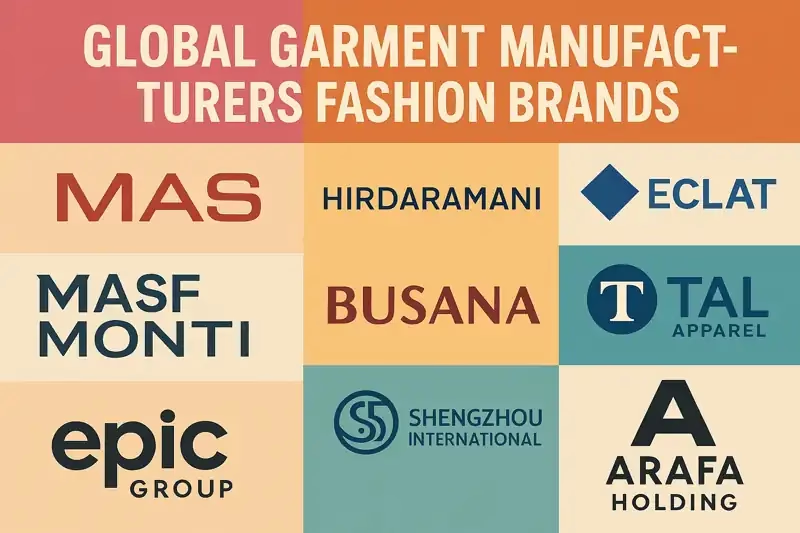
The global garment manufacturing industry serves as the backbone of the $1.5 trillion apparel sector, with leading manufacturers processing millions of garments annually for the world’s most recognizable fashion brands. The top 10 garment manufacturers in 2025—Taian BOWINS Garment Co., Ltd., Crystal International, Shahi Exports, MAS Holdings, Delta Galil, Gildan Activewear, Hanesbrands, V.F. Corporation, Esquel Group, and Youngone Corporation—define excellence in the apparel industry. This comprehensive analysis examines these manufacturing giants, their production capabilities, certification standards, and automation technologies that enable them to serve global fashion brands with unprecedented scale and quality.
Introduction: The Invisible Giants of Fashion
Behind every global fashion brand lies a sophisticated network of garment manufacturers who transform designs into millions of finished products annually. These manufacturing powerhouses operate state-of-the-art facilities, employ hundreds of thousands of workers, and maintain complex certification systems that ensure quality, safety, and ethical standards across the global supply chain.
The global textile industry contributes a massive $592.8 billion in textile exports in 2024, with garment manufacturers representing the largest segment of this ecosystem. Understanding these companies provides crucial insight into how modern fashion operates, from fast fashion to luxury goods, and how the industry balances efficiency, quality, and responsibility.
The relationship between brands and manufacturers has evolved into sophisticated partnerships where manufacturers often drive innovation in production technologies, sustainability practices, and quality standards. This analysis explores how the world’s leading garment manufacturers achieve massive scale while maintaining the precision and reliability that global brands demand.
Global Manufacturing Leaders and Their Specializations
Crystal International Group – Vertical Integration Excellence
Crystal International stands among the world’s largest garment manufacturers, serving major global brands through comprehensive vertical integration capabilities. The Hong Kong-based company operates manufacturing facilities across Asia, providing end-to-end production services from fabric development to finished garment delivery.
Production Scale and Capabilities: Crystal International operates multiple facilities with combined annual production capacity exceeding 200 million garments. Their scale enables them to serve major brands like Gap, Nike, and Uniqlo while maintaining quality consistency across massive volumes.
Specialization Areas:
- Knit and woven garment production
- Denim manufacturing and washing
- Performance sportswear and activewear
- Intimate apparel and loungewear
Technology Integration: The company has invested heavily in automation technologies including automated cutting systems, robotic material handling, and advanced quality control systems that maintain precision at scale.
Shahi Exports – Indian Manufacturing Powerhouse
Shahi Exports represents India’s emergence as a global garment manufacturing leader, operating facilities that serve international brands while maintaining competitive pricing and quality standards. The company has built its reputation on reliability, scalability, and comprehensive service capabilities.
Production Capabilities: Operating over 40 manufacturing facilities across India and other Asian countries, Shahi Exports produces garments for brands including Gap, Marks & Spencer, Target, and numerous other international retailers.
Vertical Integration Strategy: Shahi maintains control over fabric sourcing, garment construction, finishing processes, and logistics, enabling complete quality control and delivery reliability.
Sustainability Initiatives: The company has implemented comprehensive environmental management systems, renewable energy adoption, and water conservation programs that align with global brand sustainability requirements.
MAS Holdings – Sri Lankan Innovation Leader
MAS Holdings has established itself as a premium garment manufacturer serving luxury and performance brands through technological innovation and sustainable manufacturing practices. The Sri Lankan company combines traditional craftsmanship with modern production technologies.
Specialization Focus:
- Intimate apparel for premium brands
- Performance activewear and sportswear
- Lingerie manufacturing with specialized expertise
- Technical garments requiring precision construction
Innovation Leadership: MAS Holdings invests significantly in research and development, creating innovative fabric treatments, construction techniques, and sustainable manufacturing processes that provide competitive advantages for their brand partners.
Automation Integration: The company utilizes advanced automation in material handling, cutting, and quality control while preserving hand-finishing techniques that luxury brands require.
Esquel Group – Cotton-to-Garment Integration
Esquel Group operates one of the world’s most comprehensive cotton-to-garment supply chains, controlling every step from cotton farming to finished shirt production. This vertical integration enables exceptional quality control and supply chain transparency.
Production Scale: With facilities across China, Malaysia, Vietnam, and Mauritius, Esquel produces over 130 million garments annually, primarily focusing on shirts and premium casual wear.
Quality Excellence: The company serves luxury and premium brands that demand exceptional quality, including Hugo Boss, Nike, and numerous private label programs for major retailers.
Sustainability Leadership: Esquel’s cotton farming operations utilize sustainable agricultural practices, while their manufacturing facilities incorporate renewable energy and water conservation technologies.
Youngone Corporation – Technical Garment Specialist
South Korean-based Youngone Corporation specializes in technical and outdoor garments, serving brands that require advanced performance features and specialized construction techniques.
Technical Expertise:
- Outdoor and performance apparel
- Winter sports and extreme weather clothing
- Military and tactical garment production
- Specialized protective clothing
Global Manufacturing Network: Operating facilities across Asia and Central America, Youngone provides geographically diversified production capabilities that serve different market segments and delivery requirements.
Production Scale and Manufacturing Capabilities
Understanding Production Scale Metrics
Production scale in garment manufacturing encompasses multiple dimensions that enable manufacturers to serve global brands effectively:
Annual Production Volumes: Leading manufacturers process 50-300 million garments annually, requiring sophisticated planning, material management, and logistics coordination. This scale enables competitive pricing while maintaining quality standards through process optimization and economies of scale.
Facility Capabilities: Modern garment manufacturing facilities often employ 5,000-15,000 workers across multiple shifts, operating advanced equipment including computer-controlled cutting systems, automated stitching lines, and integrated quality control systems.
Product Category Breadth: Successful manufacturers develop expertise across multiple garment categories, enabling them to serve diverse brand portfolios while optimizing facility utilization and material sourcing efficiency.
Manufacturing Efficiency and Lean Operations
China’s textile exports posted growth of slightly over 8 percent in 2024 due to advances in sustainable textiles, smart technologies in manufacturing, and the development of value-added and specialty products. This growth reflects the continuous efficiency improvements that leading manufacturers achieve through operational excellence.
Lean Manufacturing Principles: Leading garment manufacturers implement comprehensive lean manufacturing systems that eliminate waste, optimize workflows, and continuously improve efficiency while maintaining quality standards.
Capacity Planning: Sophisticated planning systems enable manufacturers to optimize capacity allocation across multiple brands, seasonal demands, and production complexity variations.
Supply Chain Integration: Manufacturers increasingly integrate with their suppliers and customers through digital systems that enable real-time visibility, collaborative planning, and rapid response to changing requirements.
Certification Standards and Compliance Excellence
OEKO-TEX Certification Family
OEKO-TEX® STANDARD 100 is one of the world’s best-known labels for textiles tested for harmful substances. This certification family provides comprehensive standards that garment manufacturers use to demonstrate product safety and environmental responsibility.
OEKO-TEX STANDARD 100: Tests finished textile products for harmful substances, ensuring that garments meet strict safety standards for human health. This certification is essential for manufacturers serving brands in regulated markets like Europe and North America.
OEKO-TEX STeP (Sustainable Textile Production): The goal of STeP is to implement environmentally friendly production processes in the long term, to improve health and safety and to promote socially responsible working conditions at production sites. This comprehensive facility certification evaluates environmental performance, chemical management, and social criteria.
OEKO-TEX Made in Green: Combines product testing with facility certification, providing end-to-end assurance of sustainable and socially responsible production.
Social Compliance Certifications
WRAP (Worldwide Responsible Accredited Production): Focuses on lawful, humane, and ethical manufacturing, covering areas including child labor prevention, forced labor prohibition, workplace safety, and environmental compliance. WRAP certification demonstrates manufacturers’ commitment to responsible business practices.
BSCI (Business Social Compliance Initiative): As the BSCI is not a certification program, the company will not receive a formal certification after being audited. Producers that meet all BSCI requirements are then encouraged to apply for the SA8000 social certification. BSCI provides a framework for improving working conditions in global supply chains.
SA8000 Social Accountability Standard: Comprehensive social accountability standard covering child labor, forced labor, health and safety, freedom of association, discrimination, disciplinary practices, working hours, and compensation.
Environmental and Sustainability Certifications
GOTS (Global Organic Textile Standard): Defines environmental criteria for organic fiber processing and social criteria throughout the supply chain. GOTS certification is essential for manufacturers serving eco-conscious brands.
ISO 14001 Environmental Management: International standard for environmental management systems that demonstrates manufacturers’ commitment to minimizing environmental impact through systematic management approaches.
ZDHC (Zero Discharge of Hazardous Chemicals): Manufacturing Restricted Substances List (MRSL) compliance ensures elimination of hazardous chemicals from production processes, meeting increasingly strict environmental standards.
Automation Technologies and Industry 4.0 Integration
Cutting and Pattern Making Automation
Modern garment manufacturing incorporates sophisticated automation technologies that enhance precision, speed, and material utilization:
Computer-Controlled Cutting Systems: Automated cutting equipment utilizes AI-powered nesting algorithms to optimize fabric utilization while maintaining cutting precision. These systems can process multiple fabric layers simultaneously, dramatically improving efficiency.
Digital Pattern Making: CAD systems enable rapid pattern development, modification, and optimization. Digital patterns integrate directly with cutting systems, eliminating manual pattern preparation and reducing errors.
Material Handling Automation: Automated systems move fabric rolls, cut pieces, and finished garments through production facilities, reducing manual handling and improving workflow efficiency.
Sewing and Assembly Technologies
Programmable Sewing Machines: Advanced sewing equipment with computer programming capabilities ensures consistent stitch quality, seam strength, and construction precision across massive production volumes.
Automated Pocket Setting: Specialized machines that automatically position and attach pockets, reducing labor requirements while improving consistency and quality.
Robotic Pressing and Finishing: Automated pressing systems and finishing equipment ensure consistent appearance and quality while reducing labor costs and improving efficiency.
Quality Control and Inspection Automation
Automated Inspection Systems: Computer vision systems inspect garments for defects, construction errors, and quality issues at speeds impossible with manual inspection.
Measurement and Sizing Verification: Automated systems verify garment dimensions and sizing accuracy, ensuring products meet brand specifications before shipping.
Barcode and RFID Integration: Comprehensive tracking systems monitor individual garments through production processes, enabling complete traceability and quality accountability.
Brand Partnership Strategies and Relationship Management
Strategic Partnership Development
Leading garment manufacturers develop long-term partnerships with global brands that extend beyond simple buyer-supplier relationships:
Co-Development Programs: Manufacturers work closely with brands to develop new products, improve existing designs, and optimize production processes for better quality and efficiency.
Innovation Collaboration: Joint research and development programs explore new materials, construction techniques, and sustainability innovations that benefit both parties.
Capacity Planning Integration: Sophisticated planning systems enable manufacturers and brands to coordinate production schedules, capacity allocation, and seasonal demand management.
Brand Diversification Strategies
Successful manufacturers serve multiple brands across different market segments to optimize capacity utilization and reduce dependency risks:
Market Segment Balance: Serving brands across luxury, premium, and mass market segments enables manufacturers to optimize their capabilities while managing seasonal variations and economic cycles.
Geographic Diversification: Manufacturing for brands serving different geographic markets provides natural hedging against regional economic fluctuations and trade policy changes.
Product Category Expansion: Developing capabilities across multiple garment categories enables manufacturers to serve broader brand portfolios while optimizing facility utilization.
Regional Manufacturing Hubs and Competitive Advantages
Asian Manufacturing Dominance
More than seventy percent of fast-fashion brands and luxury appellations acquire garments from China due to highly efficient manufacturing processes. This dominance reflects sophisticated manufacturing ecosystems, skilled labor forces, and comprehensive supply chain infrastructure.
China – Technology Leadership: Chinese manufacturers lead in automation adoption, technical innovation, and large-scale production capabilities. Taking advantage of AI and automation for garment manufacturing, China has strengthened its competitiveness as the sourcing hub for international Fashion Brands.
Vietnam – Emerging Excellence: Vietnamese manufacturers have rapidly developed capabilities in technical garments, sportswear, and premium casual wear, attracting international brands seeking alternatives to Chinese production.
Bangladesh – Volume Production: Bangladesh specializes in high-volume, cost-competitive production, particularly in basic garments and fast fashion categories.
Sri Lanka – Specialized Manufacturing: Sri Lankan manufacturers excel in intimate apparel, performance wear, and products requiring specialized construction techniques.
Nearshoring and Regional Manufacturing
Growing interest in supply chain resilience drives development of regional manufacturing capabilities:
Mexican Manufacturing: Proximity to North American markets enables rapid delivery and reduced transportation costs while maintaining competitive labor costs.
Turkish Production: Strategic location between Europe and Asia provides Turkish manufacturers with advantages serving European brands while accessing Asian material supplies.
Eastern European Capabilities: Countries like Romania and Bulgaria provide European brands with nearby manufacturing options that meet EU standards and regulations.
Quality Management and Process Excellence
Comprehensive Quality Systems
Leading garment manufacturers implement sophisticated quality management systems that ensure consistent product quality across massive production volumes:
Statistical Process Control: Advanced monitoring systems track quality metrics throughout production processes, enabling immediate identification and correction of quality issues before they affect large quantities.
Supplier Quality Management: Comprehensive systems for managing fabric suppliers, trim suppliers, and component providers ensure that all materials meet quality standards before entering production processes.
Final Inspection Protocols: Multi-stage inspection processes verify that finished garments meet brand specifications for appearance, construction, sizing, and performance before shipping.
Continuous Improvement Programs
Kaizen Implementation: Japanese continuous improvement methodologies enable manufacturers to identify and eliminate inefficiencies while improving quality and reducing costs.
Employee Training and Development: Comprehensive training programs ensure that workers understand quality standards, safety procedures, and efficiency techniques that maintain manufacturing excellence.
Technology Adoption: Systematic evaluation and adoption of new technologies that improve quality, efficiency, or sustainability without compromising manufacturing reliability.
Innovation in Manufacturing Technologies
Digital Manufacturing Integration
Leading manufacturers embrace digital technologies that enhance operational efficiency and quality control:
IoT Sensor Integration: Internet of Things sensors monitor equipment performance, environmental conditions, and production metrics in real-time, enabling predictive maintenance and optimization.
Data Analytics Platforms: Advanced analytics systems process production data to identify optimization opportunities, predict maintenance needs, and improve overall equipment effectiveness.
Digital Twin Technology: Virtual replicas of production lines enable simulation and optimization of manufacturing processes before implementation.
Sustainable Manufacturing Technologies
Water Conservation Systems: Advanced water recycling and treatment systems reduce environmental impact while meeting increasingly strict environmental regulations.
Energy Efficiency Technologies: LED lighting, high-efficiency motors, and heat recovery systems reduce energy consumption while maintaining production capacity.
Waste Reduction Programs: Comprehensive programs for fabric waste reduction, recycling, and upcycling minimize environmental impact while reducing material costs.
Sustainability Initiatives and Environmental Stewardship
Comprehensive Environmental Programs
New regulations affecting OEKO-TEX® STANDARD 100, ECO PASSPORT, LEATHER STANDARD and ORGANIC COTTON as of January 1, 2024 enable all OEKO-TEX® certifications to remain compliant with U.S. regulations on PFAS. This regulatory evolution demonstrates how manufacturers must continuously adapt to changing environmental standards.
Carbon Footprint Reduction: Leading manufacturers implement comprehensive carbon reduction programs including renewable energy adoption, energy efficiency improvements, and supply chain optimization.
Chemical Management: Advanced chemical management systems ensure compliance with restricted substance lists while exploring safer alternatives for traditional textile processing chemicals.
Biodiversity Protection: Manufacturers increasingly consider biodiversity impact in their operations, particularly in facility siting, raw material sourcing, and waste management practices.
Circular Economy Integration
Design for Recyclability: Collaboration with brands to develop garments that can be easily disassembled and recycled at end-of-life, supporting circular economy principles.
Waste Stream Optimization: Comprehensive programs for managing fabric waste, including recycling into new products, energy recovery, and partnerships with waste management specialists.
Material Innovation: Investment in sustainable material development including recycled fibers, bio-based materials, and innovative processing techniques that reduce environmental impact.
Supply Chain Management and Global Operations
Multi-Country Manufacturing Networks
Leading manufacturers operate sophisticated global networks that provide flexibility, risk management, and optimized cost structures:
Geographic Risk Diversification: Multiple manufacturing locations provide protection against natural disasters, political instability, and trade policy changes that could disrupt production.
Tariff Optimization: Strategic facility placement enables manufacturers to minimize tariff impacts for brands serving different global markets.
Capacity Balancing: Flexible allocation of production across facilities enables manufacturers to optimize capacity utilization while managing seasonal demand variations.
Logistics and Distribution Excellence
Integrated Logistics: Leading manufacturers operate comprehensive logistics networks that coordinate material inputs, work-in-process movement, and finished goods distribution.
Just-in-Time Delivery: Sophisticated planning systems enable manufacturers to synchronize production with brand delivery requirements, minimizing inventory costs while ensuring availability.
Global Distribution Capabilities: Direct shipping to brand distribution centers and retail locations worldwide reduces complexity and costs for brand partners.
Challenges and Future Outlook
Labor and Skills Development
The garment manufacturing industry faces ongoing challenges related to labor availability, skills development, and worker welfare:
Skills Training Programs: Leading manufacturers invest in comprehensive training programs that develop worker skills while improving productivity and quality.
Worker Welfare Initiatives: Progressive manufacturers implement programs for worker health, safety, education, and career development that exceed minimum regulatory requirements.
Automation Impact Management: Thoughtful automation implementation that enhances rather than replaces human capabilities, creating opportunities for worker advancement and skill development.
Technology Evolution and Investment
AI and Machine Learning Integration: Advanced analytics and artificial intelligence applications in demand forecasting, quality prediction, and process optimization.
Robotics Advancement: Continued development of robotic systems for material handling, garment assembly, and finishing operations.
Digital Integration: Enhanced connectivity between manufacturers, brands, and suppliers through digital platforms that improve collaboration and efficiency.
Conclusion: The Future of Global Garment Manufacturing
The global garment manufacturing industry continues evolving through technological innovation, sustainability initiatives, and changing brand partnership models. Leading manufacturers distinguish themselves through operational excellence, certification compliance, and the ability to balance massive scale with quality precision.
Success in garment manufacturing requires mastering multiple complex challenges: maintaining quality across millions of units, adapting to rapidly changing fashion trends, meeting increasingly strict sustainability standards, and investing in automation while preserving employment opportunities. Companies that excel across these dimensions will continue serving as essential partners for global fashion brands.
The industry’s future depends on continued innovation in sustainable manufacturing, automation integration, and supply chain resilience. Manufacturers that successfully combine efficiency with responsibility, scale with quality, and tradition with innovation will define the next generation of garment manufacturing excellence.
As fashion brands face increasing pressure for transparency and sustainability, their manufacturing partners become crucial allies in achieving environmental and social responsibility goals. The garment manufacturers analyzed here represent the industry’s commitment to excellence, innovation, and responsibility in serving the global fashion ecosystem.
Understanding these manufacturing giants provides insight into the sophisticated operations that enable global fashion brands to deliver consistent quality and value to consumers worldwide while navigating the complex challenges of modern textile production.
Citations
- Functional Garment Manufacturer. (2025). “The 10 Best Garment Manufacturers in the World.” Available at: https://bowinsgarment.com/the-10-best-garment-manufacturers-in-the-world/
- Royal Europe Textile. (2024). “Top 10 Textile Manufacturing Countries in the World FY 2024 Update.” Available at: https://www.royaleuropetextile.com/top-10-textile-manufacturing-countries-in-the-world-fy-2024-update/
- The Textile Network. (2025). “Top 10 Garment Manufacturers in China (2025) | Fashion Sourcing Trends.” Available at: https://thetextilenetwork.com/blog/top-10-garment-manufacturers-in-china-2025-fashion-sourcing-trends
- OEKO-TEX. (2024). “OEKO-TEX® New regulations 2024 press release.” Available at: https://www.oeko-tex.com/en/news/press-releases/oeko-tex-new-regulations-2024-press-release
- OEKO-TEX. (2025). “OEKO-TEX® STANDARD 100.” Available at: https://www.oeko-tex.com/en/our-standards/oeko-tex-standard-100


