

Resources & General
Reference hub covering glossaries, standards, sourcing directories, cost calculators, and foundational explainers. It helps students, buyers, and engineers get oriented fast with neutral, fact-checked primers and links to deeper modules across the site. This section explains practical decision criteria, typical test methods, and failure modes that matter in real production. Readers get checklists, calculation steps, and case examples connecting specifications to cost, reliability, and compliance. Links map core concepts to upstream inputs and downstream processes so choices remain consistent across sourcing, manufacturing, and end-use performance. Each article includes definitions, diagrams where helpful, and plain-language notes to help newcomers ramp quickly while giving experienced professionals the depth needed to troubleshoot and optimize. Standards references are cited with context, and whenever trade-offs exist, we make them explicit so you can defend decisions.

Manmade Fiber
Fibres have traditionally been used in all cultures of the world to meet basic requirements of clothing, storage, building material, and for items of daily use such as ropes and fishing nets.
Article

Resources & General
Transformation of textile materials from fibers passing through various processes and enhancements and become a product for the end user explained briefly.
Article
Resources & General
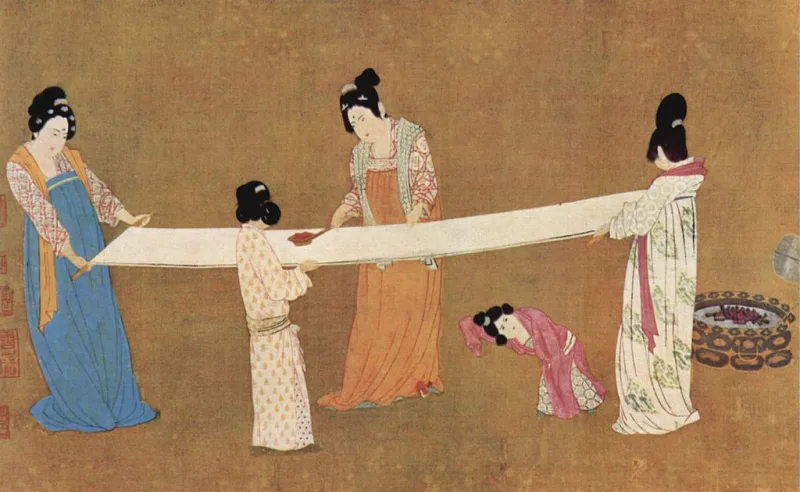
History and origin of fabrics, the introduction of various textile fibers to mankind each from natural and man-made categories.
Article

Fabric
Different fabrics are used differently. They are specially made to fulfill certain purposes.
Article
Manmade Fiber
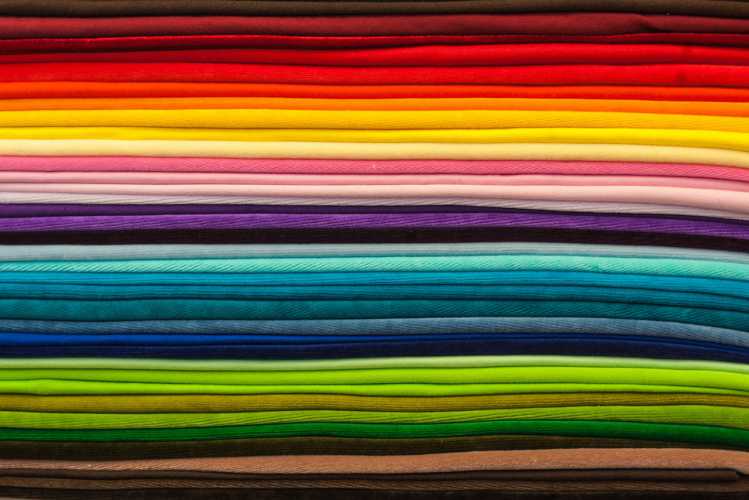
Fabrics are classified by construction (woven, knitted, nonwoven) and by fibre. An A to Z of 88 fabric types with pictures, fibres, weights and uses.
Article
Resources & General
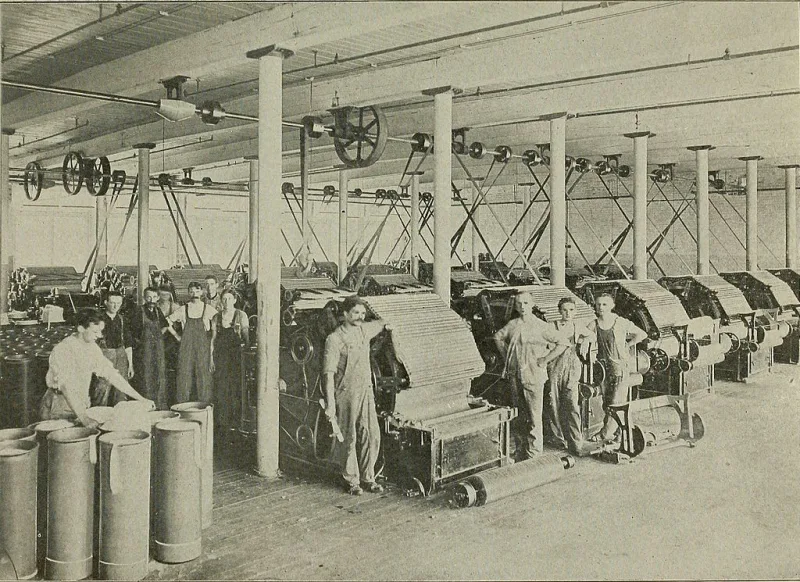
The textile industry has been a cornerstone of human civilization for centuries, weaving together threads of history, culture, and innovation. From the earliest hand-spun fibers to the mass production of synthetic materials, textiles have evolved in tandem with human progress. Today, we stand on the brink of another transformative era – the Textile Revolution. In this comprehensive article, we will explore the key drivers, innovations, and impacts of this revolution, which is reshaping the textile industry in ways that were once unimaginable.
Article

Finishing
Finishing encompasses chemical or mechanical treatments performed on fibre, yarn, or fabric to improve appearance, texture, or performance. Some of the fabric finishing methods are-Brushing, Shearing, Pressing, Raising, Beetling, Calendaring, Folding, etc. Finishing can be carried out in 3 stages i.e. Pre-treatment, coloration and Finishing.
Article

Resources & General
Textile materials are prone to dangers such as moisture, heat, mildew, fungus, insects and rodents. Therefore storing the textile materials in the right store and condition is important.
Article

Fiber
This article provides an in-depth exploration of mathematical formulas critical to the textile industry, focusing on environmental impact, mechanical properties, production efficiency, and material characteristics. By presenting precise equations for carbon footprint, tensile strength, fiber yield, moisture regain, and other key metrics, this work aims to equip researchers, engineers, and industry professionals with tools to optimize textile processes and enhance sustainability. Each formula is accompanied by detailed explanations, practical applications, and considerations for real-world implementation.
Article
Every record in these registers was sent in by somebody. Submissions are reviewed before they are published.
1,496 machines in the register.Tell us about a missing one 306 event series in the register.Submit a trade fair or conference 3,038 standards tracked in the register.Get the changes by email each week