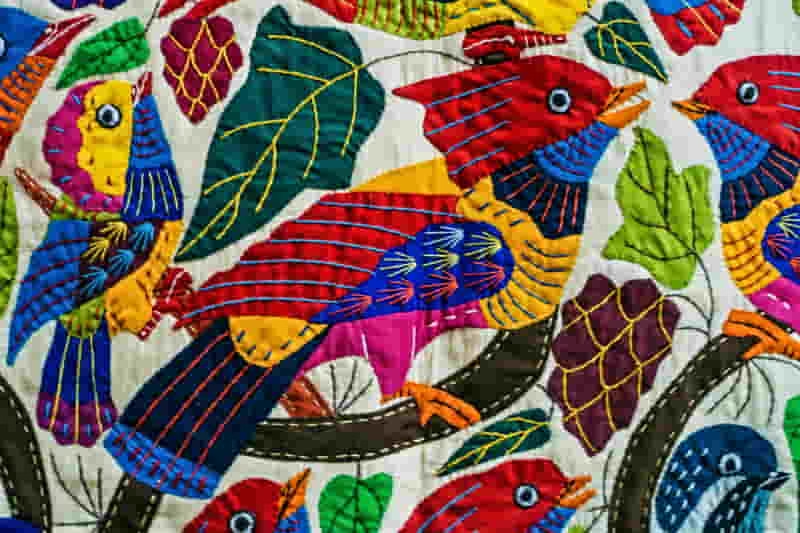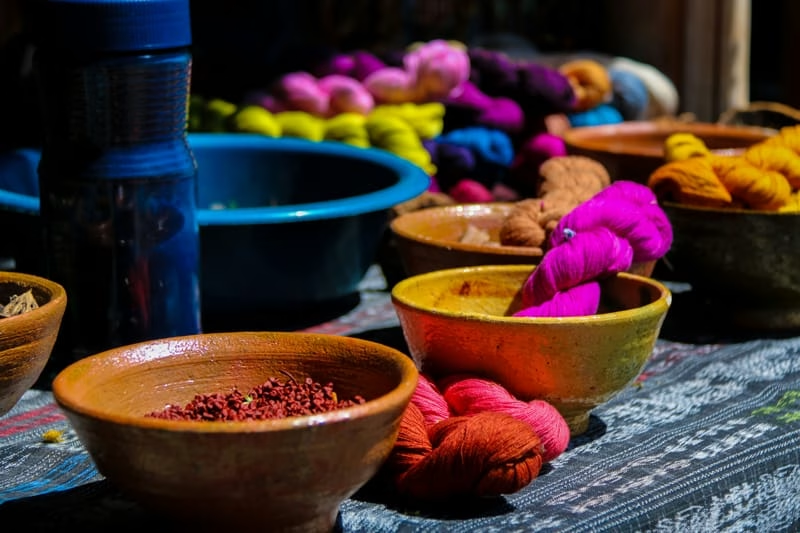
This article explores innovative textile dyeing methods, including waterless technologies, digital printing, microbial dyeing, hybrid pigments, and recycled dye systems, which reduce environmental impact and enhance efficiency. It highlights global and regional initiatives, such as India’s sustainable dyeing practices, and addresses challenges like scalability and cost. The article emphasizes how these innovations align with circular economy principles to create a sustainable textile industry.
Textile dyeing, a critical stage in textile manufacturing, is one of the most resource-intensive and polluting processes in the fashion industry, contributing to significant water use, chemical discharge, and energy consumption. The United Nations Environment Programme estimates that the textile industry accounts for 10% of global carbon emissions and substantial water pollution, much of which stems from dyeing processes (www.unep.org/news-and-stories/story/tackling-textile-industrys-environmental-footprint). As sustainability becomes a priority, innovative dyeing technologies are transforming the industry by reducing environmental impact, improving efficiency, and expanding creative possibilities. This article provides a comprehensive analysis of sustainable dyeing innovations, integrating global advancements, regional efforts like India’s initiatives, and addressing challenges and future directions for a greener textile industry.
The Environmental Impact of Traditional Dyeing
Traditional textile dyeing is notoriously resource-intensive, consuming vast amounts of water, energy, and chemicals. Dyeing a single kilogram of fabric can require 100–150 liters of water, generating wastewater laden with toxic dyes, salts, and heavy metals that pollute rivers and groundwater. The Ellen MacArthur Foundation notes that the industry’s linear model exacerbates these issues, with less than 1% of textiles recycled into new garments, amplifying waste from dyeing processes (www.ellenmacarthurfoundation.org/a-new-textiles-economy). Conventional methods also rely on high temperatures and synthetic chemicals, contributing to greenhouse gas emissions and environmental degradation. Sustainable dyeing innovations address these challenges by minimizing resource use, reducing pollution, and aligning with circular economy principles.
Waterless Dyeing Technologies
Waterless dyeing technologies are revolutionizing textile production by eliminating the need for water in dyeing processes. Supercritical CO₂ dyeing, pioneered by companies like DyeCoo, uses pressurized carbon dioxide to dissolve and deliver dyes into fabrics, achieving vibrant colors without wastewater. This closed-loop system recycles CO₂, reducing energy use by up to 50% and eliminating chemical runoff (www.dyecoo.com). Foam dyeing, another waterless innovation, applies dyes in a stable foam form, cutting water consumption by up to 90% and enhancing color penetration. Companies like Alchemie Technology are scaling foam dyeing for industrial use, offering a low-impact alternative for synthetic and natural fibers (www.alchemietechnology.com). These technologies significantly reduce the environmental footprint of dyeing while maintaining quality.
Digital Textile Printing
Digital textile printing is transforming dyeing with its precision and sustainability. Using inkjet technology, it applies dyes directly onto fabrics, minimizing water, energy, and waste compared to traditional screen printing. Biodegradable inks and low-temperature fixation processes further enhance its eco-friendliness, making it ideal for small-batch and customized production. Digital printing reduces dye waste by up to 95% and supports on-demand manufacturing, aligning with slow fashion principles. Brands like Kornit Digital are leading the adoption of digital printing, offering scalable solutions for sustainable textile production (www.kornit.com). While initial equipment costs are high, the long-term savings in resources and flexibility make it a compelling option.
Biological and Microbial Dyeing
Biological and microbial dyeing represents a cutting-edge approach to sustainable color creation. Companies like Colorifix engineer bacteria to produce and fix dyes directly onto textiles, eliminating the need for water-intensive processes and harsh chemicals. These bio-based dyes are derived from natural sources, offering vibrant, long-lasting colors with minimal environmental impact (www.colorifix.com). Microbial dyeing reduces water use by up to 80% and avoids synthetic chemicals, making it a game-changer for eco-friendly fashion. While still in early stages, this technology is gaining traction, particularly for natural fibers like cotton and hemp, and holds promise for scalable, sustainable dyeing.
Hybrid Pigments and Nano-Engineered Dyes
Hybrid pigments and nano-engineered dyes are enhancing dyeing efficiency by improving dye uptake and colorfastness. These innovations allow for lower dye concentrations, reducing chemical runoff and environmental pollution. Nano-engineered dyes, with their smaller particle sizes, penetrate fabrics more effectively, improving color durability and reducing unfixed dye waste. Reactive dyes with advanced bonding capabilities further minimize wastewater by ensuring dyes adhere tightly to fibers. Companies like Archroma are developing eco-friendly reactive dyes that cut chemical use by up to 50% (www.archroma.com). These advancements support sustainable dyeing by reducing resource consumption and pollution while maintaining high-quality results.
Recycled Dye Systems
Recycled dye systems, such as Recycrom, convert textile waste into pigment powders, creating a closed-loop dyeing process. By repurposing pre-consumer scraps and post-consumer garments, these systems reduce landfill waste and offer a unique aesthetic with muted, earthy tones. Recycrom’s pigments can be applied to various fibers, providing a sustainable alternative to traditional dyes (www.recycrom.com). In India, initiatives like Saahas Zero Waste are exploring similar recycling methods, transforming textile waste into usable materials (saahaszerowaste.com/waste-types/textile-cloth-waste-management). Recycled dye systems align with circular economy principles, minimizing waste and promoting resource efficiency.
Circular Economy and Sustainable Dyeing
Sustainable dyeing technologies are integral to the circular economy, which prioritizes keeping materials in use and minimizing waste. Waterless and low-impact dyeing methods reduce resource consumption, while recycled dye systems repurpose waste into new products. Take-back programs, such as those by Patagonia and Eileen Fisher, complement these technologies by ensuring garments are recycled or upcycled, reducing the need for virgin dyes (www.patagonia.com/stories/worn-wear; www.eileenfisher.com/renew). Zero-waste design, as practiced by designers like Zero Waste Daniel, optimizes fabric use to minimize dyeing-related waste (zerowastedaniel.com). These strategies create a closed-loop system that enhances the sustainability of textile dyeing.
Regional Initiatives: India’s Sustainable Dyeing Efforts
India, a global textile hub, is embracing sustainable dyeing to address environmental challenges. In the Garo Hills, waste-to-wealth programs repurpose agricultural byproducts like banana and pineapple fibers into textiles, reducing reliance on water-intensive dyeing processes (www.nesfas.org). The National Technical Textiles Mission promotes low-impact dyeing technologies, encouraging manufacturers to adopt waterless and digital printing systems (texmin.nic.in). Large-scale companies like Aditya Birla Fashion and Retail are integrating sustainable dyeing into their supply chains, supported by partnerships with development agencies. These initiatives position India as a leader in eco-friendly textile production, combining traditional craftsmanship with modern innovation.
Policy Frameworks and Industry Standards
Policy frameworks are critical for scaling sustainable dyeing practices. Extended Producer Responsibility (EPR) schemes, such as those in the European Union’s Strategy for Sustainable and Circular Textiles, hold manufacturers accountable for reducing environmental impact, including dyeing processes (ec.europa.eu/environment/strategy/textiles-strategy_en). In India, the Solid Waste Management Rules 2016 promote wastewater management and recycling, supporting sustainable dyeing (cpcb.nic.in/solid-waste-management-rules-2016). Certifications like the Global Organic Textile Standard (GOTS) ensure that dyeing processes meet environmental and ethical standards, fostering consumer trust (www.global-standard.org). Industry standards and transparency, as practiced by brands like Reformation, drive adoption of eco-friendly dyeing (www.thereformation.com/pages/sustainability).
Challenges to Sustainable Dyeing
Sustainable dyeing faces several challenges. High initial costs for technologies like supercritical CO₂ dyeing and digital printing can deter adoption, particularly for small manufacturers. Infrastructure gaps, especially in developing regions, limit access to advanced equipment and wastewater treatment facilities. Regulatory disparities across countries complicate global adoption, with regions like the EU advancing faster than others. Consumer awareness is also a barrier, as many prioritize affordability over sustainability, sustaining demand for conventionally dyed fast fashion garments. Addressing these challenges requires investment, education, and policy support.
The Role of Consumers and Brands
Consumers play a pivotal role in driving sustainable dyeing. By supporting brands that use eco-friendly dyeing methods, choosing second-hand platforms like ThredUp, or embracing repair services like Nudie Jeans’, consumers can reduce demand for high-impact textiles (www.thredup.com; www.nudiejeans.com/sustainability/repair). Rental platforms like Rent the Runway offer access to sustainably dyed garments, promoting circular consumption (www.renttherunway.com). Campaigns like Fashion Revolution’s “Who Made My Clothes?” raise awareness about sustainable practices, encouraging accountability (www.fashionrevolution.org).
Brands must lead by investing in low-impact dyeing technologies and transparent supply chains. Collaborations with organizations like the Sustainable Apparel Coalition, which developed the Higg Index, help brands measure and reduce their environmental impact (apparelcoalition.org/higg-index). Companies like People Tree set benchmarks by prioritizing eco-friendly dyes and ethical production (www.peopletree.co.uk).
Innovations Supporting Sustainable Dyeing
Emerging technologies are enhancing sustainable dyeing. AI-driven systems, like those from Greyparrot, improve textile sorting for recycling, ensuring eco-friendly dyes are reused effectively (greyparrot.ai). Enzymatic dyeing processes, which use biological agents to fix colors, are gaining traction for their low environmental impact. 3D printing technologies enable precise dye application, reducing waste in customized production. These innovations, combined with sustainable fibers like organic cotton and hemp, create a synergy that amplifies the environmental benefits of eco-friendly dyeing.
The Future of Textile Dyeing
The future of textile dyeing lies in continued innovation and collaboration. Advances in microbial and enzymatic dyeing promise scalable, low-impact solutions, while waterless technologies like supercritical CO₂ dyeing are becoming more accessible. Policy interventions, such as EPR and incentives for sustainable practices, will accelerate adoption. Consumer demand, particularly among Gen Z and Millennials, is driving growth in sustainable models like resale and rental, encouraging brands to prioritize eco-friendly dyeing. Collaborative efforts among brands, policymakers, and consumers will shape a future where sustainable dyeing is the industry standard, reducing environmental harm and promoting circularity.
Conclusion
Sustainable textile dyeing is transforming the fashion industry by reducing water use, chemical discharge, and energy consumption. Innovations like waterless dyeing, digital printing, microbial dyes, hybrid pigments, and recycled dye systems offer practical solutions for eco-friendly production. Regional initiatives, such as India’s waste-to-wealth programs, and global policies like EPR are driving systemic change. Despite challenges like cost and infrastructure gaps, collaboration, innovation, and consumer engagement provide a path toward a sustainable dyeing future. By embracing these technologies, the textile industry can create vibrant, eco-friendly garments that respect both people and the planet.
Citations
- United Nations Environment Programme. “Tackling the Textile Industry’s Environmental Footprint.” UNEP, www.unep.org/news-and-stories/story/tackling-textile-industrys-environmental-footprint. Accessed 18 July 2025.
- Ellen MacArthur Foundation. “A New Textiles Economy: Redesigning Fashion’s Future.” Ellen MacArthur Foundation, www.ellenmacarthurfoundation.org/a-new-textiles-economy. Accessed 18 July 2025.
- DyeCoo. “Waterless Dyeing Technology.” DyeCoo, www.dyecoo.com/. Accessed 18 July 2025.
- Alchemie Technology. “Sustainable Dyeing Solutions.” Alchemie Technology, www.alchemietechnology.com/. Accessed 18 July 2025.
- Kornit Digital. “Digital Textile Printing.” Kornit Digital, www.kornit.com/. Accessed 18 July 2025.
- Colorifix. “Microbial Dyeing Technology.” Colorifix, www.colorifix.com/. Accessed 18 July 2025.
- Archroma. “Eco-Friendly Dyes.” Archroma, www.archroma.com/. Accessed 18 July 2025.
- Recycrom. “Recycled Dye Systems.” Recycrom, www.recycrom.com/. Accessed 18 July 2025.
- Saahas Zero Waste. “Textile and Cloth Waste Management.” Saahas Zero Waste, saahaszerowaste.com/waste-types/textile-cloth-waste-management/. Accessed 18 July 2025.
- Patagonia. “Worn Wear: Repair and Reuse.” Patagonia, www.patagonia.com/stories/worn-wear/. Accessed 18 July 2025.
- Eileen Fisher. “Renew: Circular Design.” Eileen Fisher, www.eileenfisher.com/renew. Accessed 18 July 2025.
- Zero Waste Daniel. “Zero Waste Fashion.” Zero Waste Daniel, zerowastedaniel.com/. Accessed 18 July 2025.
- North East Slow Fashion Network. “Sustainable Textiles in India.” NESFAS, www.nesfas.org/. Accessed 18 July 2025.
- Ministry of Textiles, Government of India. “National Technical Textiles Mission.” Texmin, texmin.nic.in/. Accessed 18 July 2025.
- European Commission. “EU Strategy for Sustainable and Circular Textiles.” European Commission, ec.europa.eu/environment/strategy/textiles-strategy_en. Accessed 18 July 2025.
- Central Pollution Control Board. “Solid Waste Management Rules 2016.” CPCB, cpcb.nic.in/solid-waste-management-rules-2016/. Accessed 18 July 2025.
- Global Organic Textile Standard. “GOTS: The Leading Organic Textile Standard.” GOTS, www.global-standard.org/. Accessed 18 July 2025.
- Reformation. “Sustainability at Reformation.” Reformation, www.thereformation.com/pages/sustainability. Accessed 18 July 2025.
- ThredUp. “Secondhand Fashion Marketplace.” ThredUp, www.thredup.com/. Accessed 18 July 2025.
- Rent the Runway. “Fashion Rental for Sustainability.” Rent the Runway, www.renttherunway.com/. Accessed 18 July 2025.
- Fashion Revolution. “Who Made My Clothes?” Fashion Revolution, www.fashionrevolution.org/. Accessed 18 July 2025.
- Sustainable Apparel Coalition. “Higg Index.” Sustainable Apparel Coalition, apparelcoalition.org/higg-index/. Accessed 18 July 2025.
- People Tree. “Sustainable Fashion with Organic Cotton.” People Tree, www.peopletree.co.uk/. Accessed 18 July 2025.
- Nudie Jeans. “Sustainability: Repair Program.” Nudie Jeans, www.nudiejeans.com/sustainability/repair. Accessed 18 July 2025.
- Greyparrot. “AI-Driven Waste Sorting Solutions.” Greyparrot, greyparrot.ai/. Accessed 18 July 2025.
- Carbios. “Enzymatic Recycling Technology.” Carbios, www.carbios.com/. Accessed 18 July 2025.