Digital textile printing (DTP) is transforming the textile industry by enabling sustainable, customizable, and efficient production, reducing the sector’s 10% share of global carbon emissions and 20% of industrial wastewater. This article explores advancements in DTP technologies like inkjet, dye-sublimation, and direct-to-film (DTF), their integration with AI and automation, and their synergy with eco-friendly materials like bamboo textiles. Supported by case studies of brands like Kornit Digital and Epson, it covers benefits, challenges, and future trends, including connections to durability testing like salt spray tests, highlighting DTP’s role in advancing zero-waste and circular economy goals.
Introduction to Digital Textile Printing Advancements
The textile industry, responsible for 92 million tons of waste annually and significant environmental impact, is undergoing a revolution with digital textile printing (DTP). Unlike traditional screen printing, which uses 35–60 cc of ink per meter and generates substantial water waste, DTP employs inkjet technology to apply precise designs, using only 6–9 cc of ink per meter. Advancements in printheads, inks, and automation have made DTP faster, more sustainable, and versatile, catering to fashion, home decor, and smart textiles. With the global DTP market projected to reach $19.92 billion by 2034 at a 12.75% CAGR, this article explores how these innovations drive sustainability, customization, and efficiency, integrating with materials like bamboo textiles to support a circular economy.
Understanding Digital Textile Printing
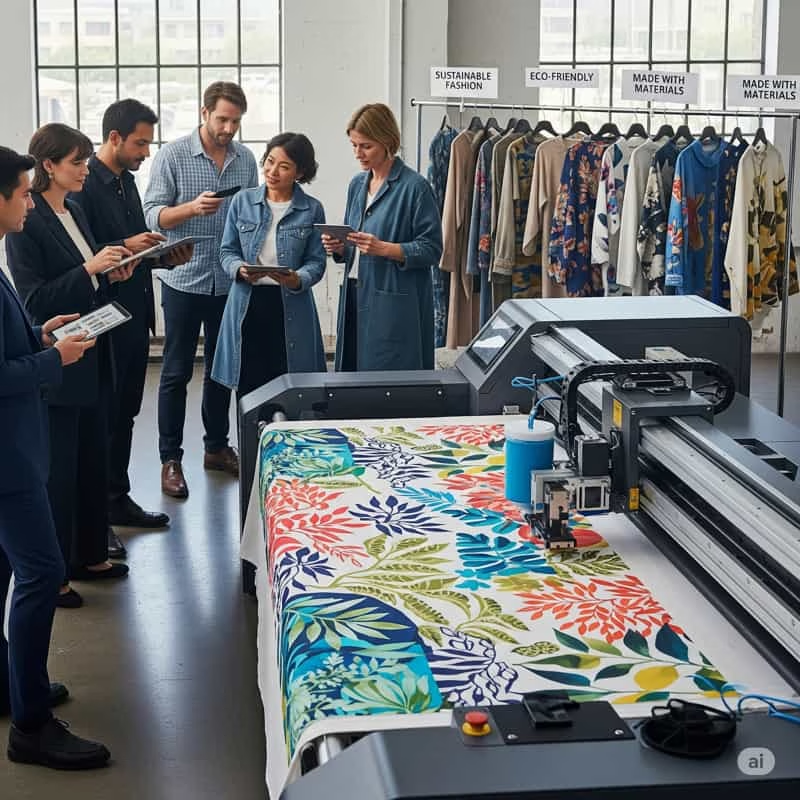
Digital textile printing uses inkjet-based methods to transfer designs directly onto fabrics, eliminating the need for screens or plates required in traditional rotary printing. Key techniques include direct-to-garment (DTG), direct-to-fabric (DTF), and dye-sublimation, which use CMYK and extended gamut inks (e.g., orange, blue, green) for vibrant, durable prints. Advancements in printheads (e.g., Kyocera’s industrial models), eco-friendly inks like Sun Chemical’s Xennia Amethyst Evo, and AI-driven software enhance precision and reduce waste. DTP’s versatility supports diverse substrates like cotton, polyester, and bamboo, aligning with zero-waste goals and enabling applications from custom apparel to technical textiles.
The Need for Digital Textile Printing Advancements
Traditional textile printing consumes vast resources, with rotary screen printing requiring over 5,000 square feet of factory space and producing significant effluent. DTP reduces this footprint to under 400 square feet and cuts water use by up to 95%, addressing the industry’s 20% contribution to industrial wastewater. Consumer demand for personalization (78% prefer customized products) and regulations like the EU’s Circular Economy Action Plan drive DTP adoption. By enabling on-demand production and reducing overstock, DTP supports sustainable manufacturing and aligns with the $1.05 trillion sustainable packaging market’s growth trajectory.
Key Advancements in Digital Textile Printing
High-Speed Inkjet Printing
Modern inkjet printers, like HPRT’s DA186T Plus, achieve speeds of 1080 m²/hour using Kyocera printheads, enabling large-scale production while maintaining quality. These systems reduce production cycles, making DTP competitive with traditional methods for bulk orders.
Eco-Friendly Inks
Innovations like Sun Chemical’s reactive inks and Kornit’s NeoPigment™ Robusto reduce dye washout by 50%, minimizing effluent. Pigment inks, used in D.gen’s Artrix H8, eliminate pre- and post-treatments, cutting water and energy use by 80%.
Direct-to-Film (DTF) and UV DTF
DTF and UV DTF technologies, supported by Epson and Roland, allow heat-free printing on diverse substrates, including non-textiles, expanding applications to signage and accessories with vibrant neon fluorescent inks.
Automation and AI Integration
AI-driven design software and automation, as seen in Kornit’s Presto, streamline workflows, predict errors, and optimize ink use. IoT-enabled systems monitor real-time performance, reducing waste by 50% and enhancing scalability.
Single-Pass Printing
Single-pass printers, like those from Durst and SPGPrints, support high-volume printing on cotton, silk, and blends, using less ink and water, aligning with sustainability goals and enabling vibrant, durable designs.
Applications of Digital Textile Printing
Fashion and Apparel
DTP enables custom designs for T-shirts, dresses, and sportswear, as seen in Kornit Digital’s Atlas MAX, supporting small-batch production and reducing overstock by 30%.
Home Decor and Interiors
High-resolution DTP produces intricate patterns for upholstery and curtains, with EFI Reggiani’s printers catering to vibrant, durable home textiles.
Smart Textiles
DTP integrates conductive inks for wearable tech, like health-monitoring fabrics, enabling innovations in healthcare and fitness markets.
Signage and Banners
Dye-sublimation DTP, used by Procedes Group, creates vibrant, weather-resistant flags and banners, replacing PVC-based signage with eco-friendly fabrics.
Technical Textiles
DTP supports automotive and industrial textiles, printing durable, weather-resistant materials for car interiors and outdoor applications.
Case Studies: Digital Textile Printing in Action
Kornit Digital’s Presto
Kornit’s Presto uses one-step pigment printing with NeoPigment™ inks, reducing costs by 50% and energy use by 80%. Adopted by brands like Cotton Squad, it supports sustainable, vibrant prints on diverse fabrics.
Epson’s Monna Lisa
Epson’s Monna Lisa printers, used in Italy’s fashion hubs, combine high-speed printing with eco-friendly inks, reducing water use by 90% and supporting circularity for brands like Gucci.
Procedes Group’s Automation
Procedes Group’s 30,000–40,000 annual textile printing orders leverage automated DTP systems, reducing manual labor and enabling scalable production for trade fairs and events.
Beximco Group in Bangladesh
Beximco adopted DTP in 2015, producing high-quality prints for saris and dresses, competing globally despite initial challenges with skilled labor, showcasing DTP’s potential in emerging markets.
Benefits of Digital Textile Printing Advancements
Environmental Sustainability
DTP reduces water use by up to 95% and chemical waste by 80%, cutting the industry’s 10% carbon footprint. Waterless printing, as in microfactories, eliminates wastewater pollution.
Economic Advantages
DTP lowers production costs by 50% for short runs, with the market projected to grow 88% by 2028. On-demand printing reduces inventory costs by 30%, enhancing profitability.
Social and Ethical Benefits
DTP supports ethical labor by reducing hazardous chemical exposure and creates jobs in tech-driven printing, benefiting the industry’s 300 million workers.
Consumer Appeal
Customization meets 78% consumer demand for personalized products, boosting brand loyalty and market share, with DTP enabling limited-edition runs.
Challenges of Digital Textile Printing Advancements
High Initial Costs
Advanced DTP machines, like EFI Reggiani’s, require significant investment, 20–30% higher than traditional systems. Subsidies and leasing models mitigate this.
Skilled Labor Shortage
Operating DTP equipment requires expertise, lacking in regions like Bangladesh. Training programs and academic curricula are addressing this gap.
Ink Limitations
Specialized inks, like UV-cured or pigment, are costly and may limit color options, impacting small-scale profitability. Ongoing R&D aims to reduce costs.
Infrastructure Barriers
Limited access to advanced DTP systems in developing countries slows adoption. Collaborative initiatives, like ITMA Asia, are expanding access.
Future Trends in Digital Textile Printing
AI and Generative Design
Generative AI, as seen in 2024 microfactories, creates unique patterns and optimizes production, reducing waste and enabling rapid prototyping.
Sustainable Inks and Materials
Biodegradable and plant-based inks, like those from RUDOLF Group, will reduce environmental impact, supporting zero-waste goals by 2030.
Smart Textiles Integration
DTP will expand into conductive inks and 3D printing for smart textiles, enabling health-monitoring fabrics and interactive clothing by 2028.
Microfactory Models
Nearshore microfactories, using waterless DTP, will reduce emissions and lead times, aligning with localized production trends by 2030.
Synergy with Bamboo Textiles
Bamboo textiles, requiring 30% less water and no pesticides, are ideal for DTP due to their smooth surface and biodegradability. DTP’s precision enhances bamboo’s vibrant prints, as seen in HARA’s apparel, reducing the 92 million tons of textile waste via on-demand production. Blockchain verifies bamboo’s sustainability, aligning with circular economy goals.
Connection to Salt Spray Testing
Bamboo textiles and DTP-printed technical fabrics, like outdoor gear, undergo salt spray tests to ensure coating durability. Results, reported in sustainability metrics by brands like Patagonia, demonstrate longevity, supporting zero-waste principles.
Best Practices for Digital Textile Printing
- Adopt Eco-Friendly Inks: Use pigment or reactive inks, like Sun Chemical’s, to reduce water and chemical use.
- Leverage Automation: Integrate AI and IoT, as in Kornit’s systems, for efficiency and waste reduction.
- Train Workforce: Implement training, as suggested by Textile Learner, to address skill gaps.
- Use Certified Materials: Opt for GRS or FSC-certified fabrics like bamboo to ensure sustainability.
- Embrace Microfactories: Adopt localized, on-demand models to reduce emissions and inventory.
Conclusion
Digital textile printing advancements are revolutionizing sustainable fashion by enabling precise, eco-friendly, and customizable production. Technologies like high-speed inkjet, eco-friendly inks, and AI-driven automation reduce the industry’s environmental footprint while meeting consumer demand for personalization. Case studies from Kornit, Epson, and Procedes Group highlight DTP’s scalability and impact. Despite challenges like high costs and skill shortages, innovations in sustainable inks, smart textiles, and microfactories promise a greener future. By integrating with bamboo textiles and leveraging transparency tools like blockchain, DTP positions the textile industry as a leader in zero-waste, circular manufacturing.
Citations
- Grand View Research. “Digital Textile Printing Market Size, Share & Trends Analysis Report.” Grand View Research, 2024, www.grandviewresearch.com.
- Fibre2Fashion. “Impact of Digital Technologies on the Textile Industry.” Fibre2Fashion, 2023, www.fibre2fashion.com.
- FESPA. “Sustainability in Textiles: Why Digital Textile Printing Offers a Green Future.” FESPA, 2021, www.fespa.com.
- Ink World. “Growth Continues in Digital Textile Segment.” Ink World, 2024, www.inkworldmagazine.com.
- Keypoint Intelligence. “The Digital Textile Revolution Continues: Trends That Shaped 2024.” Keypoint Intelligence, 2024, keypointintelligence.com.
- Textile Focus. “An Overview of Digital Textile Printing Technology.” Textile Focus, 2021, textilefocus.com.
- HPRT. “2024 Digital Fabric Printing Technology: Development and Prospects.” HPRT, 2024, www.hprt.com.
- Towards Packaging. “Digital Textile Printing Market Leads USD 19.92 Bn at 12.75% CAGR.” Towards Packaging, 2025, www.towardspackaging.com.
- TEXINTEL. “Innovations Driving the Growth of Digital Textile Printing.” TEXINTEL, 2023, www.texintel.com.
- Wikipedia. “Digital Textile Printing.” Wikipedia, 2009, en.wikipedia.org.
- Knitting Industry. “Digital Printing Direct to Fabrics and Garments.” Knitting Industry, 2025, www.knittingindustry.com.
- ScienceDirect. “Digital Textile Printing Innovations and the Future.” ScienceDirect, 2023, www.sciencedirect.com.
- Advanced Digital Textiles. “Advancements in Digital Textile Printing Technologies.” Advanced Digital Textiles, 2023, advdigitaltextiles.com.
- drupa. “Textile Printing Innovations & Technologies.” drupa, 2028, www.drupa.com.
- Innotransfers Textiles. “An Overview of Digital Printing on Textiles.” Innotransfers Textiles, 2023, www.innotransferstextiles.com.
- Textile Learner. “Recent Advancements in Textile Printing.” Textile Learner, 2022, textilelearner.net.
- Smithers. “The Future of Digital Textile Printing to 2028.” Smithers, 2023, www.smithers.com.
- ARC. “Fabric Printing in 2025: Innovations, Trends, and the Future of Textile Design.” ARC, 2024, www.e-arc.com.
- Wide Format Impressions. “Digital Printing Driving Innovation in Textile Printing.” Wide Format Impressions, 2019, www.wideformatimpressions.com.
- FESPA. “The Importance of Automation and Digitalisation in Textile Printing.” FESPA, 2024, www.fespa.com.