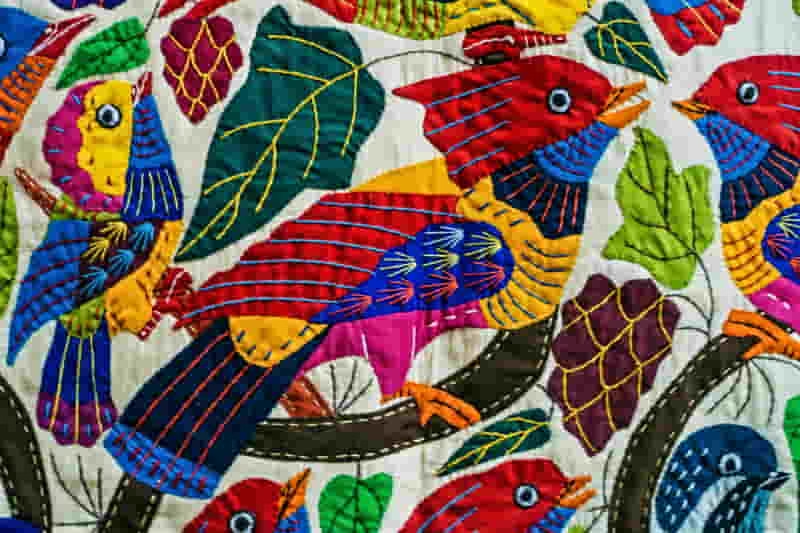
This article examines textile supply chain transparency, highlighting its importance for environmental accountability, labor ethics, and consumer trust. It explores challenges like globalized supply chains and regulatory complexity, and technologies such as blockchain, RFID, and AI that drive transparency. Innovative solutions like digital product passports and India’s sustainable initiatives, such as those in the Garo Hills, are analyzed, alongside strategies to overcome barriers and shape a transparent, sustainable textile industry.
Textile supply chain transparency, the ability to trace and disclose the journey of materials from sourcing to finished products, is a cornerstone of ethical and sustainable fashion. The textile industry, responsible for approximately 10% of global carbon emissions and 92 million tons of waste annually, faces increasing pressure to address environmental and social challenges, according to the United Nations Environment Programme (www.unep.org/news-and-stories/story/tackling-textile-industrys-environmental-footprint). Transparency ensures accountability for water usage, carbon emissions, and labor practices, while meeting consumer demand for ethical products. This article provides a comprehensive analysis of textile supply chain transparency, integrating global technologies, regional efforts like India’s sustainable initiatives, and addressing challenges and future directions for a responsible textile industry.
Why Transparency Matters
Transparency in the textile supply chain is critical for fostering sustainability and ethical practices. Environmentally, it enables brands to track resource consumption, such as the 2,700 liters of water needed for a single cotton T-shirt, and reduce carbon emissions and chemical discharge (textilelearner.net/carbon-footprint-in-textile-industry). Socially, transparency verifies fair wages, safe working conditions, and the absence of forced labor, addressing issues highlighted by events like the 2013 Rana Plaza collapse (www.fairwear.org). For consumers, transparency builds trust, with 66% of global shoppers willing to pay more for sustainable products when provided clear information, according to Nielsen (www.nielsen.com). Transparent supply chains align with the circular economy’s goal of minimizing waste, as outlined by the Ellen MacArthur Foundation (www.ellenmacarthurfoundation.org/a-new-textiles-economy).
Challenges in Achieving Transparency
Achieving supply chain transparency is complex due to the textile industry’s globalized and fragmented nature. Supply chains often span multiple countries, involving numerous tiers of suppliers, from raw material producers to garment assemblers. Many suppliers, especially in developing regions, rely on outdated systems or lack digital infrastructure, complicating data collection. Regulatory complexity adds further challenges, as compliance requirements vary across regions, creating reporting burdens. For example, the EU’s Strategy for Sustainable and Circular Textiles mandates detailed disclosures, while other regions have less stringent rules (ec.europa.eu/environment/strategy/textiles-strategy_en). Greenwashing, where brands exaggerate sustainability claims, further erodes consumer trust, making verifiable transparency essential.
Technologies Driving Transparency
Industry 4.0 technologies are revolutionizing supply chain transparency by enabling real-time tracking and data integrity. Blockchain creates tamper-proof records of sourcing, production, and distribution, ensuring verifiable sustainability claims. Platforms like TextileGenesis use blockchain to track eco-friendly materials like organic cotton, providing consumers with transparent data via QR codes (www.textilegenesis.com). RFID tags and QR codes enable product-level tracking, allowing consumers to access detailed supply chain information. Digital twins—virtual models of production processes—facilitate real-time monitoring, optimizing resource use and identifying inefficiencies. AI and big data analytics, employed by companies like Greyparrot, analyze supply chain patterns to flag anomalies, such as unethical labor practices or excessive emissions (greyparrot.ai). These technologies enhance accountability and consumer trust.
Innovative Solutions for Transparency
Innovative solutions are advancing textile supply chain transparency. Digital product passports provide detailed information on a garment’s materials, origin, and environmental impact, accessible via QR codes or apps. Brands like H&M use digital passports to share data on recycled polyester and waterless dyeing, aligning with consumer demand for transparency (hmgroup.com/sustainability/circularity). Forensic and additive tracers, such as those developed by FibreTrace, physically verify fiber origins by embedding markers in materials, ensuring authenticity (www.fibretrace.io). Worker empowerment platforms, like those from Fair Wear Foundation, allow laborers to report conditions anonymously, ensuring ethical practices are upheld (www.fairwear.org). These solutions bridge gaps in transparency, fostering accountability across the supply chain.
Sustainable Materials and Transparency
Eco-friendly materials are integral to transparent supply chains, as they provide verifiable sustainability credentials. Organic cotton, grown without synthetic pesticides, reduces water pollution and is tracked via certifications like GOTS (www.global-standard.org). Hemp, a carbon-negative fiber, and TENCEL™ (lyocell), produced in a closed-loop system, offer traceable, low-impact options (www.lenzing.com). Piñatex, made from pineapple leaf fibers, repurposes agricultural waste and is marketed for its transparency, as seen in India’s Garo Hills initiatives (www.nesfas.org). Blockchain and RFID ensure these materials are tracked from source to product, enabling brands like Patagonia to provide detailed supply chain data (www.patagonia.com/stories/worn-wear). Transparent sourcing of sustainable materials enhances consumer trust and supports circular fashion.
Sustainable Production and Transparency
Sustainable production processes, such as waterless dyeing and digital printing, rely on transparency to demonstrate their environmental benefits. Supercritical CO₂ dyeing, used by DyeCoo, eliminates wastewater and reduces energy use by 50%, with IoT sensors ensuring traceable processes (www.dyecoo.com). Digital textile printing, adopted by Kornit Digital, minimizes dye waste and supports small-batch production, with data tracked via digital platforms (www.kornit.com). These processes, when disclosed transparently, as seen with Reformation’s sustainability reports, strengthen consumer confidence and align with circular economy goals (www.thereformation.com/pages/sustainability). Transparency in production ensures brands are held accountable for their environmental claims.
Circular Economy and Transparency
Transparency is a cornerstone of the circular economy, enabling material traceability and waste reduction. Blockchain and RFID systems track textiles throughout their lifecycle, facilitating recycling and upcycling. Eileen Fisher’s Renew program uses digital tools to manage garment take-back and resale, reducing landfill waste (www.eileenfisher.com/renew). AI-driven sorting systems, like those from Greyparrot, enhance recycling efficiency by separating fibers accurately (greyparrot.ai). Digital product passports provide data on recyclability, encouraging consumers to participate in circular initiatives like those from ThredUp and Rent the Runway (www.thredup.com; www.renttherunway.com). Transparent systems ensure materials remain in use, aligning with the Ellen MacArthur Foundation’s vision (www.ellenmacarthurfoundation.org/a-new-textiles-economy).
Regional Initiatives: India’s Transparency Efforts
India, a global textile leader, is advancing supply chain transparency through sustainable initiatives. In the Garo Hills, waste-to-wealth programs repurpose banana and pineapple fibers into eco-friendly textiles, with digital platforms ensuring transparent sourcing and production (www.nesfas.org). The National Technical Textiles Mission promotes blockchain and IoT adoption for traceability, enabling manufacturers to meet global transparency standards (texmin.nic.in). Companies like Aditya Birla Fashion and Retail use digital tools to track sustainable materials, enhancing accountability in their supply chains (www.abfrl.com). These efforts highlight India’s role in blending cultural heritage with modern transparency solutions, supporting both environmental and social goals.
Policy Frameworks and Industry Standards
Policy frameworks are critical for scaling transparency in textile supply chains. The EU’s Strategy for Sustainable and Circular Textiles mandates detailed supply chain disclosures, encouraging blockchain and digital passport adoption (ec.europa.eu/environment/strategy/textiles-strategy_en). In India, the Solid Waste Management Rules 2016 support transparent waste management practices, aligning with circular economy goals (cpcb.nic.in/solid-waste-management-rules-2016). Certifications like GOTS and bluesign® provide standardized criteria for sustainable and ethical practices, ensuring credible transparency claims (www.global-standard.org; www.bluesign.com). These frameworks incentivize brands to adopt transparent systems, fostering consumer trust and industry accountability.
Challenges to Supply Chain Transparency
Achieving transparency faces significant challenges. Globalized supply chains, with multiple tiers of suppliers across countries, complicate data collection and verification. Fragmented networks, particularly in developing regions, rely on outdated systems, hindering digital integration. Regulatory complexity, with varying compliance requirements, creates reporting burdens for brands. Greenwashing remains a persistent issue, as consumers struggle to distinguish genuine transparency from marketing hype. High costs for technologies like blockchain and RFID can deter small manufacturers, while data security concerns in digital systems pose risks. Addressing these challenges requires investment, standardized protocols, and consumer education.
The Role of Consumers and Brands
Consumers drive transparency by demanding clear information about sourcing and production. By supporting brands with verifiable sustainability claims, using platforms like ThredUp for second-hand fashion, or engaging with rental services like Rent the Runway, consumers influence industry practices (www.thredup.com; www.renttherunway.com). Campaigns like Fashion Revolution’s “Who Made My Clothes?” educate consumers about ethical supply chains, encouraging informed choices (www.fashionrevolution.org).
Brands must lead by integrating transparency technologies and communicating their efforts effectively. Companies like Everlane use blockchain and QR codes to share supply chain details, building trust (www.everlane.com/about). Collaborations with organizations like the Sustainable Apparel Coalition, which developed the Higg Index, help brands measure and disclose their impact (apparelcoalition.org/higg-index). By prioritizing transparency, brands align with consumer values and drive market change.
Innovations Supporting Transparency
Emerging technologies are enhancing supply chain transparency. Digital product passports, supported by blockchain, provide comprehensive data on a garment’s lifecycle, as seen with H&M’s initiatives (hmgroup.com/sustainability/circularity). Forensic tracers, like those from FibreTrace, embed physical markers in fibers, ensuring authenticity (www.fibretrace.io). AI-driven analytics, such as Greyparrot’s sorting systems, improve recycling transparency by tracking material flows (greyparrot.ai). Worker empowerment platforms, supported by Fair Wear Foundation, enable laborers to report conditions, ensuring ethical transparency (www.fairwear.org). These innovations provide brands with tools to enhance accountability and consumer engagement.
The Future of Supply Chain Transparency
The future of textile supply chain transparency is promising, driven by technological advancements and collaboration. Blockchain and AI will further streamline traceability, making transparent systems more accessible. Digital product passports will become standard, providing consumers with detailed sustainability data. Policy interventions, such as Extended Producer Responsibility (EPR) schemes, will incentivize transparency, while consumer demand for ethical fashion will drive adoption. Regional initiatives, like India’s sustainable textile programs, will set global benchmarks. Collaborative efforts among brands, policymakers, and consumers will shape a future where transparency is the norm, creating a sustainable, accountable textile industry.
Conclusion
Textile supply chain transparency is essential for ethical and sustainable fashion, ensuring accountability for environmental and social impacts. Technologies like blockchain, RFID, AI, and digital product passports are driving transparency, while innovative solutions like forensic tracers and worker empowerment platforms enhance accountability. Regional efforts, such as India’s Garo Hills initiatives, and global policies like EPR are advancing systemic change. Despite challenges like globalized supply chains and greenwashing, collaboration and innovation offer a path forward. By prioritizing transparency, the textile industry can build consumer trust, align with circular economy principles, and create a sustainable future that respects both people and the planet.
Citations
- United Nations Environment Programme. “Tackling the Textile Industry’s Environmental Footprint.” UNEP, www.unep.org/news-and-stories/story/tackling-textile-industrys-environmental-footprint. Accessed 18 July 2025.
- Ellen MacArthur Foundation. “A New Textiles Economy: Redesigning Fashion’s Future.” Ellen MacArthur Foundation, www.ellenmacarthurfoundation.org/a-new-textiles-economy. Accessed 18 July 2025.
- Textile Learner. “Carbon Footprint in Textile Industry.” Textile Learner, textilelearner.net/carbon-footprint-in-textile-industry/. Accessed 18 July 2025.
- Fair Wear Foundation. “Improving Working Conditions in the Garment Industry.” Fair Wear, www.fairwear.org/. Accessed 18 July 2025.
- Nielsen. “The Sustainability Imperative.” Nielsen, www.nielsen.com. Accessed 18 July 2025.
- European Commission. “EU Strategy for Sustainable and Circular Textiles.” European Commission, ec.europa.eu/environment/strategy/textiles-strategy_en. Accessed 18 July 2025.
- TextileGenesis. “Blockchain for Textile Traceability.” TextileGenesis, www.textilegenesis.com. Accessed 18 July 2025.
- Greyparrot. “AI-Driven Waste Sorting Solutions.” Greyparrot, greyparrot.ai/. Accessed 18 July 2025.
- H&M Group. “Sustainability: Circularity.” H&M Group, hmgroup.com/sustainability/circularity/. Accessed 18 July 2025.
- FibreTrace. “Forensic Tracing for Textiles.” FibreTrace, www.fibretrace.io. Accessed 18 July 2025.
- Global Organic Textile Standard. “GOTS: The Leading Organic Textile Standard.” GOTS, www.global-standard.org/. Accessed 18 July 2025.
- Patagonia. “Worn Wear: Repair and Reuse.” Patagonia, www.patagonia.com/stories/worn-wear/. Accessed 18 July 2025.
- Lenzing. “TENCEL™ Sustainable Fibers.” Lenzing, www.lenzing.com. Accessed 18 July 2025.
- North East Slow Fashion Network. “Sustainable Textiles in India.” NESFAS, www.nesfas.org/. Accessed 18 July 2025.
- DyeCoo. “Waterless Dyeing Technology.” DyeCoo, www.dy拐. Accessed 18 July 2025.
- Kornit Digital. “Digital Textile Printing.” Kornit Digital, www.kornit.com/. Accessed 18 July 2025.
- Reformation. “Sustainability at Reformation.” Reformation, www.thereformation.com/pages/sustainability. Accessed 18 July 2025.
- Eileen Fisher. “Renew: Circular Design.” Eileen Fisher, www.eileenfisher.com/renew. Accessed 18 July 2025.
- ThredUp. “Secondhand Fashion Marketplace.” ThredUp, www.thredup.com/. Accessed 18 July 2025.
- Rent the Runway. “Fashion Rental for Sustainability.” Rent the Runway, www.renttherunway.com/. Accessed 18 July 2025.
- Fashion Revolution. “Who Made My Clothes?” Fashion Revolution, www.fashionrevolution.org/. Accessed 18 July 2025.
- Everlane. “Transparency in Fashion.” Everlane, www.everlane.com/about. Accessed 18 July 2025.
- Saahas Zero Waste. “Textile and Cloth Waste Management.” Saahas Zero Waste, saahaszerowaste.com/waste-types/textile-cloth-waste-management/. Accessed 18 July 2025.
- Aditya Birla Fashion and Retail. “Sustainability Initiatives.” ABFRL, www.abfrl.com. Accessed 18 July 2025.
- Ministry of Textiles, Government of India. “National Technical Textiles Mission.” Texmin, texmin.nic.in/. Accessed 18 July 2025.
- Central Pollution Control Board. “Solid Waste Management Rules 2016.” CPCB, cpcb.nic.in/solid-waste-management-rules-2016/. Accessed 18 July 2025.
- Bluesign. “Sustainable Textile Solutions.” Bluesign, www.bluesign.com. Accessed 18 July 2025.
- Sustainable Apparel Coalition. “Higg Index.” Sustainable Apparel Coalition, apparelcoalition.org/higg-index/. Accessed 18 July 2025.