textile sustainability

Home » textile sustainability
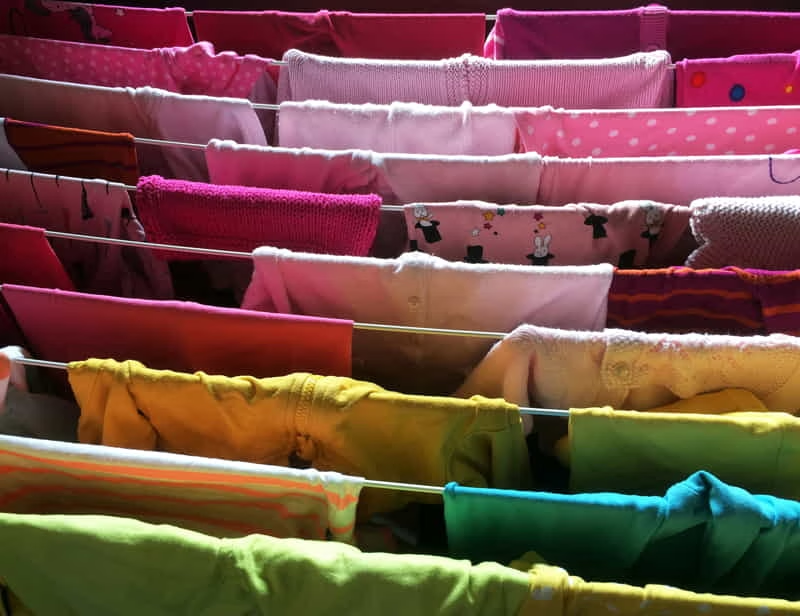
Textile Dyeing Without Water

Textile Dyeing Without Water: Innovations in Eco-Friendly Coloring

Waterless textile dyeing is revolutionizing the fashion industry by eliminating water from the coloring process, significantly reducing environmental impact. This article explores its history, technologies, challenges, applications, and future trends, highlighting its potential to transform textile production into a more sustainable practice.

Textile Dyeing Without Water: Innovations in Eco-Friendly Coloring Read More »
bamboo vs hemp textile fiber

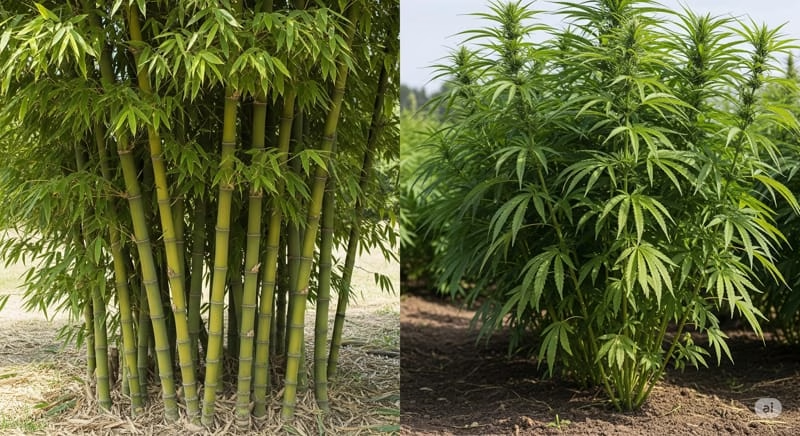
Bamboo vs. Hemp: Which Eco-Friendly Fiber Wins for Sustainable Textiles?

Bamboo and hemp are leading eco-friendly fibers for sustainable textiles, each with distinct strengths. Hemp’s minimal chemical processing and soil benefits suggest greater sustainability, while bamboo’s softness shines in closed-loop lyocell production. This article compares their cultivation, processing, applications, and future trends to guide sustainable textile choices.

Bamboo vs. Hemp: Which Eco-Friendly Fiber Wins for Sustainable Textiles? Read More »

calculator

Carbon Footprint and Environmental Impact Calculations for Textiles

This document provides a comprehensive guide to carbon footprint and environmental impact calculations for textiles, essential for evaluating sustainability across the product life cycle. It covers calculations for carbon footprint, energy consumption, water footprint, waste generation, carbon intensity, water intensity, recycling potential, and environmental impact score, supported by formulas, derivations, and practical examples. Designed for textile manufacturers, sustainability managers, and policymakers, this resource promotes eco-friendly practices and compliance with global standards.

Carbon Footprint and Environmental Impact Calculations for Textiles Read More »

Water and Energy Conservation in Weaving Mills

Water and Energy Conservation in Weaving Mills

Water and energy conservation are critical priorities in modern weaving mills, where reducing resource consumption can significantly impact operational costs and environmental sustainability. This comprehensive article explores the evolution, innovative technologies, and practical strategies for conserving water and energy in weaving mills. Through rich historical context, technical analyses, real-world case studies, detailed diagrams, and actionable insights, textile professionals, engineers, and enthusiasts gain an in-depth understanding of how efficient resource management drives sustainability and profitability in the textile industry.

Water and Energy Conservation in Weaving Mills Read More »

Life Cycle Assessment

Life Cycle Assessment (LCA) for Textiles

Life Cycle Assessment (LCA) for textiles offers an indispensable framework to evaluate environmental impacts from raw material extraction to end-of-life disposal. This comprehensive guide examines LCA’s historical evolution, technological advancements, innovative methodologies, and real-world applications, providing textile professionals, researchers, and enthusiasts with actionable insights into sustainable textile production and market competitiveness.

Life Cycle Assessment (LCA) for Textiles Read More »

sustainable-fashion-concept

Sustainable Sourcing of Natural Fibers

Sustainable sourcing of natural fibers is revolutionizing the textile industry by integrating environmentally responsible practices, ethical labor, and advanced technologies. This comprehensive guide explores the history, benefits, challenges, and future trends in sourcing fibers such as cotton, wool, silk, and hemp sustainably, offering actionable insights for manufacturers, designers, and consumers.

Sustainable Sourcing of Natural Fibers Read More »

microfiber

Microfiber Production and Environmental Concerns

This article presents an in-depth exploration of microfiber production and its environmental concerns. It covers manufacturing processes, pollution challenges, regulatory standards, and sustainable innovations. Industry insights and real-world case studies provide actionable strategies for balancing performance with ecological responsibility.

Our comprehensive analysis of microfiber production highlights both its technological advantages and environmental challenges. We examined production techniques, microfiber pollution in ecosystems, and mitigation strategies. By embracing sustainable practices, advanced digital tools, and regulatory compliance, the textile industry can mitigate environmental impacts and drive innovation toward a greener future.

Microfiber Production and Environmental Concerns Read More »

sustainable textiles

Sustainable Textile Practices

Sustainable textile practices blend advanced digital technologies with eco-friendly production methods to create high-quality, environmentally responsible fabrics. This comprehensive guide examines green materials, waterless dyeing, digital printing, and blockchain traceability, along with economic benefits and industry trends. In summary, embracing sustainability not only protects the environment but also drives efficiency and profitability, positioning manufacturers to thrive in a competitive global market.

Sustainable Textile Practices Read More »

Scroll to Top