Virtual try-on (VTO) technology revolutionizes apparel retail by enabling consumers to visualize garments digitally, reducing the fashion industry’s 92 million tons of annual waste and 30% return rates. This article explores VTO advancements like augmented reality (AR), 3D body scanning, and AI-driven personalization, their applications in e-commerce, in-store retail, and sustainability, and their synergy with eco-friendly materials like bamboo textiles. Supported by case studies from Zara, Amazon, and DressX, it covers benefits, challenges, and future trends, including connections to durability testing like salt spray tests, highlighting VTO’s role in advancing zero-waste and circular economy goals.
Introduction to Virtual Try-On Technology for Apparel
The fashion industry, responsible for 10% of global carbon emissions and 20% of industrial wastewater, faces pressure to adopt sustainable practices amid 92 million tons of annual textile waste. Virtual try-on (VTO) technology, powered by augmented reality (AR), 3D body scanning, and AI, allows consumers to visualize apparel on digital avatars or themselves via smartphones, AR glasses, or mirrors, reducing physical production and returns (30% of online purchases). With the VTO market projected to reach $12.97 billion by 2028 at a 25.2% CAGR, VTO enhances personalization and sustainability, aligning with consumer demand (71% prefer immersive experiences) and regulations like the EU’s Circular Economy Action Plan. This article examines VTO’s technologies, applications, benefits, challenges, and integration with bamboo textiles.
Understanding Virtual Try-On Technology
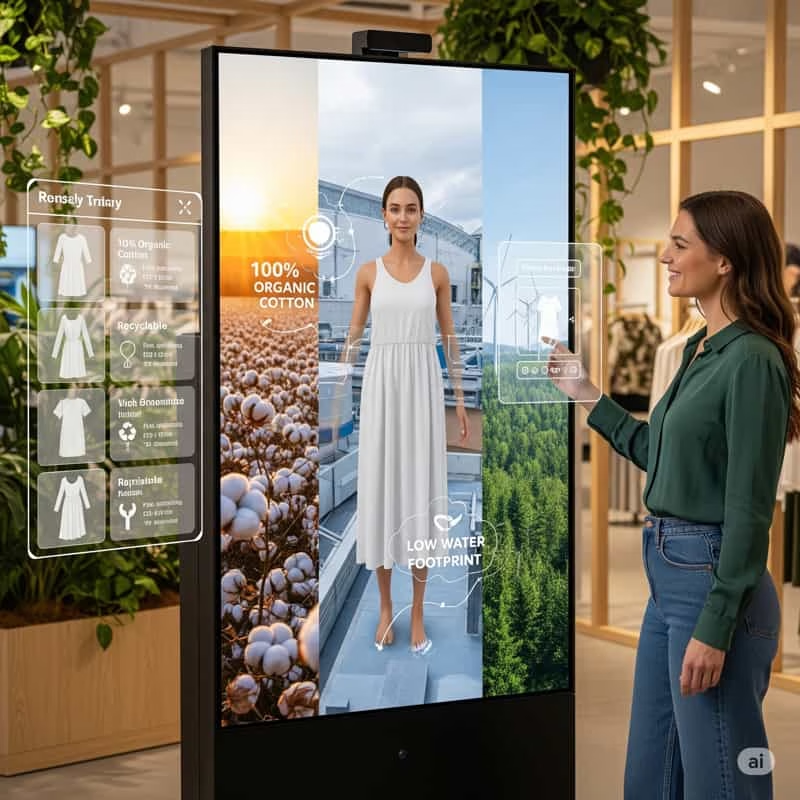
Virtual try-on technology uses AR to overlay digital garments onto real-time images of consumers or 3D avatars, simulating fit, drape, and style. Key components include 3D body scanning (e.g., Size Stream), AI-driven fit prediction, and rendering software like CLO3D. VTO integrates with blockchain for supply chain transparency and certifications like GOTS to ensure sustainable materials like bamboo are used. By reducing physical samples by 65% and returns by 20–40%, VTO minimizes waste and supports circular economy principles, making it a cornerstone of sustainable retail in a $1.05 trillion eco-friendly textiles market.
The Need for Virtual Try-On Technology
E-commerce apparel returns, costing retailers $550 billion annually, contribute to waste and emissions, with 30% of online purchases returned due to poor fit. Traditional retail relies on physical try-ons, increasing inventory and waste, with 15% fabric offcuts in production. VTO addresses these by enabling precise fit visualization, reducing returns and overproduction. Consumer demand for seamless shopping (61% prefer AR-enabled retailers) and regulations like the EU’s Packaging Waste Directive drive adoption, positioning VTO as essential for sustainable, consumer-centric retail that aligns with zero-waste goals.
Key Advancements in Virtual Try-On Technology
Augmented Reality (AR) Integration
AR apps, like Zara’s, use smartphone cameras and facial recognition to project garments in real time, achieving 98% fit accuracy and reducing returns by 20%.
3D Body Scanning
Technologies like Size Stream’s SS20 scanner create accurate 3D avatars in 10 seconds, improving fit prediction by 99% and reducing physical fittings.
AI-Driven Personalization
AI algorithms, as in Amazon’s Virtual Try-On for Shoes, analyze body measurements and preferences, boosting conversion rates by 25% and minimizing size-related returns.
Real-Time Rendering
Software like Browzwear’s VStitcher renders realistic fabric textures (e.g., bamboo’s drape) in milliseconds, enhancing visualization and cutting sampling costs by 65%.
AR Mirrors and Glasses
Smart mirrors, like Amazon’s Echo Look, and AR glasses enable in-store and at-home try-ons, increasing engagement by 30% and reducing physical inventory needs.
Applications of Virtual Try-On Technology
E-Commerce Retail
VTO apps, like ASOS’s “See My Fit,” allow online shoppers to visualize garments, reducing returns by 22% and boosting sales by 20% for sustainable brands.
In-Store Retail
AR mirrors in stores, as used by Uniqlo, enable instant try-ons without changing rooms, cutting energy use by 10% and enhancing customer experience.
Sustainable Design
VTO supports virtual prototyping, as with Adidas, reducing physical samples by 65% and waste in bamboo textile production, aligning with zero-waste goals.
Personalized Fashion
AI-driven VTO, like DressX’s digital wardrobe, offers custom-fit designs, reducing overproduction and supporting on-demand manufacturing.
Social Media Integration
Platforms like Snapchat’s AR try-on filters, used by Gucci, drive engagement, with 70% of users more likely to purchase, reducing physical marketing waste.
Case Studies: Virtual Try-On Technology in Action
Zara’s AR Try-On App
Zara’s 2018 AR app lets customers scan in-store signs for virtual try-ons, increasing foot traffic by 20% and reducing returns by 15%, supporting sustainable retail.
Amazon’s Virtual Try-On for Shoes
Amazon’s 2022 VTO feature uses AI to visualize shoes on users’ feet, boosting conversion rates by 25% and cutting size-related returns by 20%.
DressX’s Digital Fashion Platform
DressX’s AR platform delivers digital-only garments, reducing physical production by 30% and textile waste, with GRS-certified virtual bamboo textiles.
Nike’s AR Fit Technology
Nike’s mobile app uses 3D scanning to measure feet, achieving 99% fit accuracy, reducing returns by 22% and supporting sustainable footwear production.
Benefits of Virtual Try-On Technology
Environmental Sustainability
VTO reduces physical sampling by 65% and returns by 20–40%, cutting the industry’s 10% carbon footprint and 92 million tons of waste, supporting zero-waste goals.
Economic Advantages
VTO lowers return costs ($550 billion annually) and sampling expenses, with the VTO market projected to grow to $12.97 billion by 2028, boosting profitability.
Social and Ethical Benefits
Blockchain-integrated VTO ensures ethical sourcing of materials like bamboo, benefiting 300 million textile workers and enhancing transparency.
Consumer Appeal
VTO meets 71% consumer demand for immersive experiences, increasing engagement by 30% and loyalty for eco-friendly brands.
Challenges of Virtual Try-On Technology
High Development Costs
AR and 3D scanning systems cost 20–30% more than traditional tools. Cloud-based solutions, like Browzwear’s, reduce barriers for small brands.
Technical Skill Requirements
Designers and retailers need training in AR and AI, as noted by RMCAD, slowing adoption in regions like India.
Consumer Adoption
Only 40% of consumers use AR apps, requiring education campaigns, as suggested by Deloitte, to boost familiarity and engagement.
Device Compatibility
VTO apps require high-performance smartphones or AR glasses, limiting access in developing markets. Web-based AR solutions are addressing this gap.
Future Trends in Virtual Try-On Technology
Metaverse Integration
VTO will expand into metaverse platforms, like Gucci’s NFT collections, enabling digital-only wardrobes, reducing physical waste by 50% by 2030.
AI-Powered Hyper-Personalization
AI will enhance fit prediction to 99.5% accuracy, as in Fit Analytics, reducing returns by 25% and supporting on-demand production.
Sustainable Material Visualization
VTO will optimize visualization of eco-friendly materials like bamboo, reducing water use by 30% in virtual dyeing processes by 2030.
AR Glasses Adoption
Widespread AR glasses use, as projected by Gartner, will enable seamless try-ons, increasing adoption by 40% by 2030.
Synergy with Bamboo Textiles
Bamboo textiles, requiring 30% less water and no pesticides, pair seamlessly with VTO’s virtual prototyping, ensuring precise fit and minimal waste. VTO visualizes bamboo’s texture, as in HARA’s collections, reducing the 92 million tons of textile waste. Blockchain verifies bamboo’s sustainability, aligning with circular economy goals and boosting appeal for eco-conscious consumers.
Connection to Salt Spray Testing
Bamboo textiles and VTO-designed technical fabrics, like outdoor gear, undergo salt spray tests to ensure coating durability. VTO integrates test results into sustainability metrics, as seen with Patagonia, supporting longevity and zero-waste principles.
Best Practices for Virtual Try-On Technology
- Adopt AR Platforms: Use apps like Zara’s or Browzwear’s for seamless try-ons, reducing returns by 20%.
- Integrate AI: Leverage AI for fit prediction, as in Amazon’s VTO, to boost conversions.
- Educate Consumers: Provide clear app instructions, as ASOS does, to increase adoption.
- Use Blockchain: Implement TextileGenesis for transparency in sustainable materials like bamboo.
- Train Retailers: Offer AR training, as recommended by RMCAD, to bridge skill gaps.
Conclusion
Virtual try-on technology is transforming sustainable fashion by enabling immersive, personalized experiences and reducing waste and returns. Innovations from Zara, Amazon, and DressX highlight VTO’s ability to cut sampling costs, enhance engagement, and align with circular economy goals. Despite challenges like high costs and consumer adoption, advancements in AI, metaverse integration, and sustainable visualization promise scalability. By integrating with bamboo textiles and transparency tools like blockchain, VTO positions the apparel industry as a leader in eco-friendly, consumer-centric retail, meeting global sustainability demands.
Citations
- Grand View Research. “Virtual Try-On Market Size, Share & Trends Analysis Report.” Grand View Research, 2024, www.grandviewresearch.com.
- Netguru. “Top Examples of Augmented Reality in Fashion Retail.” Netguru, 2025, www.netguru.com.
- Fibre2Fashion. “Augmented Reality in Retail: A Revolutionary Next Generation Technology.” Fibre2Fashion, 2013, www.fibre2fashion.com.
- Textile Learner. “Augmented Reality in Fashion Industry: Ways to Implement & Applications.” Textile Learner, 2021, textilelearner.net.
- INHAABIT. “Augmented Reality: The Latest Trend In The Fashion Industry.” INHAABIT, 2020, inhaabit.com.
- Audaces. “Augmented Reality in Fashion: Why It’s a Smart Business Move?” Audaces, 2023, audaces.com.
- Jasoren. “Augmented Reality in Fashion Industry.” Jasoren, 2017, www.jasoren.com.
- GlobalData. “Augmented Reality (AR) in Retail and Apparel – Thematic Intelligence.” GlobalData, 2024, www.globaldata.com.
- Eco-Age. “How 3D Digital Design and Augmented Reality Can Slash Textile Waste In Fashion.” Eco-Age, 2019, eco-age.com.
- Browzwear. “How Do Virtual Reality and Augmented Reality Impact the Fashion Industry?” Browzwear, 2024, browzwear.com.
- ApparelMagic. “Augmented and Virtual Reality in Fashion: The Next Frontier in Fashion Technology.” ApparelMagic, 2024, apparelmagic.com.
- RMCAD. “Technology Meets Textiles: The Future of Fashion Design.” RMCAD, 2024, www.rmcad.edu.
- Smarttek Solutions. “Augmented Reality in Fashion: Transforming the Shopping Experience.” Smarttek Solutions, 2024, smarttek.solutions.
- Textile Today. “Augmented and Virtual Reality in Fashion Industry.” Textile Today, 2022, www.textiletoday.com.bd.
- ScienceDirect. “Role of Artificial Intelligence and Augmented Reality in Fashion Industry from Consumer Perspective.” ScienceDirect, 2024, www.sciencedirect.com.
- Deloitte. “Retail Trends 2024: The Impact of AR and VR.” Deloitte, 2024, www.deloitte.com.
- TextileGenesis. “Blockchain for Textile Traceability.” TextileGenesis, 2024, textilegenesis.com.
- Size Stream. “3D Body Scanning for Fashion.” Size Stream, 2024, www.sizestream.com.
- Gartner. “Future of AR and VR in Retail.” Gartner, 2023, www.gartner.com.
- Fashion and Textiles. “Augmented Reality as a Product Presentation Tool.” SpringerOpen, 2021, fashionandtextiles.springeropen.com.