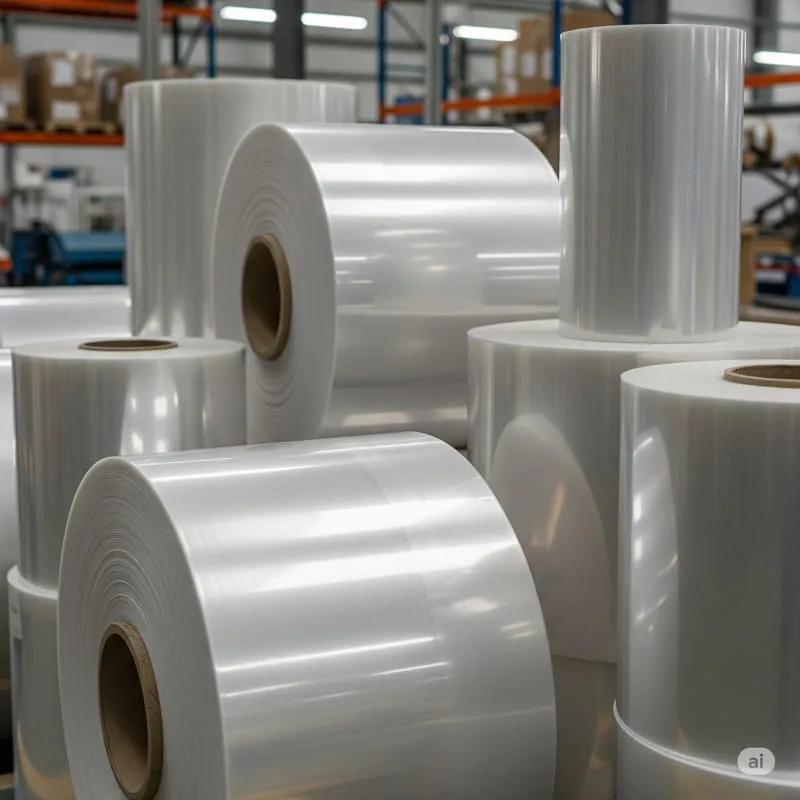
Polyester (PET) film, also known as polyethylene terephthalate film, is a versatile and widely used plastic film integral to various industries due to its exceptional properties. Made from polyethylene terephthalate (PET), a thermoplastic polymer resin in the polyester family, PET film is renowned for its high tensile strength, chemical stability, transparency, and electrical insulation capabilities. This response provides a comprehensive overview of PET film, covering its definition, properties, manufacturing process, types, applications, environmental considerations, and recent developments.
Definition and Properties of PET Film
PET film is a plastic film derived from polyethylene terephthalate, often recognized by brand names like Mylar® or Melinex®. It is produced through extrusion and biaxial orientation, a process that stretches the film in two directions to enhance its mechanical strength, clarity, and barrier properties. These characteristics make PET film suitable for a broad range of applications.
Key Properties:
- High Tensile Strength: With a Young’s modulus of approximately 4 GPa, PET film resists tearing and puncturing, making it one of the strongest plastic films available.
- Chemical Stability: It is inert to most chemicals, including solvents, oils, and greases, ensuring durability in harsh environments.
- Dimensional Stability: The film maintains its shape and size under varying temperatures and humidity, ideal for precision applications.
- Transparency and Optical Clarity: Available in super-clear grades, it is perfect for uses requiring visibility.
- Thermal and Electrical Insulation: It withstands temperatures up to 150°C and offers excellent dielectric strength, suitable for electrical insulation.
- Barrier Properties: When metallized, PET film provides superior protection against gases and moisture, crucial for food packaging.
Compared to alternatives like PVC or polypropylene, PET film excels due to its balanced combination of strength, clarity, and stability.
Manufacturing Process
The production of PET film begins with the polymerization of terephthalic acid and ethylene glycol to create PET resin. This resin is melted and extruded onto a chill roll, forming an amorphous film. The film is then biaxially oriented—stretched in both the machine and transverse directions at ratios of 3 to 4 times its original size—to align the polymer chains, boosting strength and clarity. Finally, it is heat-set at temperatures above 200°C to stabilize its structure and prevent shrinkage. This process allows customization of thickness, clarity, and surface treatments to meet specific needs.
Types of PET Film
PET film comes in various grades and surface treatments tailored to specific applications:
- General Purpose Films: Used in industrial laminates, electrical insulation, and packaging.
- Print-Treated Films: Enhanced for ink and adhesive adhesion, ideal for labels and graphics.
- Slip-Treated Films: Smooth-surfaced for easy handling in packaging and carrier films.
- Metallized Films: Coated with metal for superior barrier properties in food packaging and reflective applications.
- Hard-Coated Films: Scratch-resistant for automotive and electronic uses.
- Flame-Retardant Films: Halogen-free options for safety-critical applications.
These variations ensure PET film meets diverse industry demands.
Applications of PET Film
PET film’s versatility makes it essential across multiple sectors:
- Packaging: Used in food packaging for its clarity, barrier properties, and compliance with FDA and USDA standards. Metallized versions extend shelf life by blocking oxygen and moisture.
- Electronics: Acts as an insulator in capacitors, flexible circuits, and touchscreens due to its dielectric strength and thermal stability.
- Graphics and Printing: Its printability and clarity suit labels, overlays, and signage.
- Industrial Applications: Found in laminates, face shields, and carrier films for its durability and chemical resistance.
- Medical Devices: Used in diagnostic strips, transdermal patches, and sterilized packaging.
These applications underscore PET film’s adaptability and importance in both consumer and industrial contexts.
Environmental Considerations
A major advantage of PET film is its recyclability. Widely recycled in bottle form, PET film can also be reused, though challenges arise from its diverse applications and coatings. Recent advancements, such as enzyme-based recycling with PET hydrolases, have improved efficiency—some enzymes can depolymerize 90% of PET in 10 hours—enhancing sustainability. However, recycling infrastructure for PET film lags behind that of PET bottles, requiring further development to maximize its environmental benefits.
Recent Developments
The PET film industry continues to evolve with innovations in functionality and sustainability:
- Flame-Retardant Films: New halogen-free, clear films with VTM-0 ratings cater to safety needs in construction and automotive sectors.
- Improved Recycling Technologies: Advances like Ideonella sakaiensis bacteria and machine learning-designed enzymes enhance PET recyclability.
- Specialty Films: Soft-touch and high-barrier films expand applications in luxury packaging and flexible electronics.
These advancements highlight ongoing efforts to improve PET film’s utility and environmental footprint.
Conclusion
Polyester (PET) film is a high-performance material pivotal to modern industries due to its exceptional mechanical, optical, thermal, and chemical properties. Its versatility, recyclability, and continuous innovation position it as a preferred choice for applications from packaging to electronics. As technology and sustainability efforts progress, PET film will remain a vital component in meeting industrial and environmental demands.