1. Introduction
The industrial sector operates in environments that demand extreme performance, durability, and safety. Whether in mining, chemical processing, automotive manufacturing, or metal smelting, traditional textiles cannot withstand the stresses of high temperatures, mechanical abrasion, chemical exposure, and continuous operation.
Indutech—short for Industrial Technical Textiles—fills this gap by delivering engineered fabrics and composites that perform reliably under the toughest conditions.
From heat-resistant conveyor belts in steel plants to precise filtration fabrics in food processing, Indutech solutions enable industries to operate efficiently, safely, and sustainably.
2. What is Indutech?
Indutech is one of the 12 recognized categories of technical textiles. It includes all textiles and textile-based products used in industrial manufacturing processes, equipment, and systems.
Unlike conventional fabrics, Indutech products:
- Are performance-focused rather than aesthetic.
- Provide mechanical strength, chemical resistance, and functional properties.
- Often operate continuously in demanding industrial settings.
3. Functions of Indutech Products
Indutech products perform a variety of functions across industries:
- Filtration – Removing particles from air, liquids, and gases.
- Conveyance – Moving materials within production processes.
- Separation – Dividing solids from liquids or gases in processing plants.
- Insulation – Thermal and acoustic barriers in industrial facilities.
- Protection – Safeguarding equipment and workers from heat, chemicals, or mechanical hazards.
- Reinforcement – Strengthening composite structures and materials.
4. Key Indutech Products
Indutech products can be grouped into several main categories.
4.1 Filtration Textiles
- Air Filtration: Baghouse filters, cartridge filters for dust collection.
- Liquid Filtration: Filter cloths for water treatment, food processing, and chemical plants.
- Gas Filtration: High-temperature filter fabrics for flue gas cleaning.
4.2 Conveyor and Transmission Belts
- Woven, knitted, or nonwoven base fabrics coated with rubber, PVC, or PU.
- Used in mining, packaging, paper manufacturing, and food processing.
4.3 Coated and Laminated Fabrics
- Used for chemical containment, flexible ducts, and industrial covers.
- Coatings include PTFE, silicone, PVC for added resistance.
4.4 Industrial Hoses and Reinforcements
- Textile reinforcements in hoses for oil, gas, chemicals, and hydraulics.
4.5 Thermal and Acoustic Insulation Fabrics
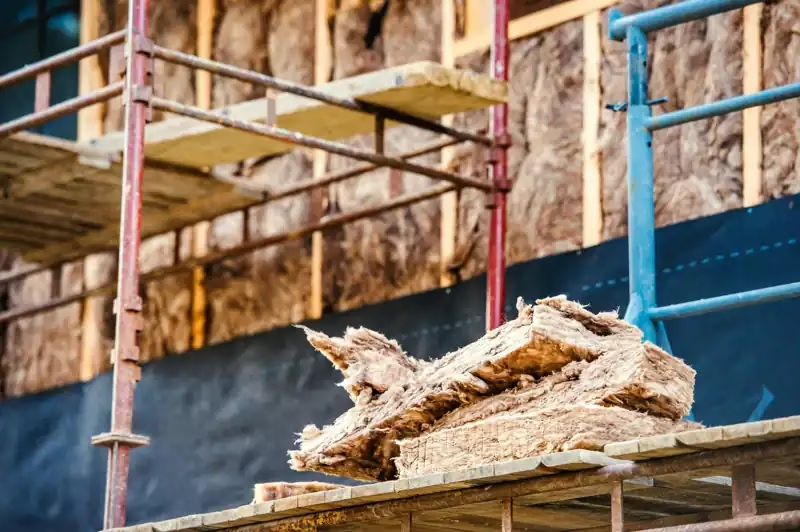
- Fiberglass, aramid, and ceramic fabrics for heat shields, welding blankets, and furnace insulation.
4.6 Abrasive and Polishing Textiles
- Nonwoven pads for metal polishing and surface finishing.
4.7 Industrial Safety Textiles
- Protective aprons, gloves, and covers for high-risk industrial environments.
5. Materials Used in Indutech
Synthetic Fibers:
- Polyester (PET) – Strong, dimensionally stable.
- Polypropylene (PP) – Lightweight, chemical-resistant.
- Polyamide (Nylon) – Abrasion-resistant, durable.
- Aramids (Kevlar®, Nomex®) – Heat and flame-resistant.
Inorganic Fibers:
- Glass Fibers – Thermal resistance, dimensional stability.
- Basalt Fibers – High heat and chemical resistance.
- Ceramic Fibers – Extreme high-temperature insulation.
Natural Fibers:
- Cotton – Used in polishing and light filtration.
- Jute – Reinforcement in certain composite structures.
6. Manufacturing Techniques
- Weaving: Produces strong, dimensionally stable fabrics.
- Knitting: For flexible and elastic industrial applications.
- Nonwoven Technology: For filtration and insulation.
- Coating & Laminating: Adds barrier properties and resistance.
- Needle-punching: Common for nonwoven industrial felts.
- Braiding: For reinforcement in hoses and protective sleeves.
7. Functional Properties
Indutech fabrics are engineered for:
- Heat Resistance: Continuous operation at high temperatures.
- Chemical Resistance: Withstanding acids, alkalis, and solvents.
- Mechanical Strength: Handling heavy loads and abrasion.
- Dimensional Stability: Maintaining form under stress.
- Filtration Efficiency: Capturing fine particles in gases and liquids.
- Safety Compliance: Meeting industrial safety standards.
8. Applications of Indutech
| Industry | Applications |
|---|---|
| Automotive | Airbag fabrics, conveyor belts, insulation linings |
| Mining & Quarrying | Heavy-duty conveyor belts, dust filtration |
| Chemical Processing | Corrosion-resistant filters, flexible storage containers |
| Food & Beverage | Hygienic conveyor belts, liquid filtration fabrics |
| Metallurgy | Heat shields, welding blankets, furnace insulation |
| Energy & Power | Turbine insulation, oil spill containment booms |
9. Advantages of Indutech
- Long service life under extreme conditions.
- Increased efficiency in industrial processes.
- Reduced downtime through reliable performance.
- Compliance with environmental and safety regulations.
- Customization for specific industrial needs.
10. Global Market Overview
- Market size (2024): USD 30–35 billion.
- CAGR: 5–6% expected over the next decade.
- Key growth drivers: Industrial automation, environmental compliance, demand for high-performance materials.
- Leading markets: North America, Europe, China, Japan, India.
11. Innovations in Indutech
- Nanofiber Filtration Media: Captures sub-micron particles with high efficiency.
- Smart Conveyor Systems: Textiles with embedded sensors for predictive maintenance.
- Eco-Friendly Coatings: Water-based and biodegradable industrial coatings.
- Advanced Aramid Blends: Lighter yet stronger high-heat fabrics.
12. Sustainability in Indutech
- Recycling industrial filter fabrics.
- Using bio-based polymers for certain applications.
- Energy-saving insulation textiles reducing industrial energy costs.
- Eco-compliant finishes to reduce environmental impact.
13. Challenges
- High raw material costs for specialty fibers.
- Need for precise quality control in industrial processes.
- Disposal of used synthetic industrial textiles.
14. Future Trends
- Integration of IoT and smart monitoring in industrial fabrics.
- Wider use of biodegradable industrial composites.
- More efficient high-performance filtration to meet strict environmental laws.
- Lightweight yet durable textiles for automated manufacturing systems.
15. Conclusion
Indutech textiles are the backbone of industrial performance—often invisible to the end user but essential to modern manufacturing and infrastructure. Their combination of durability, precision, and safety ensures smooth operations across countless industries. As technology advances, Indutech will play a pivotal role in making industrial processes more efficient, safer, and environmentally responsible.
Frequently Asked Questions (FAQ) – Indutech Technical Textiles
Indutech refers to technical textiles used in industrial applications, machinery, and manufacturing processes. These materials are engineered for durability, heat and chemical resistance, mechanical strength, and other functional properties required in demanding industrial environments.
Examples include:
Filtration fabrics for air, gas, and liquids
Conveyor and transmission belts
Industrial hoses and reinforcements
Thermal and acoustic insulation fabrics
Coated and laminated industrial covers
Abrasive and polishing textiles
Common materials include:
Synthetic fibers: Polyester, polypropylene, polyamide, aramids
Inorganic fibers: Glass fibers, basalt fibers, ceramic fibers
Natural fibers: Cotton and jute (for specific applications)
They improve efficiency, enhance safety, extend equipment life, and meet strict environmental and quality standards. Indutech textiles can withstand high temperatures, mechanical stress, and chemical exposure while delivering consistent performance.
Many manufacturers are developing eco-friendly Indutech solutions, including recyclable filtration media, bio-based polymers, and energy-saving insulation fabrics.
They are found in automotive plants, mining operations, chemical processing facilities, food and beverage production, metalworking, and power generation.
Future developments will include smart industrial textiles with embedded sensors, lightweight yet ultra-strong composites, advanced nanofiber filtration, and more sustainable production processes.