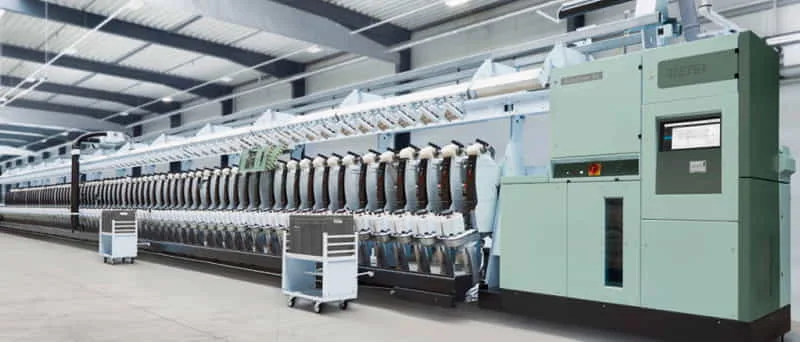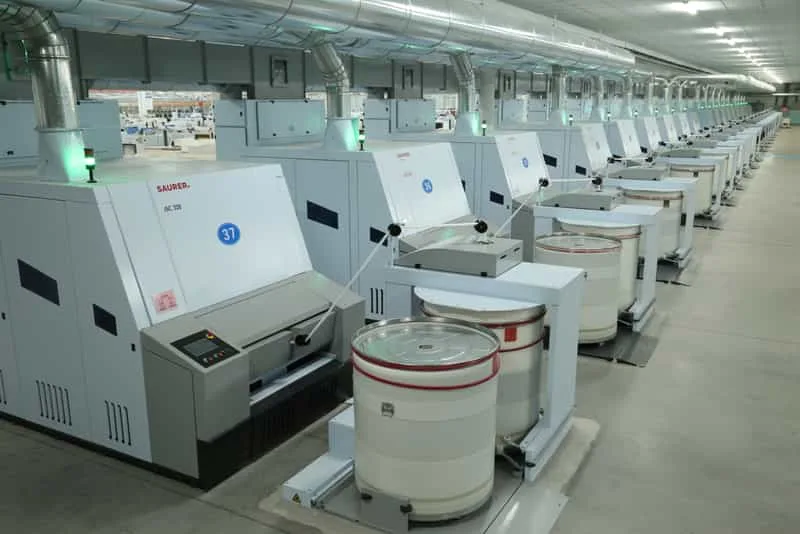
The carding process in yarn spinning is essential for transforming opened and cleaned fibers into a uniform sliver, enhancing yarn quality. Key objectives include fiber individualization, cleaning, blending, sliver formation, dust removal, and waste management. By aligning fibers and removing impurities, carding ensures consistent, high-quality yarn production, making it a critical step in textile manufacturing.
Introduction
Carding is a fundamental stage in the yarn spinning process, following the blow room, where opened and cleaned fibers are further processed to produce a uniform sliver suitable for subsequent spinning stages. This mechanical process employs carding machines to individualize, clean, and align fibers, significantly impacting the quality and consistency of the final yarn. The objectives of carding are critical to achieving high-quality yarn production, and this article outlines these objectives, detailing their significance and operational mechanisms [1].
Objectives of Carding
The carding process serves multiple essential functions to prepare fibers for spinning. These objectives are detailed below:
1. Fiber Individualization
The primary objective of carding is to separate fiber tufts into individual fibers. After the blow room, fibers remain in small clumps. Carding machines, equipped with a series of wire-covered rollers (such as the taker-in, cylinder, and doffer), gently tease apart these tufts, achieving nearly complete fiber individualization. This process enhances fiber alignment and prepares them for uniform sliver formation, critical for consistent yarn quality [2].
2. Cleaning of Fibers
Carding further removes impurities left after the blow room, such as fine trash, seed fragments, and short fibers. The carding machine’s flats and carding segments interact with the cylinder to extract 10–20% of remaining impurities. Specialized components, like stationary flats and knife-edge settings, enhance cleaning efficiency, ensuring cleaner fibers for subsequent processing [1].
3. Fiber Blending and Mixing
Carding promotes thorough blending and mixing of fibers to ensure homogeneity. By processing fibers across multiple carding points, the machine achieves uniform distribution of different fiber types or grades, reducing variability in yarn properties. This blending is essential for maintaining consistent yarn strength, fineness, and appearance, particularly when combining fibers with varying characteristics.
4. Sliver Formation
A key objective of carding is to form a continuous, uniform sliver—a rope-like strand of aligned fibers. The doffer and delivery rollers consolidate individualized fibers into a cohesive sliver, which is collected in a can for further processing. Uniform sliver formation ensures consistent drafting and spinning in subsequent stages, directly impacting yarn quality [2].
5. Dust Removal
Carding removes fine dust particles trapped within fibers, which can affect yarn quality and machinery performance. Suction systems and air currents integrated into carding machines extract microdust, improving the cleanliness of the sliver and creating a healthier working environment. This process complements the dust removal initiated in the blow room.
6. Waste Management and Fiber Recovery
Carding generates waste, including short fibers (linters) and impurities, known as flat strips, taker-in waste, and doffer waste. An important objective is to manage this waste efficiently, recovering usable fibers for reprocessing into coarser yarns or other applications. Effective waste management enhances cost-efficiency and supports sustainable textile production practices.
Importance of Carding Objectives
The objectives of carding are pivotal to yarn spinning, as they refine the fiber mass into a form suitable for high-quality yarn production. Fiber individualization and alignment ensure uniformity, while cleaning and dust removal enhance fiber purity. Blending promotes consistency, and sliver formation sets the stage for efficient drafting and spinning. Effective waste management reduces material loss, contributing to cost savings. Poor carding performance can lead to neps, uneven slivers, or excessive waste, compromising yarn quality and production efficiency.
Key Components and Actions in Carding
Carding machines consist of several key components that facilitate these objectives:
- Taker-in: Initiates fiber opening and cleaning.
- Cylinder and Flats: Perform primary individualization and cleaning.
- Doffer: Collects fibers to form the sliver.
- Suction Systems: Remove dust and fine particles.
- Carding Segments: Enhance cleaning and blending efficiency.
These components work in tandem, using wire-covered surfaces and precise settings to process fibers effectively.
Challenges and Considerations
Achieving carding objectives requires addressing challenges such as:
- Nep Formation: Excessive carding action can create neps, requiring optimized machine settings.
- Fiber Damage: Harsh processing may cause fiber breakage, necessitating gentle handling.
- Uneven Sliver: Inconsistent fiber flow can lead to irregular slivers, requiring precise control.
- Waste Control: Balancing impurity removal with minimal loss of good fibers is critical.
Regular maintenance, proper machine settings, and adherence to manufacturer guidelines are essential to mitigate these issues.
Conclusion
Carding is a cornerstone of yarn spinning, with objectives that include fiber individualization, cleaning, blending, sliver formation, dust removal, and waste management. These processes ensure that raw fibers are transformed into a uniform, clean sliver, setting the foundation for high-quality yarn production. By leveraging advanced carding machines and addressing operational challenges, the carding process enhances yarn consistency and production efficiency, making it indispensable in textile manufacturing.