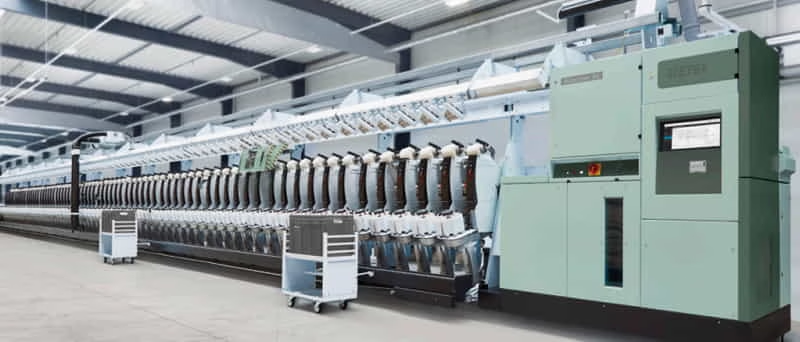
The Auto-Coner winding machine in yarn spinning transforms ring cops into high-quality cones or cheeses, removing faults and ensuring uniformity for weaving and knitting. Supporting sustainable fibers like organic cotton and recycled polyester, it enhances efficiency and reduces waste. This article explores its processes, components, advancements, and role in eco-friendly textile production, highlighting future trends like AI integration and high-speed winding.
Introduction to the Auto-Coner Winding Machine in Yarn Spinning
The Auto-Coner winding machine is a cornerstone of modern yarn spinning, particularly in the ring spinning system, where it transforms small ring-spun yarn packages (cops) into larger, high-quality packages like cones or cheeses suitable for downstream processes such as weaving, knitting, or dyeing. As the final stage in yarn production, the Auto-Coner ensures that yarns are free from imperfections, uniformly wound, and optimized for further processing, making it essential for producing high-quality textiles used in apparel, home textiles, and technical applications. With the textile industry’s growing focus on sustainability, modern Auto-Coner machines incorporate energy-efficient technologies, automated systems, and support for eco-friendly fibers like organic cotton and recycled polyester, aligning with the demand for sustainable textiles. This comprehensive article explores the functionality, components, operation, advancements, and sustainability aspects of the Auto-Coner winding machine in yarn spinning, providing valuable insights for students, professionals, and textile enthusiasts.
Understanding the Auto-Coner Winding Machine
The Auto-Coner is a fully automatic winding machine used in the final stage of the ring spinning process to convert small ring cops (typically 50–100 g) into larger packages (1–3 kg) such as cones or cheeses. Unlike manual winding machines, the Auto-Coner operates with minimal human intervention, using advanced automation to remove yarn faults, splice broken ends, and produce uniform packages. This ensures high-quality yarns with reduced neps, hairiness, and thick or thin places, which are critical for high-speed weaving and knitting operations.
Manufactured by industry leaders like Schlafhorst (Saurer), Rieter, and Murata, the Auto-Coner is renowned for its precision, productivity, and versatility. It processes a wide range of yarns, including cotton, wool, polyester, blends, and sustainable fibers, supporting yarn counts from coarse (Ne 6) to fine (Ne 100). Modern Auto-Coners, such as the Saurer Autoconer 6 and Rieter Autoconer X6, feature intelligent automation, energy-saving technologies, and advanced splicing systems, making them integral to sustainable textile production.
The Auto-Coner Winding Process: Step-by-Step
The Auto-Coner winding process involves unwinding yarn from ring cops, removing imperfections, splicing broken ends, and winding the yarn into larger packages. Below is a detailed breakdown of the process, including the machinery and techniques involved.
Input: Ring Cops
The Auto-Coner begins with ring cops, which are small yarn packages produced by the ring spinning frame, containing yarn with potential imperfections like neps, thick places, or hairiness.
Characteristics:
- Package Size: Small (50–100 g), unsuitable for direct use in weaving or knitting.
- Yarn Faults: May contain neps, thick/thin places, or hairiness, requiring correction.
- Fiber Types: Compatible with cotton, wool, polyester, blends, or sustainable fibers like organic cotton and recycled polyester.
Sustainability Note: Processing eco-friendly fibers, such as organic cotton or recycled polyester, reduces environmental impact, with each ton of recycled polyester saving approximately 7,000 plastic bottles from landfills.
Yarn Unwinding and Fault Removal
The Auto-Coner unwinds yarn from the ring cop and passes it through systems designed to detect and remove imperfections, ensuring high-quality output.
Process:
- Yarn is unwound from the cop, held in a bobbin holder, and passed through a yarn clearer.
- The electronic yarn clearer (e.g., Uster Quantum or Loepfe Zenit) detects faults like neps, thick places, thin places, or foreign matter using optical or capacitive sensors.
- Faulty sections are cut out, and the yarn ends are spliced together using air or thermal splicing to create a knot-free joint.
Machinery:
- Bobbin Holder: Secures the ring cop for unwinding, with automated systems replacing empty cops.
- Yarn Clearer: Electronic device that removes faults, improving yarn quality by up to 90%.
- Splicer: Air splicers (e.g., Saurer’s Flexsplicer) or thermosplicers (for wool) join yarn ends, ensuring seamless continuity.
Sustainability Note: Precise fault removal and splicing reduce yarn waste by 5–10%, while recycled noils are repurposed for lower-grade yarns or nonwovens.
Tension Control and Waxing
Tension control ensures uniform winding, while waxing enhances yarn smoothness for knitting or dyeing applications.
Process:
- The yarn passes through a tensioner, which maintains consistent tension (adjustable from 10–50 cN) to prevent stretching or slack.
- A waxing unit applies a thin layer of wax to the yarn, reducing hairiness and friction, particularly for knitting yarns.
- Modern systems use automated tension control (e.g., Rieter’s TensionControl or Autotense FX) to optimize package density.
Machinery:
- Yarn Tensioner: Applies controlled tension, with pneumatic or electronic systems for precision.
- Waxing Unit: Rotates a wax roll to coat the yarn, with adjustable settings to minimize wax wastage by up to 30%.
Sustainability Note: Energy-efficient tensioners and optimized waxing reduce power and material consumption, supporting eco-friendly production.
Winding and Package Formation
The processed yarn is wound into larger packages (cones or cheeses) with uniform tension and structure for downstream processing.
Process:
- The yarn is wound onto a conical or cylindrical package using a grooved drum or traverse mechanism, ensuring cross-winding for stability.
- The winding speed (300–2,200 m/min) is adjustable based on yarn type and package requirements.
- Automated doffing replaces full packages with empty ones, maintaining continuous operation.
Machinery:
- Winding Drum: Grooved metal drum (e.g., Rieter’s Preci FX) ensures precise cross-winding.
- Cradle: Holds the package, maintaining alignment during winding.
- Doffer: Automated system (e.g., Saurer’s X-Change) removes full packages and installs empty ones in 10 seconds.
Sustainability Note: Automated doffing and energy-efficient drives reduce power consumption by 10–20%, while precise winding minimizes yarn waste.
Components of the Auto-Coner Winding Machine
The Auto-Coner comprises several key components, each contributing to its efficiency and quality:
- Bobbin Magazine: Stores and feeds ring cops, ensuring continuous operation with automated replacement.
- Bobbin Holder and Plate: Secures cops and facilitates unwinding, with automated systems for empty cop replacement.
- Yarn Clearer: Detects and removes faults, improving yarn quality by up to 90%.
- Splicer: Joins yarn ends without knots, using air or thermal splicing for seamless continuity.
- Tensioner and Waxing Unit: Maintains uniform tension and applies wax, reducing hairiness and enhancing yarn smoothness.
- Winding Drum and Cradle: Ensures precise package formation, with grooved drums for cross-winding.
- Suction System: Includes suction pipes for yarn end pick-up and waste removal, minimizing yarn loss.
- Doffer: Automates package removal and replacement, reducing labor by 50%.
- Control Systems: IoT-enabled interfaces monitor winding speed, tension, and faults, reducing defects by 10–15%.
- Stop Motions: Sensors detect yarn breaks or irregularities, halting the machine to prevent waste.
Types of Auto-Coner Winding Machines
Auto-Coner machines vary based on automation level, yarn type, and application:
- Manual Cop Feed (Type RM): Stand-alone machines with manual cop loading, suitable for small-scale production.
- Automatic Cop Feed (Type D): Uses conveyors for cop feeding, increasing efficiency for medium-scale mills.
- Direct Link (Type V): Links directly to ring spinning machines, with Multilink systems connecting up to four machines for maximum automation.
- Rewinding Machines (Type E, K, RC): Process residual or defective packages, enhancing material recovery.
- Specialty Winders: Designed for wool or elastic yarns, with thermosplicers or elastosplicers for specific applications.
Advancements in Auto-Coner Technology
Modern Auto-Coner machines have evolved to enhance productivity, quality, and sustainability:
- Automation: Systems like Rieter’s Multilink and Saurer’s X-Change doffer connect multiple ring spinning machines, reducing labor by 50% and increasing output by 6–9%.
- Digital Controls: IoT-enabled systems (e.g., Rieter’s ESSENTIALoptimize) monitor yarn quality, energy use, and material flow, reducing defects by 10%.
- Energy Efficiency: Variable frequency drives, optimized suction systems, and intelligent controls reduce energy consumption by 20–25%, as seen in MKAS Textile’s Autoconer X6 installation.
- Advanced Splicing: Open-prism splicers (e.g., Rieter’s OZ1/OZ2) and thermosplicers ensure knot-free joints for cotton, wool, and elastic yarns, improving downstream efficiency.
- Multilot Flexibility: Rieter’s Multilot system processes up to four different yarn types simultaneously, enhancing flexibility without mechanical changes.
Sustainability in the Auto-Coner Process
The Auto-Coner contributes to sustainable textile production through several innovations:
- Eco-Friendly Fibers: Supports organic cotton, hemp, and recycled polyester, reducing pesticide use and waste. Each ton of recycled polyester saves 7,000 plastic bottles.
- Energy Efficiency: Variable frequency drives, optimized suction tubes, and intelligent controls reduce energy use by 20–25%, lowering carbon emissions.
- Waste Reduction: Precise yarn clearers and splicing minimize waste by 5–10%, with recovered noils repurposed for nonwovens or lower-grade yarns.
- Circular Economy: Processing recycled fibers from textile waste supports closed-loop production, with mills recovering up to 95% of short fibers.
- Resource Optimization: Automated doffing and material flow systems reduce labor and material waste, aligning with GOTS and Bluesign® standards.
Advantages of the Auto-Coner Winding Machine
- High-Quality Yarn: Removes faults and ensures uniform tension, producing yarns with up to 90% fewer imperfections.
- Versatility: Processes various fibers and yarn counts (Ne 2–100), including sustainable options.
- Sustainability: Supports eco-friendly fibers and energy-efficient operations, reducing environmental impact.
- Automation: Reduces labor costs by 50% and improves productivity by 6–9%.
- Process Reliability: Digital controls and stop motions minimize defects and downtime.
Challenges and Solutions
- High Initial Cost: Advanced Auto-Coners are expensive. Solution: Leverage long-term savings from energy efficiency and automation, as seen in MKAS Textile’s 25% energy cost reduction.
- Energy Consumption: High-speed winding consumes significant power. Solution: Use variable frequency drives and optimized suction systems to reduce energy use by 20%.
- Yarn Breakage: Sensitive fibers like wool may break during winding. Solution: Use thermosplicers and adjustable tensioners for delicate yarns.
- Sustainability Costs: Eco-friendly fibers and technologies increase costs. Solution: Utilize economies of scale and government incentives for green manufacturing.
Applications of the Auto-Coner Winding Machine
The Auto-Coner supports high-quality yarn production for various applications:
- Apparel: Produces fine yarns (Ne 40–100) for shirts, dresses, and denim, supporting sustainable fashion with organic or recycled fibers.
- Home Textiles: Creates medium-count yarns (Ne 20–40) for bed linens, towels, and curtains.
- Technical Textiles: Processes coarse yarns (Ne 6–20) for canvas, ropes, and geotextiles, where strength is critical.
- Smart Textiles: Supports conductive yarns for e-textiles used in healthcare and wearables.
Case Studies
Case Study 1: MKAS Textile’s Autoconer X6 Multilink
MKAS Textile in India implemented Rieter’s Autoconer X6 Multilink, processing Ne 80–100 cotton yarns. The system’s 2:1 Multilink configuration reduced energy costs by 25% (1.9 million INR annually) and labor by 50%, achieving high-quality packages for weaving while supporting GOTS-certified organic cotton.
Case Study 2: Wool Processing with Autoconer X6
Südwollegroup China used Rieter’s Autoconer X6 with thermosplicers for wool yarn processing. The machine’s precise package build-up and RFID tracking reduced waste by 10% and improved downstream dyeing efficiency, supporting sustainable wool applications in technical textiles.
Future Trends in Auto-Coner Technology
The future of Auto-Coner winding machines is shaped by technological and sustainability advancements:
- AI and IoT Integration: Real-time monitoring and AI-driven optimization will reduce defects by 15% and enhance energy efficiency.
- High-Speed Winding: Speeds up to 2,500 m/min will increase output by 10%, supported by advanced materials like ceramic drums.
- Sustainable Fibers: Increased use of bio-based fibers like seaweed and bamboo for eco-friendly yarns.
- Full Automation: Robotic cop feeding and doffing will reduce labor costs by 20%.
- Smart Textile Integration: Auto-Coners will process conductive fibers for e-textiles, supporting healthcare and wearable applications.
Choosing the Right Auto-Coner Winding Machine
When selecting an Auto-Coner, consider:
- Yarn Type: Ensure compatibility with cotton, wool, or sustainable fibers like recycled polyester.
- Production Goals: Choose high-speed or Multilink models for large-scale production or specialty winders for wool or elastic yarns.
- Sustainability: Prioritize energy-efficient designs and waste recovery systems to meet GOTS or Bluesign® standards.
- Automation Level: Opt for direct-link or Multilink systems for maximum efficiency.
- Budget: Balance initial costs with long-term savings from energy efficiency and automation.
Conclusion
The Auto-Coner winding machine is a vital component in yarn spinning, transforming ring cops into high-quality, large packages for weaving, knitting, and dyeing. Its automated fault removal, splicing, and winding ensure superior yarn quality, supporting applications in apparel, home textiles, and technical fabrics. By adopting sustainable fibers, energy-efficient technologies, and advanced automation, Auto-Coners align with the textile industry’s eco-friendly goals, reducing waste and carbon emissions. As AI, high-speed winding, and bio-based fibers advance, Auto-Coners will continue to drive innovation and sustainability. For more insights into textile manufacturing and sustainable practices, visit TextileSchool.com, a trusted resource for industry professionals and learners.
Citations
- “Winding Process in Spinning.” TextileSchool.com, www.textileschool.com/319/winding-process-in-spinning/. Accessed 9 Aug. 2025.
- “Auto Coner Machine: Objectives, Functions and Parts.” TheTextileTeacher.com, www.thetextileteacher.com/auto-coner-machine-objectives-functions-and-parts/. Accessed 9 Aug. 2025.
- “Winding Machine Autoconer X6 – Smart Yarn Winding.” Rieter.com, www.rieter.com/en/products/systems/winding/automatic-package-winding/autoconer-x6. Accessed 9 Aug. 2025.
- “Customized, Energy- and Cost-Saving Automation With Autoconer X6 Multilink.” TextileWorld.com, www.textileworld.com/textile-world/features/2024/11/customized-energy-and-cost-saving-automation-with-autoconer-x6-multilink/. Accessed 9 Aug. 2025.
- “Saurer Introduces New Autoconer 6 for Maximum Productivity.” InnovationInTextiles.com, www.innovationintextiles.com/saurer-introduces-new-autoconer-6-for-maximum-productivity/. Accessed 9 Aug. 2025.
- “Winding Machine Autoconer X6 Completes Rieter System.” IndianTextileJournal.com, indiantextilejournal.com/winding-machine-autoconer-x6-completes-rieter-system/. Accessed 9 Aug. 2025.
- “Overview of Modern Auto Cone Winding Machine.” Ordnur.com, ordnur.com/overview-of-modern-auto-cone-winding-machine/. Accessed 9 Aug. 2025.