textile manufacturing

spun yarns

Spun Yarns: Characteristics, Production, and Applications

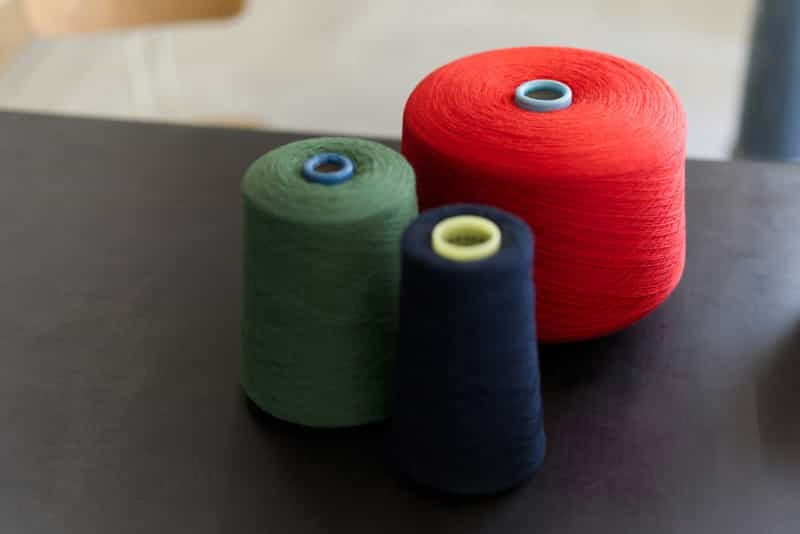
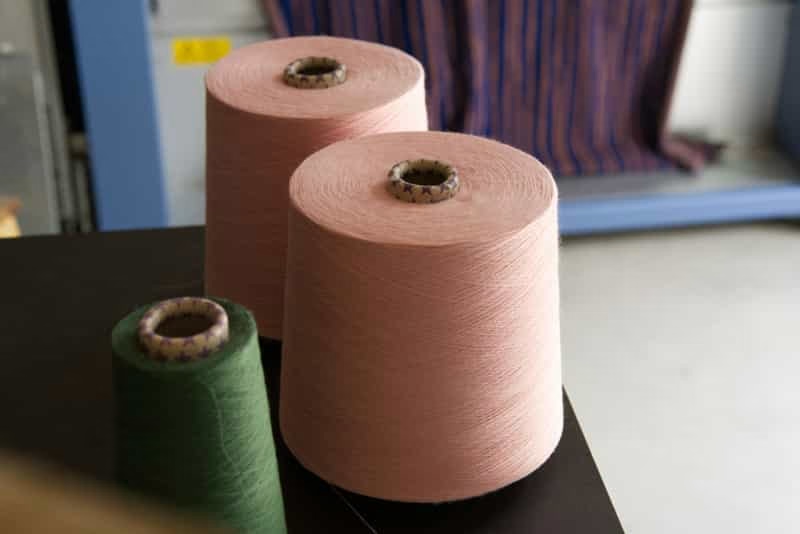
Spun yarns, formed by twisting staple fibers together, are a cornerstone of textile manufacturing, valued for their versatility, texture, and strength. This article provides a comprehensive exploration of spun yarns, detailing their characteristics, production methods, types, and applications. By examining the spinning processes, fiber properties, and practical uses, the article equips textile professionals with insights to optimize yarn selection and production for diverse textile applications.

Spun Yarns: Characteristics, Production, and Applications Read More »

spun yarn

Twist Insertion and Different Spinning Techniques in Textile Manufacturing

Twist insertion is a fundamental process in yarn production, imparting strength, cohesion, and structural integrity to fibers. Various spinning techniques, such as ring spinning, rotor spinning, air-jet spinning, and friction spinning, employ different methods of twist insertion to produce yarns with distinct properties. This article explores the mechanics of twist insertion, its significance in yarn formation, and the characteristics, advantages, and applications of major spinning techniques, providing a comprehensive resource for textile professionals seeking to optimize yarn production.

Twist Insertion and Different Spinning Techniques in Textile Manufacturing Read More »

lap-former

Lap Former Process in Yarn Spinning

The lap former process transforms carded slivers into a consistent lap for combing in yarn spinning. By consolidating slivers, ensuring uniformity, aligning fibers, and controlling quality, this process enhances yarn strength and quality. Specialized lap former machines achieve these objectives, making it a critical step in textile production.

Lap Former Process in Yarn Spinning Read More »

Speed Frame in Yarn Spinning

The speed frame process in yarn spinning converts slivers into roving through drafting, twisting, and winding, preparing fibers for ring spinning. By ensuring uniformity, strength, and quality, this process is critical for producing high-quality yarn. Advanced speed frame machines achieve these objectives, enhancing textile production efficiency.

Speed Frame in Yarn Spinning Read More »

Schiffli Embroidery Fabric Fixation Systems

Schiffli Embroidery Fabric Fixation Systems: Mechanisms and Applications

Schiffli embroidery, renowned for its intricate and ornate patterns, relies on specialized fabric fixation systems to ensure precision and stability during the embroidery process. This article examines the primary fabric fixation systems used in Schiffli embroidery machines—magic tape, needle, and fishbone systems—detailing their mechanisms, advantages, and applications. By exploring their roles in maintaining fabric tension and alignment, this article provides a comprehensive resource for textile professionals seeking to optimize Schiffli embroidery production.

Schiffli Embroidery Fabric Fixation Systems: Mechanisms and Applications Read More »

fabrics

Blended Fabrics: Engineering Superior Textiles Through Fiber Integration

Blended fabrics represent the pinnacle of textile engineering, combining different fibers to create materials with superior performance characteristics. This comprehensive guide explores the science behind fiber blending, manufacturing processes, popular blend combinations, and their applications in modern textile production.

Blended Fabrics: Engineering Superior Textiles Through Fiber Integration Read More »

regenerated protein fibers

Manmade Regenerated Protein Textile Fibres: Properties and Applications

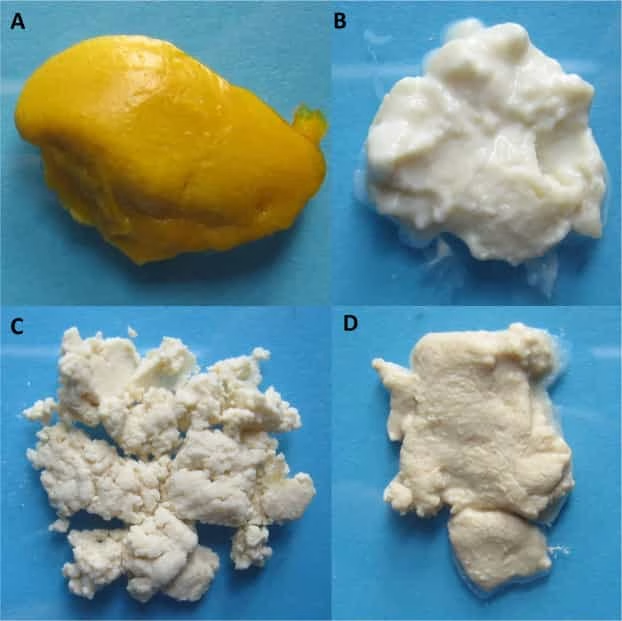
Manmade regenerated protein textile fibres, such as those made from casein, soy, and zein, offer sustainable and biodegradable options for textile production. With properties like softness and moisture absorption, these fibres are used in apparel and home textiles, contributing to environmentally conscious textile manufacturing.

Manmade Regenerated Protein Textile Fibres: Properties and Applications Read More »

Schiffli Embroidery

Schiffli Embroidery Finishing and Detailing

Schiffli embroidery finishing and detailing involve meticulous processes like thread trimming, stabilizer removal, cleaning, pressing, and quality inspection to refine embroidered textiles. These steps ensure high-quality, durable, and visually appealing products, making Schiffli embroidery ideal for apparel and home textiles.

Schiffli Embroidery Finishing and Detailing Read More »

Scroll to Top