Introduction
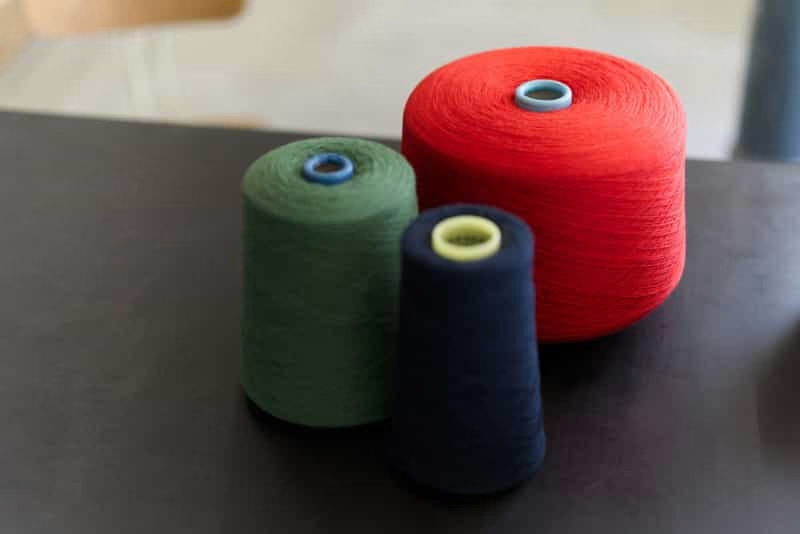
Spun yarns are created by twisting together short, discontinuous fibers, known as staple fibers, to form a continuous strand. Unlike filament yarns, which consist of long, continuous fibers, spun yarns are characterized by their textured surface, flexibility, and ability to be produced from a wide range of natural and synthetic fibers. Spun yarns are integral to the textile industry, used in apparel, home textiles, and technical fabrics due to their unique properties. This article explores the characteristics of spun yarns, the spinning techniques used in their production, their types, advantages, disadvantages, and applications, providing a detailed resource for understanding their role in textile manufacturing [Textile World, 2023].
Characteristics of Spun Yarns
Spun yarns exhibit distinct properties that arise from their construction and the nature of staple fibers. These characteristics influence their performance in fabrics and end-use applications.
- Texture and Appearance: Spun yarns have a fuzzy, textured surface due to protruding fiber ends, contributing to a soft hand-feel and matte appearance. This contrasts with the smooth, lustrous surface of filament yarns.
- Strength: The strength of spun yarns depends on the degree of twist and fiber properties. Higher twist levels increase fiber cohesion, enhancing tensile strength.
- Flexibility: Spun yarns are flexible and conformable, making them ideal for fabrics requiring drape and comfort, such as clothing and bedding.
- Absorbency: Natural fiber-based spun yarns, like cotton or wool, are highly absorbent, improving comfort in apparel and towels.
- Insulation: The air trapped within the fuzzy structure of spun yarns provides thermal insulation, beneficial for winter clothing and blankets.
- Pilling Tendency: The protruding fiber ends in spun yarns can lead to pilling, particularly in synthetic blends, requiring finishing treatments to mitigate.
These properties are quantified through tests such as tensile strength (ASTM D2256) and pilling resistance (ASTM D3512), which guide yarn selection for specific applications [Textile Technology, 2024].
Production of Spun Yarns
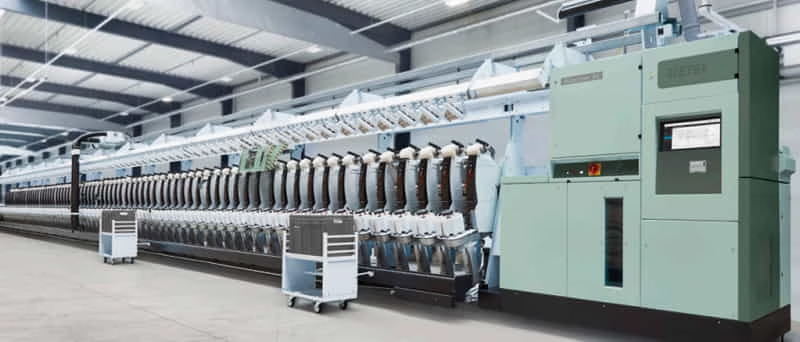
Spun yarns are produced through a series of processes that align, twist, and consolidate staple fibers into a continuous yarn. The primary spinning techniques include ring spinning, rotor spinning, air-jet spinning, and friction spinning, each imparting distinct characteristics to the yarn.
Ring Spinning
Process: Fibers are carded or combed to align them, then drafted to reduce thickness. A rotating spindle inserts twist, and the yarn is wound onto a bobbin via a traveler. The twist level is calculated as:
Characteristics: Produces strong, uniform yarns with high tensile strength, suitable for fine fabrics. However, it is slower and more energy-intensive.
Applications: Dress shirts, suits, and high-quality bedding.
Rotor Spinning
Process: Fibers are fed into a rotating rotor, where air currents deposit them into a groove, forming a yarn as twist is inserted. The twist is determined by:
Characteristics: Faster and cost-effective, producing slightly less uniform yarns with moderate strength, ideal for coarser counts.
Applications: Denim, towels, and upholstery.
Air-Jet Spinning
Process: Air jets entangle fibers, wrapping outer fibers around a core of parallel fibers to form a fasciated yarn. The twist level depends on air pressure and nozzle design.
Characteristics: High production speed and low hairiness, but lower strength due to the false twist structure.
Applications: Casual apparel, sheets, and blended fabrics [Fibre2Fashion, 2024].
Friction Spinning
Process: Fibers are fed onto a rotating drum, where friction imparts twist, forming a layered yarn structure.
Characteristics: Produces coarse, bulky yarns with low strength, suitable for specialty applications.
Applications: Carpets, blankets, and filtration fabrics.
Types of Spun Yarns
Spun yarns are classified based on fiber type, structure, and spinning method. Common types include:
- Single Yarns: Made from one strand of twisted fibers, used in lightweight fabrics.
- Plied Yarns: Two or more single yarns twisted together, increasing strength and stability for heavy-duty fabrics.
- Blended Yarns: Combine different fiber types (e.g., cotton-polyester) to balance properties like absorbency and durability.
- Core-Spun Yarns: Feature a filament core (e.g., spandex) wrapped with staple fibers, providing stretch for activewear.
- Novelty Yarns: Incorporate irregular twists or structures (e.g., slub yarns) for decorative effects in fashion textiles.
Advantages of Spun Yarns
Spun yarns offer several advantages that make them indispensable in textile production:
- Versatility: Can be produced from natural (cotton, wool, linen) and synthetic (polyester, acrylic) fibers, catering to diverse applications.
- Comfort: Fuzzy texture and absorbency enhance comfort in apparel and home textiles.
- Texture: Provide a tactile, natural feel suitable for casual and luxury fabrics.
- Customizability: Twist levels and blending allow tailoring of yarn properties for specific needs.
Disadvantages of Spun Yarns
Despite their benefits, spun yarns have some limitations:
- Pilling: Protruding fiber ends can form pills, affecting appearance and requiring anti-pilling finishes.
- Lower Strength: Compared to filament yarns, spun yarns may have lower tensile strength, especially in low-twist configurations.
- Production Complexity: Spinning processes are more complex and time-consuming than filament yarn production.
Applications of Spun Yarns
Spun yarns are used across a wide range of textile products due to their versatility:
- Apparel: Cotton spun yarns in denim, shirts, and knitwear; wool spun yarns in sweaters and suits.
- Home Textiles: Used in towels, bedding, and upholstery for their absorbency and texture.
- Technical Textiles: Employed in workwear, medical textiles, and geotextiles for durability and functionality.
- Decorative Textiles: Novelty spun yarns create unique patterns in fashion and interior design fabrics.
For example, core-spun yarns with spandex cores are widely used in stretch denim, combining the comfort of cotton with elasticity for fitted jeans [Sustainable Textile, 2024].
Practical Considerations
Selecting spun yarns involves evaluating fiber type, yarn count, twist level, and spinning method based on the intended application. For instance, high-twist ring-spun cotton yarns are ideal for durable shirting, while low-twist rotor-spun yarns suit bulky towels. Challenges include managing pilling, ensuring uniformity, and optimizing production costs. Advances in spinning technology, such as automated rotor spinning and eco-friendly fiber processing, are addressing these challenges.
Sustainability in Spun Yarn Production
Sustainability is a growing focus in spun yarn production. Using organic or recycled fibers, such as organic cotton or recycled polyester, reduces environmental impact. Energy-efficient spinning techniques, like rotor and air-jet spinning, lower carbon footprints compared to ring spinning. Additionally, processes like low-water carding and waste fiber recycling support circular economy principles, aligning with global sustainability goals [Textile World, 2023].
Conclusion
Spun yarns are a vital component of textile manufacturing, offering a unique combination of texture, comfort, and versatility. Their production through various spinning techniques—ring, rotor, air-jet, and friction spinning—allows for tailored properties to meet diverse application needs. From apparel to technical textiles, spun yarns play a critical role in delivering functional and aesthetic value. As the industry advances, innovations in sustainable fibers and spinning technologies will further enhance the efficiency and environmental performance of spun yarn production, ensuring its continued relevance in the global textile market.