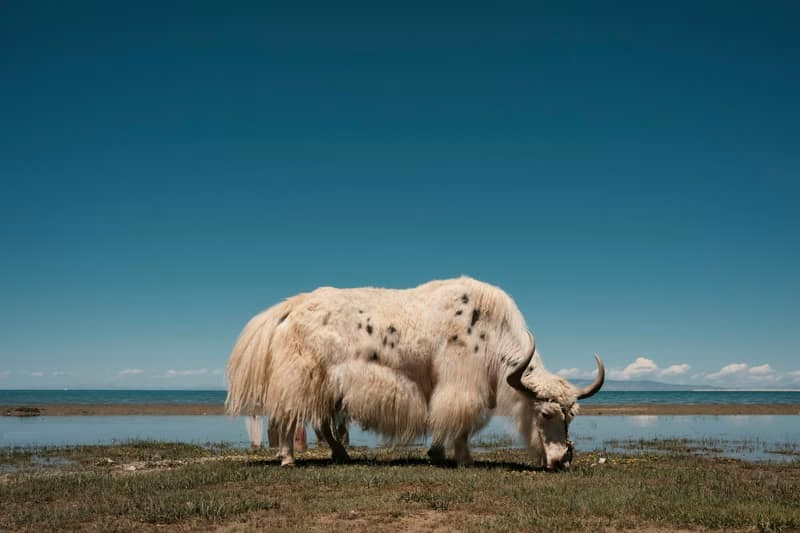
Yak fiber is the soft down from the undercoat of the domestic yak, collected by combing during the animal’s spring molt by herders in Tibet, Nepal, Mongolia and Northern India. At 16–20 microns it is comparable to high-grade cashmere; it is warmer than sheep wool, breathable and free of lanolin. An adult yak gives about 300–500 grams of usable down a year, naturally brown, gray or beige.
Yak Fiber: The Warm, Earthy Luxury of the High Himalayas
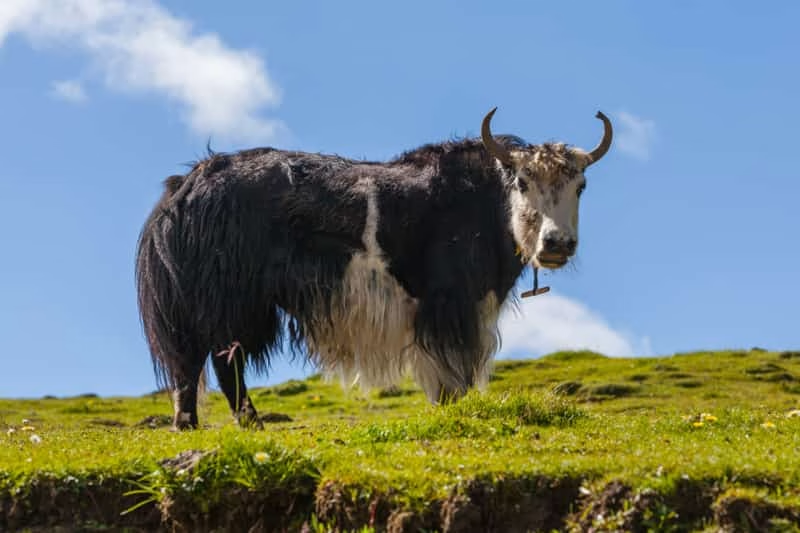
Yak fiber, often referred to as “Himalayan cashmere,” is a fine, downy wool derived from the undercoat of the yak, a long-haired bovine native to the Tibetan Plateau and Central Asia. These hardy animals survive altitudes above 3,000 meters, enduring temperatures as low as –40°C. Their survival depends on a three-layered coat that insulates them from the extreme cold.
Only the soft undercoat of this three-layered fleece is used to produce yak fiber for textiles. This down is naturally shed each spring and carefully collected by combing, a process that is both sustainable and humane.
The primary species used for fiber production is the domestic yak (Bos grunniens). Yaks are herded by nomadic families in Tibet, Nepal, Mongolia, and Northern India. The annual shedding of the undercoat provides an ethical and non-invasive source of fiber without harming the animal. One adult yak produces around 300–500 grams of usable down fiber per year.
Yak fiber exhibits a remarkable balance of warmth, softness, breathability, and durability. It has a natural fineness of 16–20 microns, making it comparable to high-grade cashmere. Despite being fine, the fiber is very strong, providing long-lasting garments that resist pilling. It is naturally moisture-wicking and thermoregulating, making it comfortable to wear in varying climates.
The natural colors of yak fiber include chocolate brown, gray, and beige tones. It is rarely dyed in traditional use, but modern applications do include dyed varieties while still honoring its earthy origins. The fiber is often blended with silk, merino, or alpaca to enhance elasticity and softness or spun on its own into pure yak yarns.
In terms of luxury comparison, yak fiber holds its own against cashmere, alpaca, and camel wool. It is warmer and more breathable than merino wool, more affordable than vicuña, and softer than many commercial-grade alpaca types. With growing consumer interest in sustainability, yak fiber is gaining recognition as an eco-conscious alternative to overfarmed cashmere.
Because it is free from lanolin, yak wool is naturally hypoallergenic and safe for those with wool sensitivities. It is low-maintenance—resistant to odor, and breathable—making it suitable for daily wear in both urban and rural environments.
Yak fiber is used in scarves, shawls, sweaters, socks, hats, and baby garments. Traditional Tibetan robes and shawls are often woven from yak wool, while modern fashion houses now create luxury items using yak yarn.
Garment care for yak wool is similar to other fine animal fibers. It is best hand-washed in cool water with mild detergent and laid flat to dry. Because of its resilience and odor-resistance, yak wool does not require frequent washing, contributing to its eco-friendly appeal.
For centuries, yak wool has played a vital role in the lives of Himalayan nomads. In recent decades, it has begun to captivate global designers and sustainable textile lovers seeking rare, ethical alternatives to conventional wool. Organizations like the Norlha Atelier and the Tibetan Yak Wool Project work with local herders to turn yak fiber into luxury goods while preserving cultural heritage and generating rural income.
Yak fiber, with its humble origin and high-performance features, exemplifies what modern consumers seek: ethical sourcing, premium quality, cultural authenticity, and environmental sustainability. It is more than just a textile—it’s a connection to the highlands, the heritage of mountain people, and the quiet strength of an animal evolved to endure the harshest climates.
Citations & References:
- Textile Exchange – “The Rise of Yak Wool in Sustainable Fashion”
- Norlha Atelier – Yak Wool Crafts and Ethical Production
- The Yak Fiber Handbook – Himalayan Textiles Research Center
- International Wool Textile Organization (IWTO) – Yak vs Cashmere
- Nomad’s Land NGO – Sustainable Livestock & Fiber in Tibet
- Interweave Press – “Spinning Exotic Fibers: Yak, Camel, and Qiviut”