Camel hair is the fiber shed each spring by the two-humped Bactrian camel of Central Asia and gathered or hand-combed rather than shorn. Its fine undercoat, or down, measures 16–22 microns and is spun into warm, soft yarns for coats, sweaters and scarves, while the coarse outer guard hair goes into rugs and industrial textiles. A Bactrian camel yields 4–7 kg of fiber a year, only about 1–2 kg of it fine down.
Camel hair fiber, often overshadowed by more mainstream luxury wools, is a natural textile gem that has been used for centuries by nomadic desert communities. Derived from the Bactrian camel (Camelus bactrianus)—the two-humped species native to Central Asia—this fiber offers unmatched warmth, breathability, and natural performance.
1. Origin of Camel Wool: From the Steppes to the Spindle
Camel wool has long been used by Mongolian, Tibetan, and Central Asian nomads to make tents, cloaks, and blankets. It comes from:
- Bactrian camels, found across Mongolia, China, and Kazakhstan
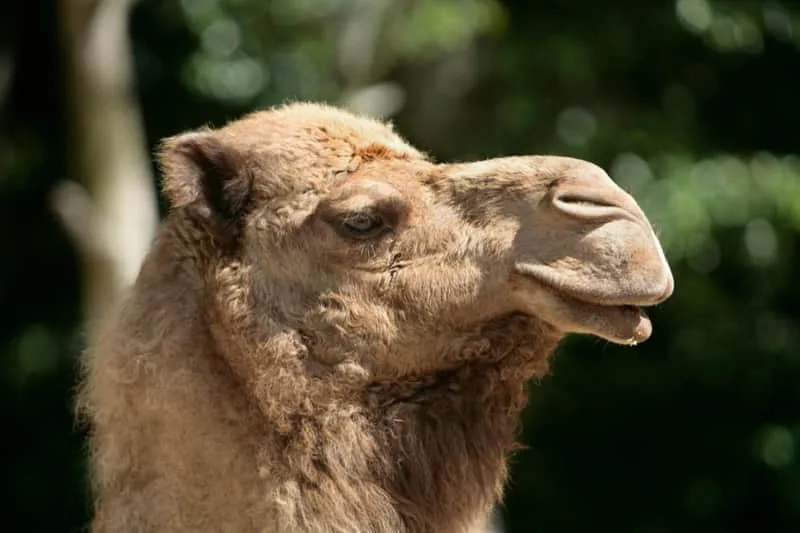
- Dromedary camels (single-humped), less commonly used for fiber, mostly in North Africa and the Middle East
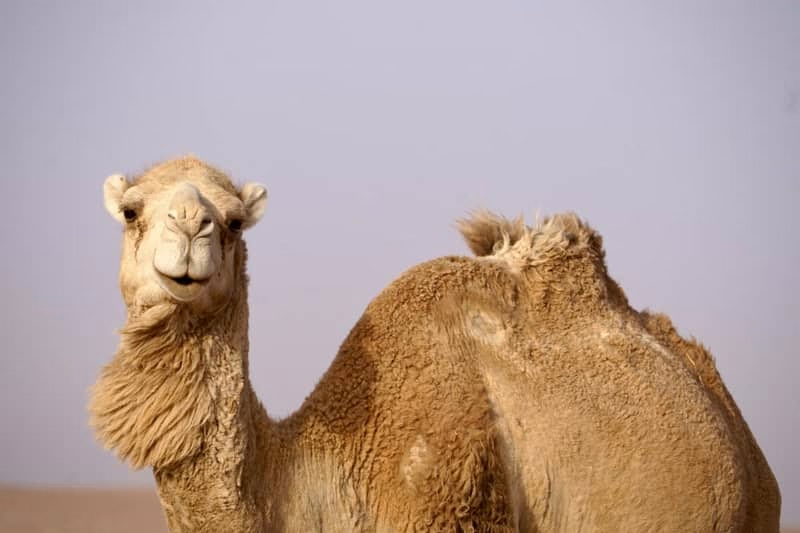
Each camel naturally sheds its coat in spring, which is then hand-combed or gathered, making camel wool one of the most ethically sourced animal fibers in the world.
2. Structure of Camel Fiber
Camel hair consists of two layers:
- Outer guard hair: Coarse, long, used for rugs and industrial textiles
- Undercoat (down): Fine, soft, and used for apparel-grade yarns
3. Properties of Camel Down Fiber
| Property | Camel Hair (Down) |
|---|---|
| Fiber Diameter | 16–22 microns |
| Warmth | Comparable to or warmer than sheep wool |
| Softness | Soft, comparable to alpaca or cashmere |
| Color | Natural tan, golden, or reddish-brown |
| Moisture Regulation | Excellent – breathable yet insulating |
| Hypoallergenic | No lanolin, suitable for sensitive skin |
| Shrinkage | Minimal when washed carefully |
Thermoregulatory properties allow camels to survive harsh climates—and those same properties benefit humans who wear camel wool.
4. Camel Wool vs Other Rare Fibers
| Fiber | Warmth | Softness | Durability | Shrinkage | Elasticity |
|---|---|---|---|---|---|
| Camel Down | ★★★★★ | ★★★★☆ | ★★★★☆ | ★★☆☆☆ | ★★★☆☆ |
| Cashmere | ★★★★☆ | ★★★★★ | ★★★☆☆ | ★★★☆☆ | ★★☆☆☆ |
| Yak Down | ★★★★★ | ★★★★☆ | ★★★★☆ | ★★☆☆☆ | ★★☆☆☆ |
| Alpaca | ★★★★☆ | ★★★★☆ | ★★★★☆ | ★★★☆☆ | ★★★☆☆ |
Camel wool stands out for its ability to regulate temperature—keeping wearers warm in cold and cool in heat.
5. Sustainable and Ethical Harvesting
Camel wool is among the most sustainably and humanely collected fibers in the world:
- No shearing: Camels shed naturally in spring.
- Manual collection: Hand-combed or gathered from shedding camels
- Zero harm: Animals are not stressed, harmed, or exploited
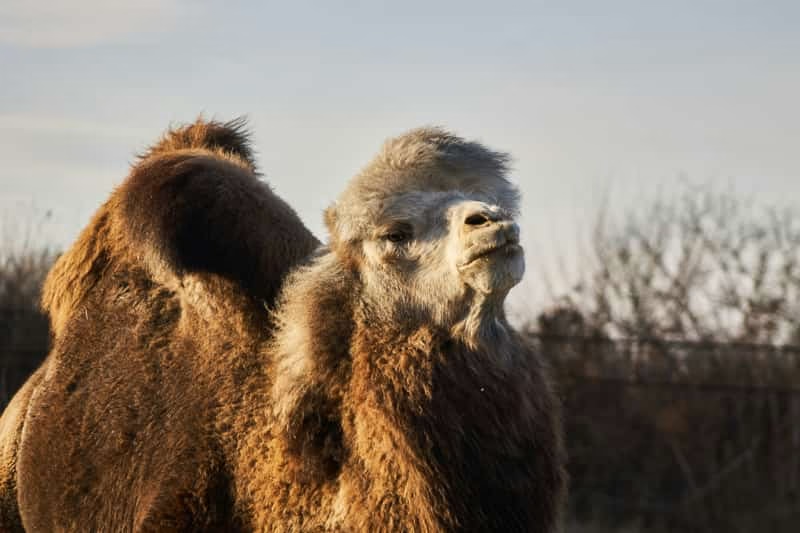
Nomadic herders often collect the fiber and sell it to cooperatives or manufacturers. This preserves traditional livelihoods and promotes slow fashion.
6. Yield and Availability
- A single Bactrian camel yields 4–7 kg of fiber per year
- Of this, only ~1–2 kg is fine down
- Processing includes cleaning, dehairing (removing guard hairs), and carding before spinning
Because of its limited annual yield, camel down is considered a rare luxury fiber, though not as scarce as qiviut or vicuña.
7. Uses of Camel Hair
Camel hair is prized in both traditional and luxury applications:
- Outerwear: Coats, jackets, and overcoats
- Sweaters and scarves
- Blankets and throws
- Upholstery and artisan rugs (coarser outer hairs)
Fabrics made from camel down are lightweight, warm, and naturally colored in rich earth tones—offering elegance without dyeing.
8. Care and Maintenance
Camel hair requires gentle handling:
- Hand wash in cold water with wool-safe detergent
- Dry flat, avoid wringing
- Air dry between uses to retain loft
- Dry-cleaning is common for outerwear
Proper care extends garment life and retains softness.
9. Cultural and Economic Value
Camel wool is a cornerstone of nomadic and tribal cultures in Central Asia. It:
- Supports sustainable desert livelihoods
- Requires minimal water or feed resources for production
- Offers an eco-conscious alternative to synthetic fibers
Brands like Maiwa, Khullu, and several Mongolian cooperatives now bring ethically sourced camel wool to the luxury market.
Conclusion
Camel hair fiber is a desert-born marvel—warm, breathable, and naturally sustainable. Its rare combination of softness, ethical sourcing, and low environmental impact makes it a smart choice for eco-conscious consumers. As fashion looks to tradition and sustainability, camel wool is poised for a rightful return to the spotlight.
Citations & References:
- Textile Exchange – “Specialty Animal Fibers Report 2024”
- International Wool Textile Organization (IWTO) – Camel Hair Properties
- UNDP Mongolia – Nomadic Herding and Wool Production
- The Sustainable Angle – Guide to Ethical Animal Fibers
- Journal of Natural Fibers – Comparative Study of Camel and Sheep Wool
- Khullu.co – Mongolian Camel Wool Products
- Maiwa Textiles – Ethical Wool Sourcing