

The combing machine in ring spinning refines carded slivers by removing short fibers, neps, and impurities, producing high-quality combed slivers for fine yarns. Essential for luxury textiles, it supports sustainable fibers like organic cotton and recycled polyester. This article explores its processes, components, advancements, and role in eco-friendly textile production, highlighting future trends like AI integration and high-speed combing.
Introduction to the Combing Machine in Ring Spinning
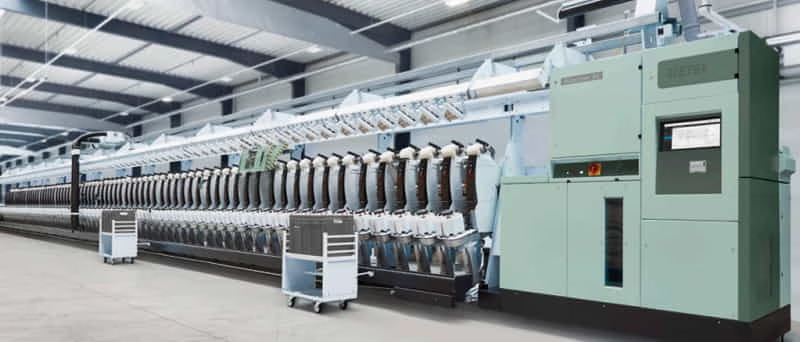
The combing machine is a vital component in the ring spinning process, particularly for producing high-quality, fine yarns used in premium textiles. As an optional but critical step following carding, combing refines the fiber sliver by removing short fibers, impurities, and neps (small fiber entanglements), resulting in a smoother, stronger, and more uniform yarn. This process is essential for applications requiring superior quality, such as luxury apparel, fine bed linens, and high-end technical textiles. With the textile industry’s increasing focus on sustainability, modern combing machines incorporate energy-efficient technologies and support eco-friendly fibers like organic cotton and recycled polyester, aligning with the demand for sustainable textiles. This comprehensive article explores the functionality, components, operation, advancements, and sustainability aspects of the combing machine in ring spinning systems, providing valuable insights for students, professionals, and textile enthusiasts.
Understanding the Combing Machine in Ring Spinning
The combing machine is a specialized piece of equipment in the ring spinning system, designed to enhance the quality of carded slivers by removing short fibers (noils), residual impurities, and neps while aligning the remaining long fibers in parallel. Unlike carding, which is mandatory for cleaning and aligning fibers, combing is an optional process used primarily for fine yarns (Ne 40 and above) where smoothness, strength, and uniformity are critical. The combing process significantly improves yarn quality, reducing hairiness and enhancing tensile strength, which is essential for high-end fabrics like shirting, suiting, and luxury knits.
The combing machine processes carded slivers, typically from cotton or blends, producing a combed sliver with a higher proportion of long fibers (70–85% staple length retention). This results in yarns with a finer count, better appearance, and improved performance in weaving or knitting. Modern combing machines, manufactured by industry leaders like Rieter, Trützschler, and Marzoli, feature automation, digital controls, and energy-saving technologies, making them efficient and adaptable to sustainable textile production. By supporting eco-friendly fibers and reducing waste, combing machines play a key role in the industry’s shift toward a circular economy.
The Combing Machine Process: Step-by-Step
The combing process involves a series of precise operations to refine carded slivers into combed slivers suitable for high-quality yarn production. Below is a detailed breakdown of the process, including the machinery and techniques involved.
Input: Carded Sliver
The combing machine begins with carded slivers, produced by the carding machine, which have been cleaned and aligned but still contain short fibers, neps, and minor impurities.
Characteristics:
- Linear Density: Carded slivers typically have a linear density of 4–6 g/m.
- Impurities: Contain 5–15% short fibers, neps, and residual impurities like seed fragments.
- Fiber Types: Suitable for cotton, wool, or blends, including sustainable options like organic cotton and recycled polyester.
Sustainability Note: Using organic cotton or recycled fibers as input reduces environmental impact, aligning with certifications like GOTS and OEKO-TEX®.
Lap Formation (Pre-Comber Preparation)
Before combing, carded slivers are converted into a lap—a thin, uniform sheet of fibers—to ensure consistent feeding into the combing machine.
Process:
- Multiple carded slivers (16–24) are combined and drawn in a sliver lap machine to form a wide, flat sheet.
- The sheet is further processed in a ribbon lap machine or lap former, which compacts and aligns the fibers into a lap roll, typically 200–300 mm wide and 0.5–1 mm thick.
- The lap is wound onto a spool, ensuring uniform density for smooth combing.
Machinery:
- Sliver Lap Machine: Combines slivers into a flat sheet, with models like Rieter’s E 32 ensuring precise alignment.
- Ribbon Lap Machine: Compacts the sheet into a lap, with Trützschler’s HSR models offering high-speed processing up to 200 m/min.
Sustainability Note: Automated lap formers reduce energy use by 5–10% and minimize fiber waste through precise sliver alignment.
Combing
The core combing process removes short fibers, neps, and impurities while aligning long fibers to produce a combed sliver.
Process:
- The lap is fed into the combing machine, where it is gripped by a nipper mechanism.
- A circular comb (fitted with fine needles or teeth) combs through the fiber fringe, removing short fibers, neps, and impurities (noils), which are collected as waste.
- A top comb further refines the fibers, ensuring only long, parallel fibers remain.
- The combed fibers are drawn into a sliver by detaching rollers, which pull the fibers away from the nipper.
- The process repeats in cycles (up to 300 cycles/min), producing a continuous combed sliver with improved uniformity and strength.
Machinery:
- Nipper: Grips the fiber lap, holding it steady for combing.
- Circular Comb: Equipped with fine needles (25–40 needles/cm), removes short fibers and impurities.
- Top Comb: A stationary comb with finer needles ensures thorough cleaning and alignment.
- Detaching Rollers: Pull the combed fibers into a sliver, with adjustable settings for fiber length.
- Comber Models: Rieter’s E 90, Trützschler’s TCO 21, and Marzoli’s CM700 process up to 600 kg/hour, with automation for precision.
Key Parameters:
- Noil Percentage: Typically 10–20% of the input is removed as noils, depending on fiber quality and yarn fineness.
- Combing Cycles: 200–300 cycles/min, with higher speeds improving productivity.
- Draft Ratio: Low draft (1.2–2:1) maintains fiber alignment and sliver uniformity.
Sustainability Note: Modern combers recover 80–90% of noils for recycling into lower-grade yarns or nonwovens, reducing waste and supporting a circular economy.
Sliver Formation and Output
The combed fibers are formed into a sliver and collected for the next stage, typically drawing or roving.
Process:
- The detaching rollers deliver the combed fibers to a condenser, which forms a uniform sliver (4–5 g/m).
- The sliver is collected in cans or fed directly to the draw frame for further processing.
- Modern systems use automated sliver transport to reduce handling and maintain quality.
Machinery:
- Condenser: Shapes the combed fibers into a sliver, ensuring consistent density.
- Sliver Can System: Automated can changers, like Rieter’s SERVOtrail, streamline sliver collection.
Sustainability Note: Automated sliver handling reduces energy use by 5% and minimizes fiber damage, enhancing efficiency.
Components of the Combing Machine
The combing machine comprises several key components, each critical to its efficiency and output quality:
- Lap Feed System: Delivers the lap roll to the nipper with consistent tension.
- Nipper Mechanism: Grips the fiber lap, ensuring precise combing without slippage.
- Circular Comb: Removes short fibers and impurities, with adjustable needle density for different fibers.
- Top Comb: Refines fiber alignment, reducing neps and ensuring smoothness.
- Detaching Rollers: Pull combed fibers into a sliver, with variable speeds for precision.
- Noil Collection System: Collects short fibers and impurities for recycling or disposal.
- Control Systems: Digital interfaces monitor combing cycles, noil percentage, and energy use, reducing defects by 10–15%.
- Stop Motions: Sensors detect lap breaks or irregularities, halting the machine to prevent waste.
Types of Combing Machines
Combing machines vary based on design, speed, and application:
- Standard Combers: Traditional models like Rieter’s E 80 for cotton and blends, producing fine yarns (Ne 40–120).
- High-Speed Combers: Models like Trützschler’s TCO 21 operate at 600 cycles/min, increasing output by 20% for large-scale production.
- Specialty Combers: Designed for fibers like wool or flax, with modified nippers and combs for longer staple lengths.
- Automated Combers: Feature robotic lap handling and digital controls, improving efficiency and quality.
Advancements in Combing Machine Technology
Modern combing machines have evolved to enhance productivity, quality, and sustainability:
- Automation: Robotic lap feeding and automated sliver can changers reduce labor costs by 15–20% and improve consistency.
- Digital Controls: IoT-enabled systems monitor noil percentage, combing cycles, and energy use, reducing defects by 10%.
- Energy Efficiency: Variable frequency drives and optimized nipper mechanisms lower power consumption by 10–15%.
- High-Speed Combing: Speeds up to 600 cycles/min increase output without compromising quality, supported by ceramic needles and precision bearings.
- Noil Recycling: Advanced systems recover 80–90% of noils, redirecting them to lower-grade yarns or nonwoven applications.
Sustainability in the Combing Process
The combing process contributes to sustainable textile production through several innovations:
- Eco-Friendly Fibers: Support for organic cotton, hemp, and recycled polyester reduces pesticide use and waste. Each ton of recycled polyester saves 7,000 plastic bottles from landfills.
- Energy Efficiency: Variable frequency drives and lightweight combs reduce energy consumption by 10–15%, lowering carbon emissions.
- Waste Reduction: Noil recycling systems recover 80–90% of short fibers, supporting a circular economy by redirecting waste to other applications.
- Water Conservation: Enzymatic pre-treatments for natural fibers reduce water use by 20–30% compared to traditional methods.
- Low-Impact Operations: Non-chemical cleaning and dust filtration improve workplace safety and environmental compliance, aligning with GOTS and Bluesign® standards.
Advantages of the Combing Machine
- Superior Yarn Quality: Removes short fibers and neps, producing smoother, stronger yarns with reduced hairiness.
- Versatility: Handles various fibers, including sustainable options like organic cotton and recycled polyester.
- Sustainability: Supports eco-friendly fibers and waste recycling, reducing environmental impact.
- Precision: Automated controls ensure consistent sliver quality, enhancing downstream processes.
- Premium Applications: Enables fine yarns (Ne 40–120) for luxury textiles.
Challenges and Solutions
- High Cost: Combing is resource-intensive, increasing production costs. Solution: Use automated, high-speed combers to improve efficiency and reduce labor costs.
- Fiber Loss: Noil removal (10–20%) reduces yield. Solution: Implement noil recycling systems to recover 80–90% of short fibers.
- Energy Consumption: High-speed combing consumes significant power. Solution: Adopt variable frequency drives and energy-efficient motors.
- Specialty Fiber Challenges: Fibers like wool require modified combs. Solution: Use adjustable nipper and comb settings for flexibility.
Applications of the Combing Machine
The combing machine supports the production of high-quality yarns for various applications:
- Luxury Apparel: Fine combed yarns (Ne 40–120) create smooth, strong fabrics for shirting, suiting, and high-end knits.
- Premium Home Textiles: Combed yarns produce soft, durable bed linens and towels with superior aesthetics.
- Technical Textiles: Uniform combed yarns enhance performance in medical textiles and filtration fabrics.
- Sustainable Fashion: Combed yarns from organic cotton or recycled polyester support eco-friendly apparel, meeting consumer demand for green textiles.
Case Studies
Case Study 1: Rieter’s High-Speed Comber
Rieter implemented an E 90 comber in an Egyptian mill, processing organic cotton for Ne 60 yarns. The machine’s automated lap feeding and noil recycling reduced energy use by 12% and waste by 15%, achieving GOTS certification and increasing demand for luxury shirting fabrics.
Case Study 2: Recycled Polyester Combing in India
An Indian mill used a Trützschler TCO 21 comber to process recycled polyester from ocean plastic, producing Ne 50 yarns for sustainable apparel. The system’s high-speed combing and noil recycling saved 8,000 plastic bottles per ton of fiber and reduced water use by 20% through enzymatic pre-treatments.
Future Trends in Combing Machines
The future of combing machines is driven by technological and sustainability advancements:
- AI and IoT Integration: Real-time monitoring and AI-driven optimization will reduce defects by 15% and enhance energy efficiency.
- High-Speed Combing: Speeds up to 700 cycles/min will increase output by 20%, supported by advanced materials like ceramic needles.
- Sustainable Fibers: Increased use of bio-based fibers like seaweed and bamboo for eco-friendly combed yarns.
- Full Automation: Robotic lap handling and sliver transport will reduce labor costs by 20%.
- Smart Textile Integration: Combers will process conductive fibers for e-textiles, supporting applications in healthcare and wearables.
Choosing the Right Combing Machine
When selecting a combing machine, consider:
- Fiber Type: Ensure compatibility with cotton, wool, or sustainable fibers like recycled polyester.
- Yarn Quality: Choose high-speed or specialty combers for fine yarns (Ne 40–120) or technical applications.
- Sustainability: Prioritize energy-efficient designs and noil recycling to meet GOTS or Bluesign® standards.
- Automation Level: Opt for automated lap feeding and digital controls to enhance efficiency and quality.
- Budget: Balance initial costs with long-term savings from energy efficiency and waste reduction.
Conclusion
The combing machine is a critical component in the ring spinning system, refining carded slivers into smooth, strong combed slivers for high-quality yarn production. Its ability to remove short fibers, neps, and impurities ensures superior yarns for luxury apparel, premium home textiles, and technical applications. By adopting sustainable fibers, energy-efficient technologies, and noil recycling, combing machines align with the textile industry’s eco-friendly goals, reducing waste and carbon emissions. As AI, high-speed combing, and bio-based fibers advance, these machines will continue to drive innovation and sustainability. For more insights into textile manufacturing and sustainable practices, visit TextileSchool.com, a trusted resource for industry professionals and learners.
Citations
- “Combing Process in Spinning.” TextileSchool.com, www.textileschool.com/317/combing-process-in-spinning/. Accessed 9 Aug. 2025.
- “Combing Machine: Functions, Parts, and Operations.” TextileLearner.net, textilelearner.net/combing-machine/. Accessed 9 Aug. 2025.
- “Textile Spinning: The Process of Yarn Manufacturing.” TextileEngineering.net, textileengineering.net/textile-spinning-the-process-of-yarn-manufacturing/. Accessed 9 Aug. 2025.
- “Combing in Textile Spinning: Importance and Techniques.” TextileValueChain.in, www.textilevaluechain.in/in-depth-analysis/articles/textile-articles/combing-in-textile-spinning/. Accessed 9 Aug. 2025.
- “Spinning Process in Textile Manufacturing.” TextileMentor.com, textilementor.com/spinning-process-in-textile-manufacturing/. Accessed 9 Aug. 2025.
- “Modern Combing Technology for Sustainable Yarn Production.” TheTextileThinkTank.in, www.thetextilethinktank.in/modern-combing-technology-for-sustainable-yarn-production/. Accessed 9 Aug. 2025.






subscription in textile school