
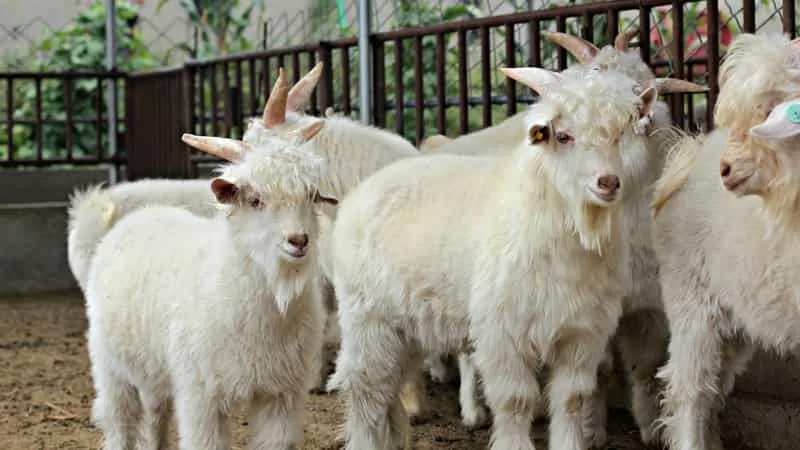
Cashgora is a rare, hybrid natural fiber produced from crossbred goats developed by combining the cashmere goat and the Angora goat. The resulting fleece offers a balance of cashmere’s softness and mohair’s strength and sheen. While not as well-known as its parent fibers, cashgora is used in high-quality yarns and garments valued for their durability, warmth, and drape. Ethically sourced and relatively sustainable, it’s a rising star among lesser-known luxury animal fibers.
1. Origin and Development
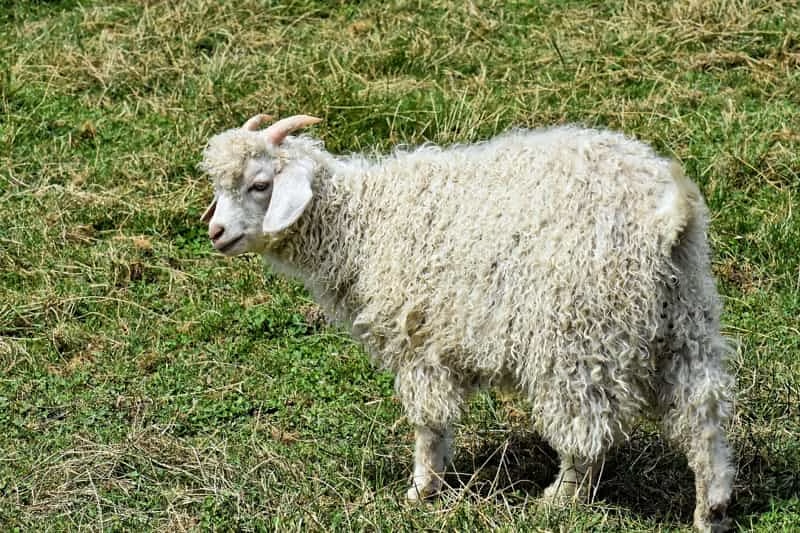
Cashgora is not the result of a specific breed but a crossbreed between cashmere-producing goats (typically local or indigenous breeds) and Angora goats, which produce mohair. This hybridization began in regions like Turkey, Iran, and parts of Central Asia in efforts to create a fiber that bridges the fine softness of cashmere and the lustrous strength of mohair.
The name “cashgora” itself is a blend of cashmere and angora, representing its mixed heritage. While the fiber has not achieved the market dominance of its parent fibers, it has been quietly gaining recognition among specialty spinners and sustainable fashion circles.
2. Characteristics of Cashgora Fiber
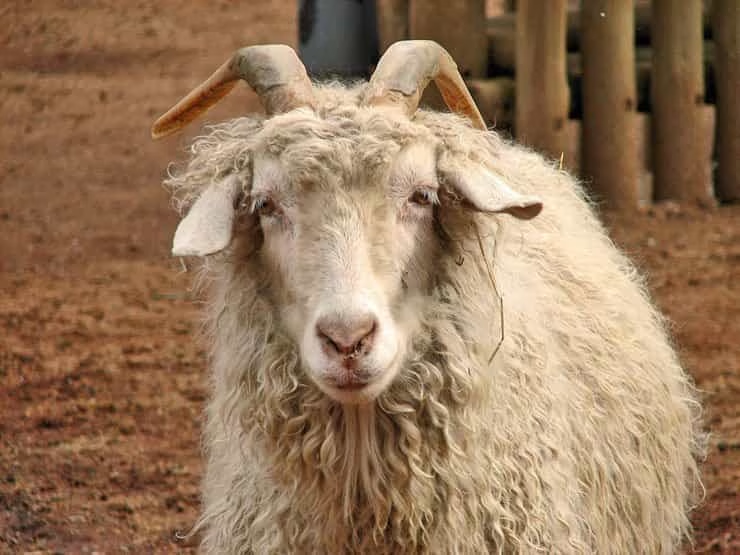
Cashgora fleece exhibits a mix of features from both parent breeds. Its texture and behavior can vary depending on the genetic makeup of each animal, but high-quality cashgora offers the following general characteristics:
- Fiber diameter ranges from 18–24 microns
- Silky, soft feel—comparable to lower-grade cashmere or fine baby alpaca
- Lustrous finish thanks to mohair influence
- Stronger and more elastic than pure cashmere
- Breathable, warm, and lightweight
- Naturally white or cream, but easily dyed
The fiber has low crimp (less bounce) but excellent drape, making it ideal for shawls, scarves, and flowing garments.
3. Cashgora vs Cashmere and Mohair
| Property | Cashgora | Cashmere | Mohair |
|---|---|---|---|
| Fiber Diameter | 18–24 microns | 14–18 microns | 25–40 microns |
| Softness | ★★★★☆ | ★★★★★ | ★★★☆☆ |
| Durability | ★★★★☆ | ★★☆☆☆ | ★★★★★ |
| Luster | ★★★★☆ | ★★☆☆☆ | ★★★★★ |
| Elasticity | ★★★☆☆ | ★★☆☆☆ | ★★★★☆ |
| Price Range | Moderate | Expensive | Moderate |
Cashgora serves as a middle ground—offering more affordability and resilience than cashmere, and greater softness than mohair.
4. Production and Availability
Cashgora production remains limited and mostly regional. It is harvested by combing or shearing, depending on the management system. Countries producing cashgora in small quantities include:
- Turkey – where early hybridization began
- Iran – where indigenous goats are crossbred with Angoras
- Kyrgyzstan and Tajikistan – through rural fiber development projects
- New Zealand and Australia – small niche farms
Annual yields per goat range from 500 to 1,200 grams of usable fiber, depending on the animal’s age and diet.
Because it lacks the name recognition of cashmere or mohair, cashgora is often underutilized despite its excellent textile properties.
5. Textile Uses of Cashgora
Cashgora fiber is well suited for luxury applications where durability, softness, and drape are desired. It is often spun into fine yarns used in:
- Lightweight sweaters and cardigans
- Soft shawls and wraps
- Scarves and cowls
- Fine knit accessories
- Hand-spun or artisan yarns
Blending with silk, merino, or alpaca enhances elasticity and stretch, especially in hand-knitting yarns.
6. Sustainability and Ethical Considerations
Cashgora fiber is considered relatively sustainable, especially when sourced from pasture-raised animals in mountainous or rural regions where goats graze naturally. Ethical aspects include:
- Non-harmful collection methods (combing or shearing)
- Minimal chemical processing
- Support for rural economies and women-led cooperatives
- Low land and water impact compared to synthetic alternatives
Initiatives in Central Asia promote cashgora as a regenerative income source, helping herding families earn through sustainable fiber markets.
7. Care and Maintenance
Cashgora garments require similar care to other fine fibers:
- Hand wash in cold water with a wool-safe detergent
- Avoid wringing; gently press to remove excess water
- Lay flat to dry, reshaping if needed
- Store clean garments in breathable cotton bags
Proper care will preserve softness and reduce pilling or matting over time.
8. Niche Appeal and Future Potential
While not yet widely marketed, cashgora is gaining attention among yarn enthusiasts, hand-spinners, and sustainable fashion designers. Its balanced properties, unique identity, and limited production give it a niche appeal.
As demand for ethically sourced and high-performance fibers grows, cashgora may emerge as a preferred alternative to cashmere—offering beauty, comfort, and strength without exclusivity or exploitation.
Conclusion
Cashgora fiber is a quiet contender in the world of rare luxury wools. With the gentleness of cashmere, the durability of mohair, and the authenticity of small-batch production, it invites textile lovers to discover a new kind of hybrid harmony—where softness meets strength, and sustainability meets sophistication.
Citations & References:
- FAO – “Hybrid Fiber Projects in Central Asia”
- Textile Exchange – “Emerging Sustainable Animal Fibers”
- Journal of Natural Fibers – Cashgora Fiber Microstructure
- Sustainable Goat Fiber Co-op – Case Study in Tajikistan
- The Spinner’s Guide to Rare Wools – Interweave Press
- International Goat Fiber Alliance – Breeding Programs and Fiber Grades
- Cashgora Project (USAID) – Community-based Fiber Development Initiatives




Excellent information about textile yarns. The SD Polytech yarn range offers options for different manufacturing and textile requirements.Visit Our Website: https://sdpolytech.com/yarn.php