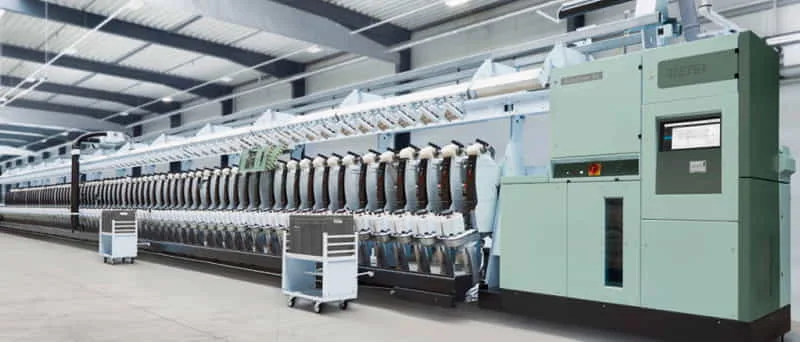
The speed frame process in yarn spinning transforms carded or combed slivers into roving, a precursor to the final yarn. Key objectives include drafting, twisting, roving formation, and quality control, ensuring uniform, strong, and high-quality roving for ring spinning. This article explores the speed frame process, its significance, and operational mechanisms in textile manufacturing.
Introduction
The speed frame, also known as the roving frame or simplex machine, is a pivotal stage in yarn spinning, bridging carding or combing and ring spinning. This process transforms carded or combed slivers into roving—a slightly twisted, continuous strand of fibers—suitable for further processing in the ring spinning frame. The speed frame enhances fiber alignment, strength, and uniformity, significantly influencing the quality of the final yarn. This article details the objectives, mechanisms, and importance of the speed frame process in textile manufacturing [1].
Objectives of the Speed Frame Process
The speed frame process serves several critical functions to prepare slivers for ring spinning. These objectives are outlined below:
1. Drafting of Slivers
The primary objective of the speed frame is to draft slivers, reducing their thickness and increasing their length. Drafting rollers attenuate the sliver by drawing it out, typically achieving a draft ratio of 5–20, depending on the desired roving fineness. This process aligns fibers and reduces the linear density of the sliver, preparing it for the finer drafting in ring spinning [2].
2. Twisting of Fibers
The speed frame imparts a slight twist to the drafted sliver to form roving, providing sufficient strength to withstand handling and further processing. The twist is applied using a flyer mechanism, which rotates the roving as it is wound onto a bobbin. This controlled twisting ensures the roving remains cohesive without being overly tight, facilitating smooth drafting in the ring spinning process.
3. Roving Formation
Roving formation is a key objective, producing a uniform, continuous strand of fibers wound onto bobbins. The speed frame consolidates the drafted and twisted fibers into roving with consistent thickness and strength, suitable for feeding into the ring spinning machine. Uniform roving formation is critical for ensuring consistent yarn quality [1].
4. Quality Control
Quality control is essential to ensure the roving meets the required standards for ring spinning. Modern speed frames are equipped with sensors and monitoring systems to detect irregularities in roving thickness, twist, or tension. These systems allow for real-time adjustments, minimizing defects and ensuring high-quality roving for subsequent processing.
Importance of the Speed Frame Process
The speed frame process is critical for producing high-quality yarn, as it refines slivers into roving suitable for ring spinning. Drafting and twisting enhance fiber alignment and strength, while roving formation ensures uniformity. Quality control mechanisms reduce defects, improving yarn consistency and production efficiency. Inadequate speed frame performance can lead to uneven roving, excessive breakage, or poor yarn quality, making this process indispensable in textile manufacturing.
Key Components and Actions in the Speed Frame Process
The speed frame machine consists of several key components that facilitate its objectives:
- Drafting System: Comprises multiple rollers to attenuate slivers and align fibers.
- Flyer Mechanism: Imparts twist to the roving and guides it onto the bobbin.
- Bobbin Winding System: Winds the roving onto bobbins with consistent tension.
- Monitoring Systems: Detect and correct irregularities in roving thickness and twist.
These components work in tandem to draft, twist, and wind slivers into uniform roving, preparing them for ring spinning.
Challenges and Considerations
Achieving the objectives of the speed frame process requires addressing several challenges:
- Uneven Roving: Inconsistent drafting or tension can lead to irregular roving, requiring precise roller settings.
- Fiber Breakage: Excessive drafting or twisting may damage fibers, necessitating careful calibration.
- Twist Variation: Inconsistent flyer speed can affect roving strength, requiring stable operation.
- Machine Maintenance: Regular cleaning and maintenance prevent fiber buildup and ensure smooth performance.
Proper machine settings, routine maintenance, and adherence to manufacturer guidelines are essential to mitigate these challenges.
Conclusion
The speed frame process is a cornerstone of yarn spinning, transforming slivers into roving through drafting, twisting, roving formation, and quality control. By producing uniform, strong roving, this process ensures high-quality yarn production in the ring spinning stage. Leveraging advanced speed frame machines and addressing operational challenges enhances efficiency and yarn consistency, making the speed frame process vital in textile manufacturing.