yarn

Home » yarn » Page 3
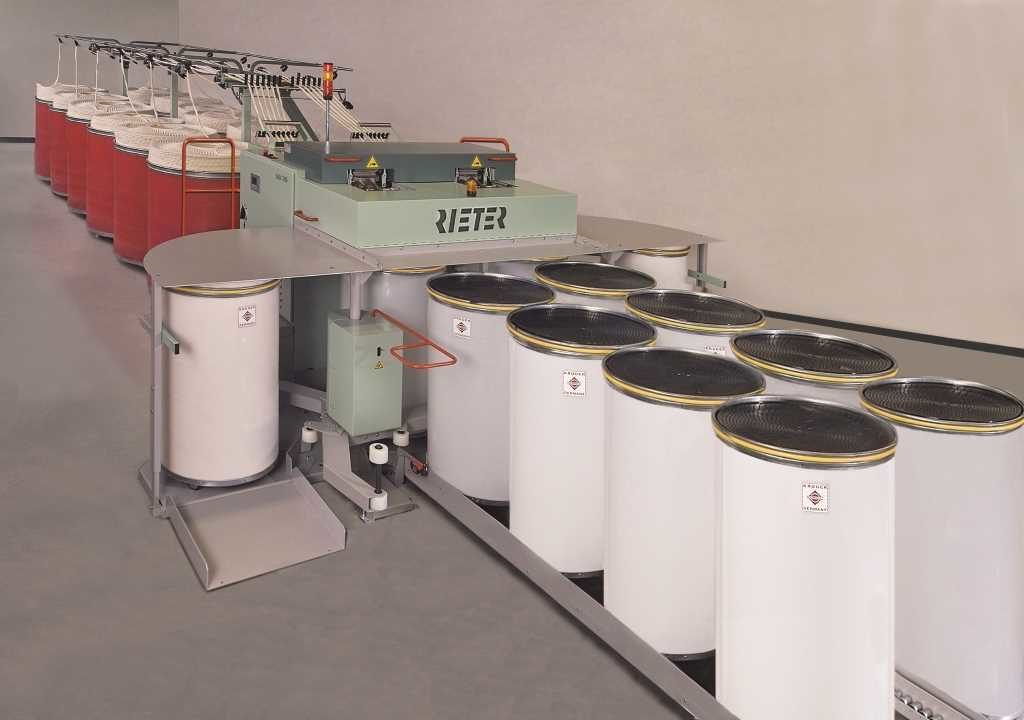
double head rieter draw frame

Draw frame Functions

Carded Slivers are fed into the Draw-Frame and are stretched/Straightened and made into a single sliver. Also, fibre blending can be done at this stage. The cans that contain the sliver are placed along the draw-frame feeder rack, usually including eight pairs of cylinders (each pair is above the space occupied by a can),the lower cylinder is commanded positively, while the upper one rests on the lower one in order to ensure movement of the relative sliver that runs between the two.

Draw frame Functions Read More »

rotor spinning machine

Open-end or Carded or Break or Rotor Spinning

The first functioning of rotor spinning, machine was presented at the ITMA in 1967.Yarn spinning according to the rotor spinning principle predominates for all nonconventional spinning methods.It omits the step of forming a roving.After drafting, the sliver is fed into a rotary beater.This device ensures that the fibers are beaten into a thin supply which enters a duct and gets deposited on the sides of the disc(rotor).The transportation of the fibers is achieved through air currents.

Open-end or Carded or Break or Rotor Spinning Read More »

yarn-cones

Yarn Formation Techniques

The Fibre formation process includes a change in shape, structure, and properties of the thermoplastic polymer. The polymer pellets or granules are fed into an extruder where, through heating, their melting temperature is exceeded. The polymeric melt is then transported, under pressure, to the spinneret. Yarn formation methods were originally developed for spinning of natural fibers including cotton, linen, wool and silk.

Yarn Formation Techniques Read More »

open-end spinning machines

Yarn Spinning – Formation of Yarn

Yarn spinning is the process of manufacturing yarn from different types of fibres into a continuous length from one or more type of fibers. Spinning is the most important and the initial step in fabric manufacturing. The major goals of spinning is to produce the quality yarn from raw material, then remove the process faults followed by winding the short length bobbins on Cones. There are different types of spinning, the most commonly forms of spinning are: Ring, Rotor, Air Jet, Friction etc.

Yarn Spinning – Formation of Yarn Read More »

Scroll to Top