

Knitting remains one of the most versatile methods for fabric production. Two principal techniques drive the industry: weft knitting and warp knitting. Each method creates textiles with unique characteristics. This article explores their fundamental principles, processes, advantages, and challenges. We examine how these techniques evolved and their impact on modern textile production.
Both weft and warp knitting use interlooping of yarns. However, they differ in orientation, machinery, and applications. Designers, engineers, and manufacturers use these methods to produce fabrics for apparel, technical textiles, and home furnishings. In this article, we cover historical backgrounds, production processes, structural differences, quality control techniques, and future innovations.
1. Introduction
Knitting revolutionized textile manufacturing. Ancient cultures wove fabrics on simple looms. Over millennia, technology advanced to produce complex, automated systems. Knitting remains popular due to its versatility and adaptability. Weft and warp knitting techniques each offer distinct benefits. Weft knitting is known for stretch and drape, while warp knitting provides tight construction and dimensional stability.
Both methods have evolved in response to market needs. Manufacturers adopt new digital technologies and automation to improve productivity and quality. Today’s textile mills produce millions of meters of knitted fabric every day. These advances have transformed the way we produce and consume textiles.
Knitting serves as the backbone for a wide range of applications. Designers craft fashionable garments and high-performance sportswear. Technical textiles use knitted fabrics for safety gear and industrial applications. The importance of understanding the basic principles of weft and warp knitting cannot be overstated. Knowledge of these principles drives innovation, product quality, and market competitiveness.

2. Knitting Fundamentals
Knitting creates fabric by interlocking loops of yarn. This process contrasts with weaving, which interlaces two sets of yarn at right angles. Knitting can be divided into two primary methods: weft and warp knitting. Each technique employs distinct mechanisms to form loops, which in turn shape fabric properties.
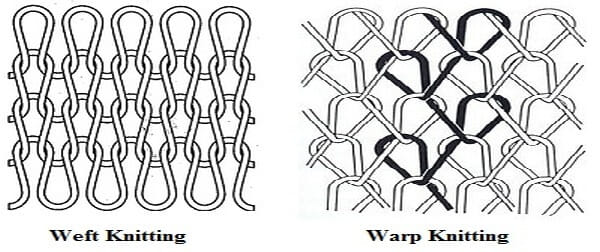
Knitting uses two types of yarn feed: the warp (longitudinal) and the weft (transverse). In weft knitting, a single yarn travels horizontally, forming loops row by row. In warp knitting, multiple yarns run vertically and form loops along the length of the fabric. Each method yields textiles with different stretch, density, and appearance.
Textile engineers and designers use these methods to target specific end-use applications. They adjust machine settings and yarn types to modify fabric properties. The following diagram illustrates the basic interlocking of loops common to both methods:
   [ Yarn Loop ]
        │
        └───[ Interlocking Loop ]────┐
                                      ↓
                           [ Fabric Structure ]
This simplified diagram shows that each loop interlocks with adjacent loops to create a continuous fabric. The precise arrangement of loops influences properties such as elasticity and durability.

3. Weft Knitting: Principles and Process
Weft knitting forms loops using a single yarn that travels horizontally. It produces fabrics that are soft, stretchable, and comfortable. The method is widely used in apparel and home textiles.
3.1 Weft Knitting Mechanism
In weft knitting, a single continuous yarn is fed through a series of needles. The needles move in a circular or flat configuration to create rows of loops. Each loop interlocks with the previous row to form a fabric. The key element in weft knitting is the formation of a “course,” which is a complete row of loops.
Weft knitting machines come in various forms. Circular knitting machines produce tubular fabrics such as t-shirts, while flat knitting machines produce panels that are later cut and sewn. The speed and flexibility of weft knitting make it ideal for garments that require stretch and drape.
A basic formula models the interlooping process:
This relationship implies that adjusting the number of loops per course changes the fabric’s density. Weft knitted fabrics typically exhibit a high degree of extensibility and recovery.
3.2 Advantages of Weft Knitting
Weft knitted fabrics offer several advantages:
- High Stretchability: The loop structure allows excellent elasticity.
- Softness and Comfort: The fabric drapes well and feels smooth on the skin.
- Design Flexibility: Weft knitting supports complex designs and color patterns, making it popular for fashion garments.
- Rapid Production: Weft knitting machines operate quickly, producing large volumes of fabric.
Real-world applications include T-shirts, sportswear, and intimate apparel. Designers appreciate the inherent stretch and softness, which add comfort and aesthetic appeal to garments.
3.3 Challenges in Weft Knitting
Despite its benefits, weft knitting presents challenges:
- Loop Stability: Insufficient twist can lead to loose loops, causing fabric distortion.
- Seaming Difficulties: The formation of seams in flat-knitted fabrics may cause weak points.
- Production Defects: Variations in yarn tension can result in uneven fabric appearance.
Manufacturers mitigate these issues through precise machine calibration and quality control. Advanced sensors and digital controls help maintain optimal tension and twist throughout production.

4. Warp Knitting: Principles and Process
Warp knitting employs multiple yarns that run vertically, forming loops in a different pattern compared to weft knitting. This method produces fabrics with high dimensional stability and less stretch.
4.1 Warp Knitting Mechanism
In warp knitting, individual yarns run parallel to the fabric length. These yarns are simultaneously fed into a machine, where needles form loops that interlock in a zigzag or chain-like pattern. The key difference from weft knitting is that warp knitting uses several yarns in parallel, resulting in a fabric that has a more stable structure.
Common warp knitting methods include tricot and raschel knitting. Tricot knitting produces lightweight, smooth fabrics ideal for lingerie and activewear. Raschel knitting creates openwork patterns often used for lace and netting.
A simplified model of warp knitting is:
This model indicates that increasing the number of yarns or the needle density boosts fabric stability. Warp knitted fabrics generally exhibit lower elasticity but higher dimensional stability compared to weft knitted fabrics.
4.2 Advantages of Warp Knitting
Warp knitted fabrics have several distinct advantages:
- Dimensional Stability: They maintain shape and size under stress.
- Tight Construction: The interlocking structure reduces the chance of unraveling.
- Versatility in Design: Warp knitting supports complex openwork designs and lace patterns.
- Durability: These fabrics exhibit high resistance to abrasion and distortion.
Warp knitting is ideal for technical textiles, lingerie, and certain industrial applications. The reduced stretch makes them suitable for fabrics that require precise fit and structure.
4.3 Challenges in Warp Knitting
Warp knitting also poses challenges:
- Limited Stretch: The inherent stability may reduce comfort in certain applications.
- Complex Machinery: The machines require precise calibration and maintenance.
- Design Constraints: Some designs are harder to achieve due to the rigid structure of warp knitting.
Manufacturers address these challenges with advanced machine technology and specialized training. Digital monitoring systems help ensure consistent performance and reduce production errors.
5. Comparative Analysis: Weft vs. Warp Knitting
Both weft and warp knitting yield high-quality textiles, yet they differ in structure, properties, and applications. A comparative analysis helps manufacturers choose the right technique based on product requirements.
5.1 Structural Differences
Weft knitted fabrics feature a single yarn looped horizontally. This structure allows for high stretch and softness. In contrast, warp knitted fabrics consist of multiple parallel yarns that interlock in a zigzag pattern. This construction offers superior stability and resistance to distortion.
Key Structural Points:
- Weft Knitting: Single yarn; high elasticity; loose structure.
- Warp Knitting: Multiple yarns; lower elasticity; tight and stable structure.
5.2 Performance Metrics
The performance of knitted fabrics depends on the knitting method. Weft knitted textiles are known for their flexibility and drape, making them ideal for casual and sportswear. Warp knitted fabrics excel in applications requiring dimensional stability and abrasion resistance.
Table: Performance Comparison
| Metric | Weft Knitting | Warp Knitting |
|---|---|---|
| Elasticity | High | Low to moderate |
| Dimensional Stability | Moderate | High |
| Production Speed | Very high | High |
| Fabric Hand | Soft and drapey | Crisp and structured |
| Application Areas | Apparel, activewear, knitwear | Technical textiles, lace, netting |
This table clearly demonstrates that each method has its own strengths and ideal applications. Manufacturers base their decisions on these metrics to achieve the desired fabric properties.
5.3 Cost and Efficiency Considerations
Weft knitting machines are generally faster due to the continuous looping of a single yarn. However, warp knitting machines, though slightly slower, produce fabrics with greater uniformity and stability. The cost of production also varies with the method used. Weft knitting often incurs lower capital costs, whereas warp knitting offers long-term benefits in terms of quality and durability.
5.4 Diagram: Comparative Structural Overview
             Weft Knitting            vs.         Warp Knitting
   [ Single Yarn Looping ]                                [ Multiple Yarn Interlocking ]
         High Stretch and Drape                             High Stability and Precision
This diagram visually contrasts the two methods. The simplicity of weft knitting supports flexibility, while the complexity of warp knitting underpins stability.
6. Machinery and Technology in Knitting
Modern knitting machines have evolved significantly from their historical counterparts. Advances in automation and digital control have transformed both weft and warp knitting processes.
6.1 Weft Knitting Machinery
Weft knitting machines come in two major types: circular and flat knitting machines. Circular machines produce tubular fabrics, ideal for garments such as T-shirts and socks. Flat knitting machines generate panels, which are later cut and sewn into garments.
Modern machines feature:
- Digital Controls: Operators can set parameters such as tension, speed, and twist via computer interfaces.
- Automated Yarn Feeding: Sensors maintain a consistent feed rate, minimizing defects.
- High-Speed Production: Advanced engineering allows for rapid production without compromising quality.
A simplified process flow for a circular weft knitting machine is:
[ Yarn Feeding ] --> [ Loop Formation via Needles ] --> [ Automated Twist & Tension Control ] --> [ Fabric Output ]
This flow emphasizes how automation has enhanced production speed and quality.

6.2 Warp Knitting Machinery
Warp knitting machines use a series of needles arranged in a fixed or circular configuration. Popular types include tricot and raschel machines. Tricot machines produce smooth, soft fabrics used in lingerie and activewear, while raschel machines create lace-like, openwork fabrics.
Key features of warp knitting machines include:
- Multi-Yarn Feeds: They simultaneously handle several yarns for complex fabric structures.
- Precision Needle Control: Digital systems regulate needle movement to ensure uniform loop formation.
- Versatile Patterning: Modern machines allow for intricate designs, including chain and tricot structures.
A simplified diagram of a warp knitting process is:
[ Multiple Yarn Feeding ]
             ↓
[ Needle Array & Loop Formation ]
             ↓
[ Digital Control for Patterning ]
             ↓
[ Finished Fabric ]
This diagram highlights the complexity and precision required in warp knitting operations.

7. Material Considerations in Knitting
Material selection plays a crucial role in determining the properties of knitted fabrics. The choice of yarn influences elasticity, durability, hand, and overall performance.
7.1 Yarn Types and Fiber Properties
Different fibers yield distinct fabric characteristics. Natural fibers such as cotton and wool offer softness and breathability. Synthetic fibers like polyester and nylon provide strength and durability. Blended fibers can combine the best attributes of both.
When selecting yarn for weft or warp knitting, manufacturers consider:
- Fiber Fineness: Finer fibers produce softer fabrics.
- Tensile Strength: High-strength fibers enhance fabric durability.
- Moisture Management: Certain fibers wick moisture effectively.
- Thermal Properties: The ability to insulate or cool, depending on application.
A formula that guides fiber selection in knitting is:
This model suggests that optimizing these parameters yields a fabric that meets specific performance criteria.
7.2 Yarn Treatments and Finishes
Yarn finishing treatments enhance fabric properties. In weft knitting, treatments can improve softness and dye uptake. In warp knitting, finishes may enhance stability and reduce pilling. Common finishing techniques include:
- Mercerization: Improves fiber luster and dye absorption.
- Sanforization: Reduces shrinkage in cotton fabrics.
- Chemical Finishes: Provide water repellency, anti-pilling, or antimicrobial properties.
These treatments are tailored to the end-use of the fabric. Manufacturers balance cost with desired performance outcomes.
Table: Common Yarn Finishes and Their Benefits
| Finish | Application Area | Benefits |
|---|---|---|
| Mercerization | Cotton weft knitted fabrics | Enhanced luster; improved dyeing |
| Sanforization | Apparel textiles | Reduced shrinkage; dimensional stability |
| Anti-Pilling | Warp knitted fabrics | Minimizes pill formation |
| Water Repellency | Technical textiles | Enhanced durability in wet conditions |
This table outlines several finishing treatments and their associated benefits.
8. Quality Control and Testing in Knitting
Quality control is essential in knitting production. Maintaining consistent fabric quality is crucial for market competitiveness and consumer satisfaction.
8.1 Testing Methods for Knitted Fabrics
Standard testing methods evaluate fabric properties such as tensile strength, elongation, abrasion resistance, and color fastness. Key tests include:
- Tensile Testing: Measures the maximum load before fabric failure.
- Elongation Testing: Assesses fabric stretchability.
- Martindale Abrasion Test: Simulates wear and tear to evaluate durability.
- Color Fastness Tests: Determine the fabric’s resistance to washing and light.
These tests adhere to international standards such as ASTM and ISO. Manufacturers use automated test equipment and digital imaging to ensure precision.
8.2 In-Line Quality Monitoring
Modern knitting machines incorporate sensors and real-time monitoring systems. These systems detect defects during production. Statistical Process Control (SPC) charts help operators track key parameters. Early detection of deviations allows for immediate corrective actions, reducing waste and rework.
A simplified process for quality monitoring in knitting is:
[ Real-Time Sensor Data ]
            ↓
[ Data Analysis & SPC ]
            ↓
[ Defect Detection ]
            ↓
[ Corrective Actions ]
This process ensures that production remains within established quality parameters.

9. Applications of Weft and Warp Knitting
Weft and warp knitted fabrics serve distinct applications in the textile industry. Each method produces fabrics with unique properties suited to specific end uses.
9.1 Weft Knitted Applications
Weft knitted fabrics excel in applications where stretch, softness, and drape are critical. Common applications include:
- Apparel: T-shirts, sportswear, intimate wear, and casual garments.
- Activewear: Fabrics that require high elasticity and moisture management.
- Home Textiles: Lightweight fabrics for items such as curtains and bedding.
Designers favor weft knitted fabrics for their flexibility and comfort. Their inherent stretch supports body movement and enhances garment fit.
9.2 Warp Knitted Applications
Warp knitted fabrics offer high dimensional stability and strength. They are used in:
- Technical Textiles: Industrial applications, automotive interiors, and protective gear.
- Lace and Netting: Openwork designs for decorative and functional uses.
- Underwear and Lingerie: Fabrics that require a smooth, stable surface with minimal stretch.
Warp knitted textiles provide structure and durability, making them ideal for products that demand long-lasting performance. Their reduced stretch supports applications where form retention is crucial.
9.3 Comparative Application Analysis
Both methods target different market segments. Weft knitting supports applications that emphasize comfort and flexibility, whereas warp knitting caters to markets demanding stability and strength.
Table: Applications Comparison
| Application Area | Weft Knitting | Warp Knitting |
|---|---|---|
| Apparel | T-shirts, sportswear, knitwear | Underwear, technical garments, lingerie |
| Home Textiles | Curtains, bedding, lightweight fabrics | Lace, netting, decorative textiles |
| Technical Textiles | Activewear with high stretch | Industrial, automotive, and safety textiles |
This table provides a clear overview of the typical applications for each knitting method. The choice depends on the specific requirements of fabric performance.
10. Environmental and Sustainability Considerations
Sustainability is a growing concern in textile production. Both weft and warp knitting methods offer opportunities for eco-friendly practices.
10.1 Resource Efficiency
Knitting techniques optimize material usage. Automated systems reduce waste and improve efficiency. Weft knitting, with its continuous looping, typically uses less yarn per unit area. Warp knitting, through precise tension control, minimizes yarn breakage.
A lifecycle assessment (LCA) model can quantify sustainability:
Lower values indicate more sustainable production. Manufacturers strive to minimize these metrics through process innovations.
10.2 Eco-Friendly Materials and Finishes
Many textile companies are now incorporating recycled and bio-based fibers into their knitting processes. Eco-friendly dyeing techniques and sustainable finishing treatments also reduce environmental impact. Green certifications, such as OEKO-TEX and GOTS, assure consumers of sustainable practices.
Table: Sustainability Metrics in Knitting
| Metric | Conventional Knitting | Sustainable Knitting |
|---|---|---|
| Energy Consumption | High | 20–30% lower with efficient systems |
| Water Usage | High | Reduced through closed-loop systems |
| Yarn Waste | Moderate | Lower due to precise automation |
| Chemical Usage | Standard | Eco-friendly, low-impact chemicals |
This table demonstrates the improvements in sustainability metrics when eco-friendly practices are adopted.
11. Technological Innovations in Knitting
Modern textile manufacturing continuously evolves. Recent innovations in knitting machinery and digitalization have driven significant improvements in quality and productivity.
11.1 Digital Integration and Automation
Digital technologies have revolutionized both weft and warp knitting. Modern machines integrate IoT sensors, AI-driven controls, and digital twins. These systems provide real-time monitoring, optimize production parameters, and reduce defects.
For instance, digital controls allow precise adjustment of yarn tension and needle speed. Automated systems also track production data, enabling predictive maintenance and process optimization.
A digital efficiency model can be represented as:
This equation emphasizes that reduced downtime and defects improve overall production efficiency.
11.2 Advanced Spinning Technologies
Recent advances in spinning technology have enhanced the production of knitted yarns. Innovations include:
- Variable Twist Systems: Adjust twist dynamically during production to achieve optimal yarn strength and softness.
- Multi-Feed Systems: In warp knitting, systems that manage multiple yarn feeds improve fabric uniformity.
- Computer-Aided Design (CAD): Digital patterning and design software allow for complex designs and rapid prototyping.
These technologies enable manufacturers to produce high-quality textiles that meet modern market demands.
11.3 Case Example: Digital Loom Transformation
A European textile mill transitioned from conventional to digital knitting machines. The digital integration resulted in:
- A 25% reduction in defect rates.
- Improved design flexibility.
- Increased production throughput by 20%.
This case demonstrates the transformative impact of digitalization on knitting operations. The success spurred further investments in automated systems.
12. Innovations in Yarn Design and Customization
Customization is key to meeting diverse market demands. Modern knitting allows for the creation of bespoke fabrics with unique properties.
12.1 Customization Techniques in Weft Knitting
Weft knitting offers high flexibility in design. Manufacturers can vary the yarn tension, color, and pattern easily. Digital systems allow for on-demand production of limited-edition textiles. Designers often collaborate with manufacturers to create exclusive fabrics for fashion collections.
12.2 Customization in Warp Knitting
Warp knitting, with its precise control over multiple yarn feeds, enables intricate designs and textures. Advanced machines can produce complex lace patterns and decorative effects. This level of customization appeals to markets such as high-end lingerie and technical textiles.
12.3 Mathematical Modeling for Yarn Customization
Engineers use mathematical models to predict the effect of various design parameters on fabric properties. One common model is:
Here,
,
, and
are coefficients determined through experimentation. This model helps optimize the balance between design complexity and production efficiency.
Table: Customization Parameters and Effects
| Parameter | Effect on Fabric | Adjustment Strategy |
|---|---|---|
| Yarn Tension | Influences fabric stretch | Automated tension control |
| Needle Arrangement | Affects pattern formation | Digital patterning software |
| Twist Level | Impacts strength and softness | Variable twist systems |
| Color Integration | Enhances visual appeal | Multi-dyeing and digital color control |
This table summarizes how different customization parameters affect fabric properties.
13. Quality Assurance and Certification Processes
Ensuring high quality in knitted fabrics is crucial for global market success. Rigorous testing and certification processes maintain product standards and boost consumer confidence.
13.1 Testing Methods
Quality assurance in knitting involves several standard tests:
- Tensile and Elongation Tests: Measure the fabric’s strength and stretchability.
- Abrasion and Pilling Tests: Evaluate durability under wear.
- Color Fastness Tests: Ensure that fabrics maintain their appearance after washing and exposure to light.
Standards such as ASTM D2256 and ISO 2062 are widely adopted. Manufacturers use automated testing equipment to gather data continuously.
13.2 Certification and Compliance
Certification bodies assess production facilities against international standards. Facilities earn certifications by passing rigorous audits and tests. These certifications, such as OEKO-TEX and ISO 9001, verify that products meet safety and quality benchmarks.
A typical certification process follows these steps:
- Initial Evaluation: Submission of samples and documentation.
- On-Site Audit: Inspection of manufacturing processes.
- Testing: Independent laboratories test product performance.
- Certification Issuance: Upon successful completion, certificates are awarded.
- Ongoing Monitoring: Regular re-certification maintains standards.

14. Process Optimization and Lean Manufacturing in Knitting
Efficient production is a key competitive advantage in textiles. Modern knitting operations incorporate lean manufacturing principles to maximize output while minimizing waste.
14.1 Lean Manufacturing Principles
Lean manufacturing focuses on reducing waste, optimizing resources, and streamlining operations. In knitting, lean strategies include:
- Just-In-Time Production: Minimizes inventory and reduces storage costs.
- Continuous Improvement (Kaizen): Regular feedback loops drive incremental process improvements.
- Value Stream Mapping: Identifies bottlenecks and areas for process optimization.
These strategies help textile manufacturers enhance productivity and lower operational costs.
14.2 Digital Process Optimization
Modern production lines integrate digital tools for process optimization. Real-time monitoring systems gather data on machine performance. Advanced analytics and digital twins simulate production scenarios to forecast improvements.
A simplified model for process optimization is:
Improving efficiency involves reducing defects and minimizing machine downtime. Digital systems offer actionable insights to achieve these goals.
Table: Lean Manufacturing vs. Traditional Production
| Metric | Traditional Production | Lean/Digital Production |
|---|---|---|
| Inventory Levels | High | Minimal |
| Waste Generation | Moderate to high | Significantly reduced |
| Production Throughput | Variable | Consistent and high |
| Cost per Unit | Higher | Lower due to optimized processes |
This table highlights the benefits of lean and digital production methods compared to traditional approaches.
15. Case Studies and Industry Success Stories
Real-world examples illustrate the transformative power of effective knitting techniques. Case studies showcase how manufacturers have improved quality, efficiency, and market position by adopting innovative methods.
15.1 Case Study: Weft Knitting in Sportswear Production
A leading sportswear brand revamped its production by switching to advanced weft knitting machines. The changes resulted in:
- Enhanced fabric elasticity and stretch.
- Improved moisture management for activewear.
- A 20% reduction in production defects.
Field tests confirmed that garments produced with weft knitting offered superior comfort and durability. The company’s success increased brand reputation and market share in the high-performance sportswear segment.
15.2 Case Study: Warp Knitting in Technical Textiles
A technical textiles manufacturer implemented warp knitting techniques to produce fabrics for automotive interiors. The warp knitted fabrics provided:
- High dimensional stability under stress.
- Excellent abrasion resistance.
- Consistent performance in high-temperature environments.
These properties made the fabrics ideal for automotive applications where safety and durability are paramount. The shift to warp knitting resulted in a 15% cost reduction and improved product reliability.
Table: Summary of Case Study Benefits
| Case Study | Technique Used | Key Improvements | Market Impact |
|---|---|---|---|
| Sportswear Production | Weft Knitting | +20% defect reduction, enhanced stretch | Increased brand reputation and market share |
| Technical Textiles | Warp Knitting | Improved stability, abrasion resistance | Lower production costs; high reliability |
These case studies illustrate the diverse applications and benefits of both weft and warp knitting techniques.
16. Future Trends in Knitting Technology
The textile industry is poised for continuous innovation. Future trends in knitting technology promise enhanced performance, increased customization, and sustainable practices.
16.1 Digital and Smart Knitting Machines
The next generation of knitting machines will integrate more advanced digital controls and AI-driven systems. Future machines will feature:
- Enhanced IoT Connectivity: Real-time data exchange across production networks.
- Predictive Analytics: AI models forecast maintenance and quality issues.
- Fully Automated Design Adaptation: Digital looms will switch patterns and yarn types with minimal human intervention.
These improvements will boost productivity and product quality while lowering operational costs.
16.2 Sustainability in Knitting
Sustainability continues to influence textile production. Future innovations focus on:
- Eco-Friendly Materials: Increased use of recycled and bio-based fibers.
- Energy-Efficient Machinery: Reduced energy consumption through optimized machine design.
- Closed-Loop Water Systems: Innovations in dyeing and finishing to recycle water and reduce emissions.
Sustainable practices will become a central pillar in modern textile manufacturing. Manufacturers will invest in technologies that minimize waste and reduce the environmental impact of production.
16.3 Customization and On-Demand Production
The market increasingly demands customization. Advances in digital design and manufacturing enable rapid switching between designs. Future knitting machines will allow:
- On-Demand Production: Small-batch and bespoke textile production.
- High-Resolution Patterning: Precise control over design details for niche markets.
- Adaptive Yarn Properties: Smart textiles that adjust to environmental conditions.
These trends open new market opportunities and support premium pricing for specialized textiles.
Diagram: Future Knitting Technology Roadmap
[ Enhanced Digital Integration ]
             ↓
[ Smart, Automated Machines ]
             ↓
[ Sustainable, Eco-Friendly Processes ]
             ↓
[ Customization & On-Demand Production ]
             ↓
[ Market Expansion & Innovation ]
This roadmap illustrates the key areas of future innovation in knitting technology.
17. Global Perspectives and Market Expansion
17.1 Regional Variations in Knitting Practices
Different regions exhibit unique knitting traditions and modern adaptations. In Asia, handlooms and modern digital systems coexist. European manufacturers lead in high-tech production, while the Americas focus on mass production and innovation.
Global textile markets continue to expand. International trade relies on standardized quality and sustainable practices. Manufacturers worldwide adopt best practices to remain competitive and meet international standards.
Table: Regional Knitting Practices
| Region | Traditional Techniques | Modern Innovations |
|---|---|---|
| Asia | Handlooms, digital handlooms | Integrated IoT systems, variable twist |
| Europe | Historic power looms | Computer-controlled looms, smart systems |
| Americas | Adapted European methods | Mass production, high automation |
This table provides an overview of regional variations and their impact on global textile markets.
17.2 International Trade and Standards
Compliance with international standards is critical for global market success. Organizations such as ASTM, ISO, and AATCC set benchmarks for fabric quality. Meeting these standards enables manufacturers to expand into international markets.
Trade policies and digital documentation further support global trade. Accurate traceability and adherence to quality standards build consumer trust and open new export opportunities.
18. Innovations in Training and Workforce Development
A skilled workforce drives textile innovation. Continuous training ensures that operators master both traditional and modern knitting technologies.
18.1 Educational Programs and Certification
Universities and technical institutes offer specialized courses in textile engineering. These programs cover the history, theory, and practice of knitting techniques. Certification courses provide standardized training and industry-recognized credentials.
Practical training involves:
- Hands-on operation of modern knitting machines.
- Workshops on digital monitoring and process optimization.
- Internships and collaborative research projects with textile manufacturers.
These educational initiatives build a workforce capable of operating advanced machinery and driving innovation.
18.2 On-Site Training and Digital Resources
Manufacturers invest in on-site training programs. Digital platforms offer webinars, interactive tutorials, and online courses. These resources help workers stay updated on the latest technologies and best practices.
A typical training program cycle includes:
- Initial Training: Covering basic principles and machinery operation.
- Advanced Workshops: Focused on digital systems, quality control, and process optimization.
- Ongoing Education: Continuous learning modules to keep skills current.
19. Regulatory and Standardization Aspects
Regulatory compliance and standardization are crucial for textile manufacturing. Loom technology must meet rigorous standards to ensure product safety, quality, and consistency.
19.1 International Standards and Certification
Key international standards govern knitting processes. ASTM, ISO, and AATCC provide testing protocols and quality benchmarks. Compliance with these standards assures consumers and facilitates global trade.
Manufacturers routinely test knitted fabrics for:
- Tensile strength and elasticity.
- Color fastness and dye performance.
- Abrasion resistance and durability.
Certification from recognized bodies enhances market credibility. Audits and periodic re-certification maintain high production standards.
19.2 National Regulations and Environmental Compliance
Different countries enforce regulations on chemical usage, energy efficiency, and labor standards. Manufacturers must adapt processes to comply with these rules. Sustainable practices are increasingly integrated to meet environmental mandates.
Regulatory frameworks support sustainable textile production. For example, certifications like OEKO-TEX and GOTS verify that manufacturing practices minimize harmful emissions and waste.
20. Case Studies and Success Stories
Real-world examples demonstrate the impact of knitting technology on the textile industry. Case studies reveal how manufacturers have improved efficiency, quality, and market reach through innovative knitting practices.
20.1 Case Study: Transforming Sportswear with Weft Knitting
A major sportswear brand transitioned to advanced weft knitting machines. The changes led to:
- Improved fabric stretch and recovery.
- Enhanced moisture management in activewear.
- A significant reduction in production defects.
Field tests confirmed that the new fabrics offered superior performance during athletic activities. The brand reported increased customer satisfaction and higher sales in the premium segment.
20.2 Case Study: Advancements in Warp Knitting for Technical Applications
A technical textiles manufacturer adopted warp knitting to produce durable fabrics for automotive interiors. The warp knitted fabrics demonstrated:
- High dimensional stability under mechanical stress.
- Superior resistance to abrasion and wear.
- Consistent performance in varying environmental conditions.
The shift improved production efficiency and reduced material wastage. These technical textiles gained acceptance in international markets, boosting the manufacturer’s export potential.
Table: Comparative Outcomes from Case Studies
| Case Study | Knitting Method | Key Performance Improvements | Market Impact |
|---|---|---|---|
| Sportswear Transformation | Weft Knitting | +20% defect reduction; enhanced stretch | Premium segment growth; increased sales |
| Technical Textiles Advancement | Warp Knitting | Improved stability; +15% cost reduction | Expanded export opportunities |
These case studies underline the transformative potential of both weft and warp knitting techniques.
21. Mathematical and Statistical Models in Knitting
Technical modeling helps optimize knitting processes. Engineers use mathematical models to predict fabric behavior and enhance machine performance.
21.1 Yarn Strength and Fabric Density Models
Yarn strength depends on fiber properties, twist, and cohesion. A common model is:
Here,
represents a material constant,
is the cohesion factor, and
is the twist per unit length. This model helps engineers adjust twist to maximize strength without sacrificing softness.
21.2 Fabric Density and Stretch Models
Fabric density influences the drape and elasticity of knitted textiles. A simplified model is:
This relationship shows that increasing the number of loops per course results in denser, less stretchy fabric. Engineers use such models to balance comfort and durability.
21.3 Statistical Process Control (SPC)
SPC monitors production quality in real time. Operators use control charts to track critical parameters such as tension and defect rate. The basic SPC formula is:
This formula determines if a process remains within acceptable quality limits. Digital sensors and data analytics play a key role in implementing SPC.
Table: Key Equations in Knitting Process Optimization
| Equation | Purpose | Variables |
|---|---|---|
|
|
Predict yarn strength based on twist |
: constant; : cohesion; : twist |
|
|
Estimate fabric density and stretch | Number of loops; course length |
|
|
Assess process quality via SPC | Process mean; standard deviation |
These equations form the foundation for technical optimization in knitting operations.
22. Industry Best Practices and Recommendations
Manufacturers follow best practices to ensure high quality and efficiency. Recommendations span process optimization, quality control, and workforce training.
22.1 Best Practices for Weft and Warp Knitting
Key recommendations include:
- Regular Calibration: Routinely calibrate machines to maintain optimal tension and twist.
- Digital Monitoring: Employ sensors and SPC to monitor quality in real time.
- Lean Production: Use lean manufacturing techniques to reduce waste and improve efficiency.
- Operator Training: Provide continuous training on advanced digital systems and maintenance procedures.
Adopting these practices ensures that production remains consistent and efficient. Manufacturers gain a competitive advantage through improved quality and reduced costs.
22.2 Sustainability and Waste Reduction Strategies
Sustainable production is essential in modern textiles. Best practices include:
- Recycling Off-Cuts: Recover yarn off-cuts and recycle them into production.
- Eco-Friendly Finishes: Use sustainable dyes and finishing agents.
- Energy Efficiency: Invest in energy-efficient machinery and renewable energy sources.
- Water Recycling: Implement closed-loop water systems in dyeing and finishing processes.
These strategies lower environmental impact while maintaining high production standards.
Diagram: Best Practices Cycle
[ Machine Calibration ]
            ↓
[ Digital Quality Control ]
            ↓
[ Lean Production Techniques ]
            ↓
[ Sustainability Initiatives ]
            ↓
[ Continuous Improvement ]
This cycle represents a holistic approach to operational excellence in knitting.
23. Challenges and Limitations in Knitting Technologies
Despite significant advancements, the knitting industry faces several challenges that require ongoing innovation.
23.1 Technical Challenges
Technical challenges in weft and warp knitting include:
- Process Variability: Maintaining consistent yarn tension and twist across machines.
- Fiber Compatibility: Different fibers may not bond well, leading to quality issues.
- Machine Complexity: Advanced digital systems require specialized knowledge for operation and maintenance.
- Integration Issues: Synchronizing multiple yarn feeds in warp knitting can be difficult.
Researchers and engineers address these issues with advanced sensors, automation, and continuous training programs.
23.2 Economic and Market Challenges
Economic challenges affect both large manufacturers and SMEs:
- High Capital Investment: Modern machines require significant upfront investment.
- Cost of Premium Materials: High-quality fibers and specialized finishes increase production costs.
- Market Volatility: Fluctuating demand and raw material prices affect profitability.
- Global Competition: Manufacturers must continuously innovate to remain competitive on a global scale.
Successful companies balance these challenges by optimizing production processes, investing in R&D, and leveraging economies of scale.
Table: Challenges and Mitigation Strategies
| Challenge | Impact | Mitigation Strategy |
|---|---|---|
| Process Variability | Inconsistent fabric quality | Digital sensors; SPC; regular calibration |
| Fiber Compatibility Issues | Poor yarn cohesion; defects | Rigorous quality control; optimized blending |
| High Capital Investment | Barrier for SMEs | Leasing options; government subsidies |
| Market Volatility | Unpredictable profit margins | Diversified product lines; agile production |
This table outlines key challenges and strategies used to mitigate their impact.
24. Future Trends and Research Opportunities
The future of knitting technology appears bright. Emerging trends indicate further digitalization, sustainability, and customization.
24.1 Digital Transformation and Smart Manufacturing
The integration of AI, IoT, and digital twins into knitting machines promises to revolutionize production. Future smart looms will feature:
- Real-Time Data Analytics: Continuous monitoring and adjustments for optimal performance.
- Predictive Maintenance: AI-driven predictions to reduce downtime.
- Customization Capabilities: Rapid changeover between designs and on-demand production.
These advancements will drive efficiency and open new market opportunities.
24.2 Sustainable Textile Innovations
Environmental sustainability is a key research area. Future trends include:
- Eco-Friendly Materials: Increased use of recycled and bio-based fibers.
- Energy-Efficient Processes: Machinery designed to reduce energy consumption.
- Closed-Loop Production: Systems that recycle water, dyes, and off-cuts to minimize waste.
Research in these areas will help manufacturers meet global sustainability goals while maintaining competitive pricing.
24.3 Hybrid Knitting Technologies
Hybrid systems that combine traditional and modern techniques will emerge. These systems aim to merge the artistry of handlooms with the efficiency of digital machines. Hybrid knitting offers:
- Enhanced Design Flexibility: The ability to produce intricate, customized fabrics.
- Improved Quality Control: Combining manual craftsmanship with automated precision.
- Cultural Preservation: Maintaining traditional techniques while modernizing production.
A conceptual model for future innovation is:
This formula highlights the multifaceted approach required to drive the next generation of knitting technology.
25. Global Collaborations and Conferences
Global partnerships and industry events continue to drive innovation in knitting technology. International conferences provide forums for sharing research, discussing challenges, and showcasing breakthroughs.
25.1 Major Industry Conferences
Conferences such as the International Textile Manufacturers Federation (ITMF) events and regional textile symposiums play a critical role. They offer:
- Networking Opportunities: Facilitating collaborations between academia and industry.
- Research Presentations: Sharing latest findings and technological innovations.
- Workshops and Training Sessions: Hands-on sessions that improve operational skills.
These events foster a collaborative environment that drives technological advancements and market growth.
25.2 Collaborative Research Projects
Many research initiatives involve partnerships between textile manufacturers, universities, and research institutes. Collaborative projects focus on:
- Advanced Digital Loom Technologies
- Sustainable Yarn and Fiber Development
- Smart and Adaptive Knitting Systems
Funding from government agencies and international bodies supports these projects, paving the way for breakthrough innovations in knitting.
26. Looms in the Context of Knitting
While the focus of this article is on weft versus warp knitting, it is important to understand the role of looms in knitting. Although most knitted fabrics are produced on specialized knitting machines rather than looms, traditional looms played a pivotal role in the evolution of fabric production. The principles of interlooping and tension control found in looms inform many aspects of modern knitting technology.
26.1 Historical Role of Looms
Historically, looms were used primarily for weaving. However, many early techniques in fabric production influenced the development of knitting machines. Traditional looms provided the mechanical foundation for controlled interlacing of yarns. These early innovations eventually led to the mechanization of both weaving and knitting.
26.2 Modern Digital Looms and Knitting Machines
Modern digital looms incorporate technology that is also used in knitting machines. Computerized controls, real-time data monitoring, and automated processes drive efficiency in both fields. These advancements have blurred the lines between traditional weaving and modern knitting, paving the way for hybrid production techniques.
27. Impact on Textile Art and Design
Knitting methods influence textile aesthetics and design versatility. Weft and warp knitted fabrics each contribute distinct textures, patterns, and visual effects. Designers leverage these characteristics to create innovative and artistic textiles.

27.1 Artistic Expression in Weft Knitting
Weft knitting allows for fluid, soft textures. Designers use this method to create garments that drape beautifully and move with the body. Intricate designs, color gradients, and complex patterns are achievable with modern digital weft knitting machines. This flexibility has made weft knitting a favorite among high-fashion designers and streetwear brands.
27.2 Structural and Pattern Innovations in Warp Knitting
Warp knitting produces fabrics with a tighter structure and greater dimensional stability. This makes it ideal for creating lace, netting, and technical textiles with precise, repeatable patterns. The rigid structure supports the production of detailed designs that require exact alignment of yarns.
Diagram: Influence of Knitting Technique on Fabric Appearance
[ Weft Knitting ]
   → Soft, drapey fabric
   → Fluid patterns, high stretch

[ Warp Knitting ]
   → Stable, structured fabric
   → Intricate, repeatable patterns
This diagram clearly shows the influence of each method on the final fabric appearance.
28. Innovations in Dyeing and Finishing for Knitted Fabrics
Dyeing and finishing play crucial roles in defining the final properties of knitted fabrics. Both weft and warp knitted textiles require specialized processes to enhance their aesthetic and functional attributes.
28.1 Advanced Dyeing Techniques
Modern dyeing techniques offer enhanced color fastness and vibrancy. Manufacturers use reactive and acid dyes tailored to the specific fiber composition of the yarn. Dual-dyeing processes may be employed for core-spun and blended yarns to achieve uniform coloration.
Key Considerations in Dyeing:
- Fiber Affinity: Different fibers absorb dyes differently. Balancing dye uptake is critical.
- Process Optimization: Automated dyeing systems adjust temperature and pH in real time.
- Environmental Impact: Eco-friendly dyes and water-recycling systems reduce chemical waste.
A simplified model for dye uptake is:
This equation highlights that increasing the effective surface area of fibers improves dye absorption.
28.2 Finishing Processes
Finishing treatments enhance the hand, durability, and functionality of knitted fabrics. Common finishes include:
- Softening Treatments: Improve the fabric’s feel.
- Anti-Pilling Finishes: Prevent pill formation.
- Moisture-Wicking Finishes: Enhance comfort in activewear.
These processes often involve both chemical and mechanical treatments. Manufacturers carefully balance these treatments to avoid compromising fabric strength and elasticity.
Table: Common Finishing Treatments and Their Effects
| Treatment | Primary Benefit | Typical Applications |
|---|---|---|
| Softening | Enhances hand feel | Apparel, intimate wear |
| Anti-Pilling | Reduces surface defects | Knitwear, activewear |
| Moisture-Wicking | Improves sweat management | Sportswear, performance textiles |
This table outlines key finishing treatments and their corresponding benefits.
29. Economic Impact and Market Trends
Knitting techniques directly influence production costs, market prices, and overall economic growth in the textile industry. Weft and warp knitting each contribute uniquely to market dynamics.
29.1 Production Efficiency and Cost Analysis
Modern knitting methods drive significant improvements in production efficiency. Automated machines lower labor costs and reduce material waste. The economic model for cost analysis is:
Increased production volume reduces the unit cost, thereby improving profitability. Manufacturers that invest in advanced knitting technology often see a higher return on investment.
29.2 Market Trends and Consumer Demand
Consumer preferences drive market trends in knitted fabrics. Key trends include:
- Demand for High-Performance Apparel: Increased use of weft knitted fabrics in sportswear.
- Rise in Technical Textiles: Warp knitted fabrics gain popularity in industrial and automotive applications.
- Sustainable and Eco-Friendly Textiles: Manufacturers adopt green practices to meet consumer demand for sustainable products.
Global market research projects steady growth in the knitted fabric segment. Manufacturers that innovate and adapt to these trends capture premium market segments.
Table: Market Growth Projections for Knitted Fabrics
| Year | Global Knitted Fabric Production (Billion m²) | Growth Rate (%) |
|---|---|---|
| 2023 | 2.8 | – |
| 2025 | 3.1 | 10% |
| 2027 | 3.5 | 9% |
| 2030 | 3.9 | 8% |
This table highlights projected growth rates driven by advancements in knitting technology and changing consumer demands.
30. Innovations in Digitalization and Process Monitoring
Digital technologies have transformed knitting production. Modern systems integrate digital controls, IoT sensors, and AI analytics to improve efficiency and quality.
30.1 Real-Time Monitoring and Predictive Maintenance
Digital monitoring systems collect data on key parameters such as tension, twist, and production speed. These systems use machine learning algorithms to predict maintenance needs and prevent downtime. The efficiency equation is:
Reducing downtime and defects increases overall efficiency. Digital systems enable operators to make immediate adjustments.
30.2 Digital Twins in Knitting Production
Digital twins simulate the entire knitting process in real time. This virtual model helps engineers test changes, forecast maintenance, and optimize production parameters without interrupting operations.
Digital twin technology leads to:
- Improved Process Control: Simulations predict outcomes before implementation.
- Cost Reduction: Preventative measures lower maintenance costs.
- Enhanced Flexibility: Quick adjustments enable production of customized textiles.
31. Innovations in Supply Chain and Sustainability
Efficient supply chains and sustainable practices are central to modern textile production. Innovations in knitting contribute to both economic and environmental benefits.
31.1 Digital Supply Chain Management
Digital platforms track raw materials, production progress, and distribution networks. Blockchain technology ensures traceability and transparency. This system reduces supply chain disruptions and verifies sustainable sourcing.
Efficient supply chain management improves product quality and lowers costs. Real-time data ensures that production aligns with demand and minimizes waste.
31.2 Sustainable Manufacturing Practices
Manufacturers adopt green technologies to reduce the environmental impact of knitting production. Innovations include:
- Recycling Initiatives: Recovering yarn offcuts and recycled fibers.
- Energy-Efficient Machinery: Modern machines that consume less power.
- Water Recycling: Closed-loop systems in dyeing and finishing processes.
A lifecycle assessment model evaluates the sustainability of production methods:
Lower impact values indicate more sustainable practices.
Table: Sustainability Metrics Comparison
| Metric | Conventional Production | Digital/Sustainable Production |
|---|---|---|
| Energy Consumption (kWh/unit) | High | 15–25% lower |
| Water Usage (L/unit) | High | Significantly reduced |
| Waste Generation (kg/unit) | Moderate | Minimal |
| Carbon Footprint (CO₂ eq.) | Elevated | Reduced with renewable energy |
This table summarizes improvements in sustainability metrics through modern practices.
32. Future Directions in Knitting Technology
Future trends in knitting technology promise further advancements. Innovations will likely focus on digital integration, sustainability, and customization.
32.1 Smart Knitting Machines
Future machines will integrate more advanced AI and IoT systems. These smart machines will offer:
- Enhanced Customization: Rapid switching between designs and real-time pattern adjustments.
- Predictive Maintenance: AI algorithms further reduce downtime.
- Greater Efficiency: Digital twins and simulation models optimize every production parameter.
32.2 Sustainable and Eco-Friendly Innovations
Sustainability remains a priority. Future research will focus on:
- Biodegradable Fibers: Increasing use of eco-friendly materials.
- Zero-Waste Production: Closed-loop systems to recycle all process by-products.
- Green Certification: Enhanced certifications that verify sustainable practices throughout the supply chain.
32.3 Market Expansion and Global Trade
Advances in knitting technology will drive global market expansion. Manufacturers who invest in smart, sustainable systems will capture premium segments. International standards and digital documentation will ease trade and ensure compliance with global regulations.
A conceptual future model is:
This model emphasizes the key drivers of future growth in the knitting industry.
33. Global Perspectives on Knitting
33.1 Regional Differences and Innovations
Global textile production varies by region. Asia retains a strong tradition of handlooms alongside modern digital knitting. Europe focuses on high-tech production and design innovation. The Americas emphasize mass production and market efficiency. Each region contributes unique techniques and innovations.
Table: Regional Contributions to Knitting Innovation
| Region | Traditional Techniques | Modern Innovations |
|---|---|---|
| Asia | Handlooms, digital handlooms | Integrated digital systems; variable twist technology |
| Europe | Historical power looms | Computer-controlled looms; smart manufacturing |
| Americas | Adapted European methods | High-efficiency systems; mass production techniques |
This table summarizes the regional variations and contributions to the knitting industry.
33.2 International Collaboration and Trade
Global collaboration drives progress. International conferences and research projects foster knowledge exchange. Harmonization of standards such as ASTM and ISO ensures quality and facilitates trade. Manufacturers must comply with diverse regulations, which digital documentation and certification systems help manage.
34. Cultural Heritage and Traditional Knitting
34.1 Preservation of Traditional Techniques
Traditional knitting methods are a vital part of cultural heritage. Handlooms and artisanal techniques preserve regional identities. Many communities continue to produce hand-knitted fabrics that reflect local customs and art. Preservation initiatives, cultural festivals, and government programs help keep these traditions alive.
34.2 Integration with Modern Technologies
Modern textile designers are merging traditional techniques with digital innovations. This fusion creates unique fabrics that honor heritage while offering the benefits of modern production. Designers use digital Jacquard systems to replicate traditional patterns with high precision. The resulting textiles retain cultural significance and meet modern quality standards.
35. Technological Developments in Loom Engineering for Knitting
Although knitting machines differ from weaving looms, many principles of machine design are shared. Advances in mechanical engineering, electronics, and digital integration have transformed both sectors.
35.1 Mechanical Innovations
Modern knitting machines feature precision components that enhance performance. Improved gears, cams, and needle arrays ensure consistent loop formation. Energy-efficient motors and ergonomic designs improve operator comfort and reduce maintenance costs.
35.2 Electronic and Digital Control Systems
The introduction of microprocessors and digital controls has revolutionized knitting. Advanced control units regulate speed, tension, and twist. Integrated sensor networks provide real-time data for quality control and process optimization.
A diagram of a modern knitting machine control system may be represented as:
[ Digital Control Unit ]
          │
[ Sensor Array (Tension, Twist, Speed) ]
          │
[ Real-Time Data Analytics ]
          │
[ Automated Machine Adjustments ]
This diagram shows the integration of digital components that drive efficiency and consistency.
36. Future Workforce Development and Education
36.1 Skill Development and Training
A skilled workforce is critical for technological adoption. Continuous training ensures that operators master both traditional and modern knitting technologies. Manufacturers invest in:
- University Partnerships: Collaborations with academic institutions provide theoretical and practical training.
- Certification Programs: Accredited courses validate the expertise of textile professionals.
- On-Site Workshops: Hands-on training sessions with modern digital equipment foster continuous learning.
These initiatives help build a robust talent pool capable of driving innovation.
36.2 Digital Learning Platforms
Online courses, webinars, and virtual labs offer flexible training options. Digital platforms provide up-to-date information on new technologies, sustainable practices, and process optimization. This educational ecosystem supports global workforce development in the textile industry.
37. Conclusion and Summary
The basic principles of weft and warp knitting define the backbone of textile production. Weft knitting offers softness, stretch, and high production speed, making it ideal for apparel and activewear. In contrast, warp knitting delivers dimensional stability, durability, and intricate design capabilities, which are crucial for technical textiles and decorative fabrics.
The evolution of these techniques—from ancient hand-operated devices to advanced digital systems—reflects centuries of innovation. Modern knitting machines leverage digital integration, IoT sensors, and AI to deliver unprecedented efficiency, quality, and customization. As manufacturers adopt sustainable practices and digital technologies, the industry continues to evolve, meeting the ever-growing demands of global markets.
Challenges remain, including process variability, high capital investment, and regulatory compliance. However, continuous research and technological advancements drive solutions that enhance fabric quality, reduce waste, and expand market opportunities. Global collaborations, advanced training programs, and digital learning platforms further empower the workforce to embrace new technologies.
In summary, understanding the basic principles of weft versus warp knitting is essential for textile professionals. Both methods offer unique advantages and face distinct challenges. The ongoing evolution of knitting technology, driven by innovation, sustainability, and digital transformation, promises a bright future for the textile industry. Manufacturers, designers, and engineers must continue to invest in research and training to harness the full potential of these versatile techniques.


