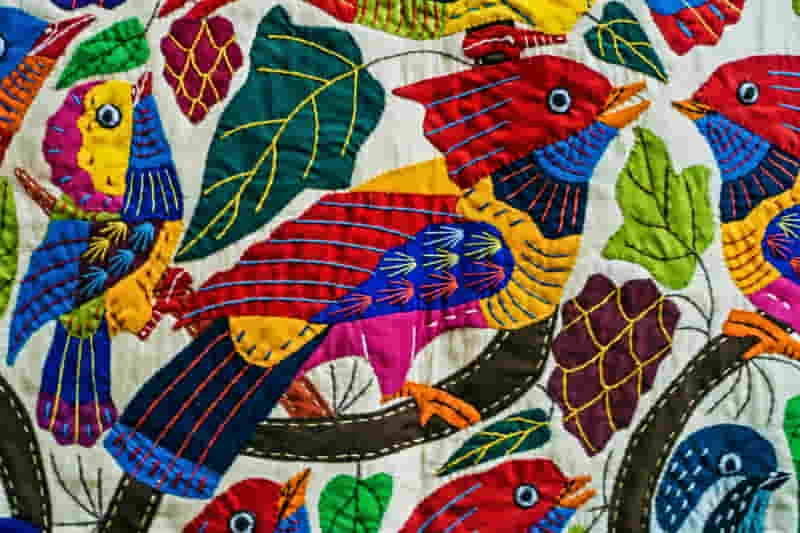
Sustainability in the textile industry is no longer a niche interest—it is a necessity. As awareness of environmental degradation and social injustice grows, so does the need for collective action. But systemic change cannot happen in isolation. True progress emerges when individuals, organizations, and communities come together to share knowledge, inspire innovation, and collaborate on solutions. That’s why building a community around sustainable textile practices is one of the most powerful ways to accelerate positive impact across the fashion and textile landscape.
In this comprehensive article, we explore how textile professionals, educators, artisans, brands, students, and consumers can build vibrant, inclusive, and purpose-driven communities dedicated to sustainable practices. From grassroots movements and digital platforms to co-creation hubs and educational networks, this guide offers a strategic roadmap to creating meaningful connections that drive real change.
Historical Context: Sustainability Through Communal Craft
Long before sustainability became a modern imperative, many textile traditions were inherently sustainable. Across cultures, community-driven textile production emphasized:
- Locally sourced materials
- Regenerative agricultural cycles (e.g., cotton, hemp, flax)
- Shared tools and labor
- Oral transmission of skills
- Repair, reuse, and repurposing
From India’s khadi spinning collectives to Andean weaving circles and African dyeing cooperatives, community was central to sustainability. These models still provide a rich foundation for today’s revival of ethical and collaborative textile systems.
Why Community Matters in Sustainable Textiles
Creating a sustainable textile community addresses multiple industry gaps:
- Bridges knowledge silos between science, design, and production
- Supports local economies through fair trade and artisan empowerment
- Drives innovation by encouraging cross-disciplinary collaboration
- Builds trust and transparency in supply chains
- Engages consumers in participatory change rather than passive purchasing
A community approach is particularly powerful because it creates systems of mutual support, enabling both small-scale makers and large brands to adopt sustainable solutions more effectively.
Defining the Pillars of a Sustainable Textile Community
A successful community initiative is built on:
- Inclusivity: All stakeholders—farmers, dyers, spinners, weavers, designers, retailers, and consumers—should have a voice.
- Transparency: Clear communication of practices, materials, and sourcing.
- Accessibility: Resources should be available to all skill levels and income groups.
- Education: Ongoing learning for both professionals and the public.
- Collaboration over competition: Sharing wins rather than hoarding secrets.
These pillars foster resilience, creativity, and collective agency in sustainable practices.
Types of Sustainable Textile Communities
A. Local Maker Collectives
- Focus on natural dyes, upcycling, and zero-waste sewing
- Organize workshops, repair cafes, and fabric swaps
B. Educational Networks
- Universities and vocational institutes teaching regenerative and circular design
- Student-led sustainability hubs linking theory and practice
C. Artisan Cooperatives
- Traditional craft communities sharing looms, tools, and marketplaces
- Provide income and social infrastructure in rural areas
D. Online Platforms and Forums
- Instagram communities using hashtags like #SustainableTextiles and #EcoWeavers
- Facebook groups for sustainable textile entrepreneurs
- Online forums like Reddit or niche Discord servers
E. Industry Consortia
- Multi-stakeholder groups advocating policy change and transparency (e.g., policy labs, dye testing circles, ethical sourcing guilds)
| Community Type | Format | Primary Stakeholders |
|---|---|---|
| Artisan Guild | Physical/Local | Weavers, dyers, cooperatives |
| Online Forum | Digital/Global | Designers, educators, students |
| University Lab | Institutional | Researchers, students, brands |
| Pop-up Events | Hybrid | Local artisans + conscious consumers |
How to Build a Sustainable Textile Community: Step-by-Step
Step 1: Define Your Purpose and Values
- What problem are you solving? (e.g., textile waste, dye toxicity, labor exploitation)
- Who do you want to connect?
- What values will guide collaboration?
Step 2: Identify Your Target Members
- Artisans, fiber farmers, students, local businesses, researchers, etc.
- Understand their motivations and challenges
Step 3: Choose Your Platform or Venue
- Digital (Instagram, Slack, Discord)
- Physical (studio, community center, rural weaving compound)
- Hybrid (host events with online follow-ups)
Step 4: Offer Value
- Host workshops, skill shares, or online classes
- Start a newsletter or knowledge repository
- Offer microgrants or barter exchanges
Step 5: Facilitate Storytelling and Transparency
- Showcase member projects with process videos or maker bios
- Share successes and failures openly
Step 6: Scale and Sustain
- Apply for grants or collaborate with ethical brands
- Rotate leadership or task roles to prevent burnout
- Collect member feedback to evolve organically
Content and Engagement Strategies
Creating educational and emotional resonance is key to maintaining interest:
- Feature maker stories and behind-the-scenes tutorials
- Share transparent sourcing breakdowns
- Create printables (natural dye charts, pattern templates)
- Facilitate discussions around decolonizing textiles, climate action, or ethical sourcing
Content that combines emotion, education, and action has the highest long-term engagement.
Technology Tools That Support Community Building
- Social Media: Instagram reels, TikTok challenges, Facebook groups
- Collaboration Tools: Slack, Notion, Airtable for shared project management
- Live Workshops: Zoom, Google Meet, Crowdcast
- E-commerce and Marketplaces: Etsy, Shopify, or community co-ops with B2C shops
- Resource Libraries: Google Drive, GitHub, Notion wikis
These tools allow for seamless communication, documentation, and scaling across borders.
Real-World Case Studies
Fibershed (USA)
- Regional textile systems based on carbon farming and local wool
- Includes fiber farmers, mill owners, brands, and consumers
Goonj (India)
- Uses donated fabric and clothing waste to empower rural communities
- Employs local women to repair, repurpose, and redistribute textiles
Fashion Revolution Community
- Global network of activists and designers promoting transparency
- Runs #WhoMadeMyClothes campaign every April
Fashion Open Studio (UK/Global)
- Educational platform providing open access to sustainable designers and practices during Fashion Revolution Week
Each initiative showcases the power of storytelling, collective action, and shared learning.
Challenges and Solutions in Building Textile Communities
| Challenge | Solution |
|---|---|
| Digital Access Gaps | Offer offline workshops, distribute printed resources |
| Language and Literacy Barriers | Use visual content, multilingual resources |
| Financial Sustainability | Apply for grants, use Patreon or community subscriptions |
| Burnout of Core Organizers | Share leadership, schedule rest weeks |
| Power Imbalances | Use consensus models, rotate roles |
Successful communities embrace feedback and foster a culture of evolving accountability.
Measuring Success in Community Building
Track both qualitative and quantitative indicators:
- Membership growth and retention
- Number of collaborations or products created
- Stories of impact (e.g., skill gains, increased income, policy influence)
- Environmental outcomes (e.g., meters of waste diverted, natural dye kits distributed)
Consider creating an annual community impact report with metrics, stories, and lessons learned.
The Role of Brands and Institutions
Brands and universities can support community building by:
- Funding events or material libraries
- Providing mentorship and business development tools
- Sharing production spaces for workshops
- Commissioning community-made collections
This bridges the gap between grassroots efforts and industry-wide transformation.
Future Trends in Community-Based Sustainability
- Decentralized Maker Economies: Localized textile ecosystems for low-carbon production
- Web3-Enabled Collectives: Tokenized participation and rewards
- AI-Assisted Learning Circles: Personalized guidance for natural dyeing or patternmaking
- Geo-Mapping of Artisan Networks: Mobile apps that connect nearby skills
- Blockchain for Provenance: Verifying fabric and garment origins via community-stamped metadata
The future will be built by communities that are open, ethical, and collaborative by design.
Summary
Building a community around sustainable textile practices is about more than reducing waste or switching materials. It’s about creating lasting human connections, sharing intergenerational knowledge, and designing systems that are fair, resilient, and regenerative. By cultivating inclusive, transparent, and creative communities, textile professionals and enthusiasts can make sustainability a shared, living tradition.
Whether you’re a weaver in a rural village, a designer in a major city, or a student passionate about fiber futures, the time to stitch your voice into the global fabric of change is now.
This in-depth article explores the importance of community in driving sustainable textile practices. It outlines step-by-step methods, case studies, challenges, and tools that help create collaborative ecosystems centered on ethical, regenerative textile work.
Citations:
- Fashion Revolution – https://www.fashionrevolution.org
- Fibershed – https://fibershed.org
- Goonj – https://goonj.org
- Textile Society of America – https://textilesocietyofamerica.org