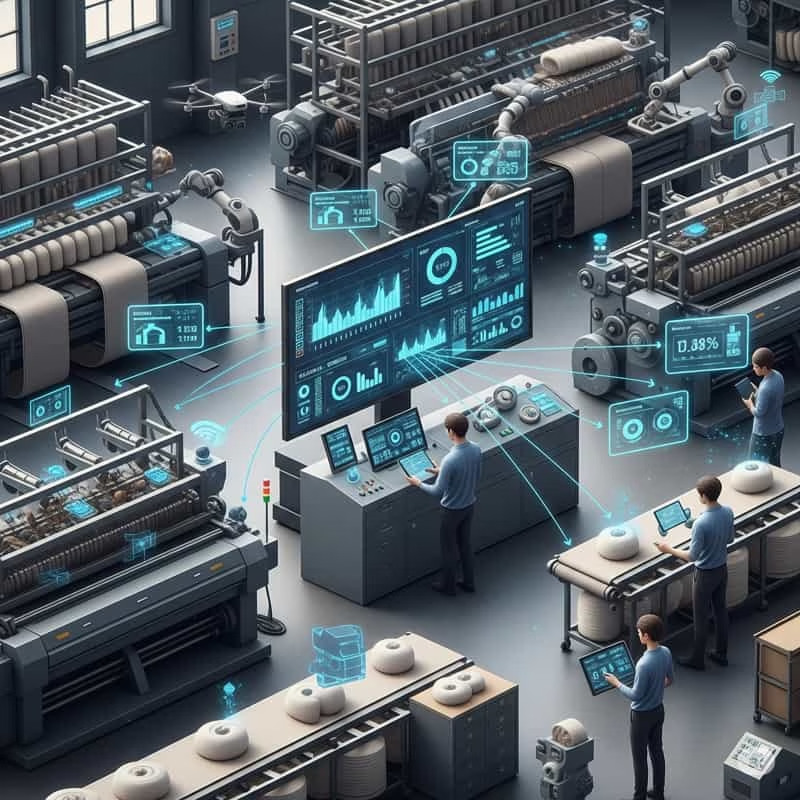
The Internet of Things (IoT) is transforming textile manufacturing by integrating smart sensors, automation, and data analytics to enhance efficiency, reduce waste, and promote sustainability. This article explores IoT’s role in automating processes, optimizing supply chains, and enabling smart textiles, with a focus on its synergy with zero-waste textile design and circular economy principles. It covers applications, benefits, challenges, and future trends, supported by case studies of industry leaders like Welspun and Rieter. Connections to durability testing, such as salt spray tests, highlight IoT’s impact on sustainable manufacturing.
Introduction to IoT in Textile Manufacturing Automation
The textile industry, a cornerstone of global manufacturing, is undergoing a digital transformation driven by the Internet of Things (IoT). IoT integrates smart sensors, connected devices, and data analytics into textile production, enabling automation, real-time monitoring, and data-driven decision-making. With the industry generating 92 million tons of textile waste annually and contributing 10% of global carbon emissions, IoT offers solutions to enhance efficiency, reduce waste, and align with sustainable practices like zero-waste textile design. This article explores how IoT revolutionizes textile manufacturing automation, its applications, benefits, challenges, and its role in fostering a sustainable, circular economy, making it a highly monetizable trend in Industry 4.0.
Understanding IoT in Textile Manufacturing
IoT refers to a network of interconnected devices embedded with sensors, software, and connectivity to collect and exchange data. In textile manufacturing, IoT enables automation across the supply chain, from fiber production to retail. Sensors monitor machine performance, environmental conditions, and material quality, while cloud-based platforms analyze data for real-time insights. IoT integrates with technologies like AI, robotics, and blockchain to optimize processes, reduce manual intervention, and enhance sustainability. By enabling smart factories, IoT supports Textile 4.0, a digital revolution that prioritizes efficiency, quality, and eco-friendly production.
The Need for Automation in Textile Manufacturing
Textile manufacturing is labor-intensive and resource-heavy, with complex supply chains spanning multiple countries. Traditional processes result in significant waste, with 15% of fabric discarded during cutting, and frequent machine downtime increases costs. Consumer demand for sustainable, transparent, and customized products adds pressure to modernize. IoT addresses these challenges by automating repetitive tasks, optimizing resource use, and providing visibility into production processes. It supports zero-waste initiatives and circular economy goals, reducing environmental impact while meeting market demands for ethical fashion.
How IoT Enhances Textile Manufacturing Automation
Real-Time Monitoring and Control
IoT sensors embedded in machinery monitor parameters like temperature, humidity, and fabric tension in real-time. Platforms like EcoAxis’s axisCONSERVE 4.0 provide insights into machine performance, enabling remote adjustments to maintain optimal conditions and reduce defects. This ensures consistent quality and minimizes downtime.
Predictive Maintenance
IoT enables predictive maintenance by analyzing machine data to detect potential failures before they occur. For example, Rieter ESSENTIAL uses IoT to monitor spinning machines, reducing downtime by 20% and extending equipment lifespan, saving costs and enhancing efficiency.
Supply Chain Optimization
IoT streamlines supply chains through real-time inventory tracking and logistics optimization. Sensors and RFID tags, as used by Welspun’s Wel-Trak 2.0, track raw materials and finished products, preventing delays and reducing overproduction. This enhances transparency and supports sustainable manufacturing.
Automation and Robotics
IoT integrates with robotics to automate tasks like cutting, sewing, and material handling. SUNTECH’s ST-FL automated guided vehicles (AGVs) improve material handling efficiency, reducing labor costs and errors. IoT-driven automation speeds production while maintaining precision.
Smart Textiles Development
IoT enables the creation of smart textiles with embedded sensors for health monitoring or environmental sensing. Google’s Project Jacquard, in collaboration with Levi’s, produces fabrics with conductive yarns, integrating functionality with sustainable design.
Applications of IoT in Textile Manufacturing
Spinning and Weaving Optimization
IoT monitors intermediate processes like blow room, carding, and ring spinning, as seen in Rieter ESSENTIAL, reducing faults and enhancing quality. In weaving, platforms like Weaving Things optimize loom performance, minimizing waste and improving output.
Quality Control and Defect Detection
IoT-powered systems like Cognex’s machine vision detect fabric defects in real-time, reducing waste by up to 30%. SUNTECH’s ST-Thinkor AI system ensures quality across diverse textile applications, from garments to automotive interiors.
Inventory and Supply Chain Management
IoT sensors provide real-time inventory data, enabling automated restocking based on demand, as implemented by Rejig Digital. This reduces stockouts and overproduction, supporting zero-waste goals.
Sustainable Manufacturing
IoT optimizes resource use, reducing energy and water consumption. EcoAxis reports 15% energy cost savings and 7% improvement in Overall Equipment Effectiveness (OEE), aligning with sustainable practices.
Smart Retail and Consumer Engagement
IoT enhances retail with smart mirrors and virtual try-ons, as seen in Levi’s stores, improving customer experiences and reducing returns, which contribute to waste.
Case Studies: IoT in Textile Manufacturing
Welspun’s Wel-Trak 2.0
Welspun Group’s blockchain-integrated IoT platform, Wel-Trak 2.0, tracks millions of products across the supply chain, ensuring transparency and sustainability. IoT sensors monitor production and logistics, reducing waste and improving efficiency by 54%.
Rieter ESSENTIAL
Rieter’s IoT application monitors spinning processes, collecting data from blow room to ring frame. This reduces machine stoppage time, enhances quality, and supports zero-waste production by optimizing resource use.
SUNTECH’s AGV Technology
SUNTECH’s ST-FL AGVs automate material handling, improving efficiency and reducing labor costs. Integrated with IoT, these vehicles ensure precise logistics, supporting sustainable manufacturing.
Payoda’s IoT Framework
Payoda’s cloud-based IoT system connects PLCs to monitor machines, boosting production by 54%. It enables predictive maintenance and remote monitoring, reducing defects and downtime.
Benefits of IoT in Textile Manufacturing Automation
Enhanced Efficiency
IoT reduces downtime and optimizes processes, with 70% of manufacturers reporting significant cost savings within three years. Automation speeds production, as seen in Payoda’s 54% efficiency increase.
Sustainability and Waste Reduction
IoT supports zero-waste textile design by minimizing fabric waste and optimizing resource use. EcoAxis’s solutions reduce carbon and water footprints, aligning with circular economy goals.
Improved Product Quality
Real-time defect detection and quality monitoring, as implemented by Cognex and SUNTECH, ensure high-quality textiles, reducing waste from faulty products.
Cost Savings
IoT reduces labor, energy, and maintenance costs. Predictive maintenance and inventory optimization, as seen in Welspun’s initiatives, lower operational expenses.
Consumer Trust and Transparency
IoT enables traceability, as in Wel-Trak 2.0, providing consumers with data on sustainable practices, enhancing brand loyalty and meeting ethical fashion demands.
Challenges of IoT in Textile Manufacturing
High Implementation Costs
IoT requires investment in sensors, software, and training, which can be challenging for SMEs. However, platforms like in.hub offer cost-effective solutions for older machines.
Integration with Legacy Systems
Heterogeneous machine parks, with equipment from the 1980s, pose compatibility issues. IoT gateways like in.hub’s siineos® system address this by enabling vendor-independent monitoring.
Data Management and Security
IoT generates vast data, requiring robust analytics and cybersecurity. Cloud-based platforms like axisCONSERVE 4.0 ensure secure data management but need strong protections.
Skill Gaps
Adopting IoT requires skilled workers. Training programs, like those by ITG Group, are essential to bridge this gap and ensure effective implementation.
Future Trends in IoT for Textile Manufacturing
Integration with AI and Blockchain
AI enhances IoT with predictive analytics, while blockchain ensures traceability, as seen in Wel-Trak 2.0. This synergy supports zero-waste design and transparency.
Digital Twins
Digital twins, virtual replicas of production lines, allow manufacturers to simulate and optimize processes, reducing waste and errors, as highlighted by ITG Group.
5G and Edge Computing
5G enables faster data processing, supporting scalable IoT networks for real-time monitoring, as noted by HashStudioz.
Smart Textiles Expansion
IoT-driven smart textiles, like Nextiles’ compression garments, will grow, integrating sensors for health and performance monitoring with sustainable design.
Synergy with Zero-Waste Textile Design
IoT supports zero-waste textile design by optimizing cutting processes and tracking sustainable materials. For example, IoT sensors ensure precise fabric use, reducing the 15% waste typical in traditional cutting. Integration with blockchain, as in Wel-Trak 2.0, verifies eco-friendly materials like organic cotton, aligning with circular economy principles and reducing the industry’s 92 million tons of annual waste.
Connection to Salt Spray Testing
IoT enhances the durability of sustainable textiles by monitoring production conditions for coatings, which can be tested via salt spray tests for corrosion resistance. This ensures textiles for outdoor or marine applications last longer, reducing waste and supporting zero-waste goals.
Best Practices for Implementing IoT in Textile Manufacturing
- Identify Opportunities: Focus on areas like quality control, inventory, and predictive maintenance for IoT integration.
- Select Scalable Technologies: Use platforms like in.hub or EcoAxis for vendor-independent, cloud-based solutions.
- Integrate with Existing Systems: Retrofit older machines with IoT sensors, as done by in.hub, to ensure compatibility.
- Invest in Training: Upskill workers to handle IoT systems, as recommended by ITG Group.
- Prioritize Sustainability: Use IoT to optimize resources and reduce waste, aligning with zero-waste and circular economy goals.
Conclusion
IoT is revolutionizing textile manufacturing automation by enabling real-time monitoring, predictive maintenance, and supply chain optimization. Its applications, from smart textiles to quality control, enhance efficiency, reduce costs, and support sustainability, aligning with zero-waste textile design and circular economy principles. Despite challenges like costs and integration, advancements in AI, blockchain, and 5G promise a bright future. Case studies from Welspun, Rieter, and SUNTECH demonstrate IoT’s transformative impact, while its synergy with durability testing, like salt spray tests, ensures long-lasting, eco-friendly textiles. As the industry embraces Textile 4.0, IoT offers a profitable, sustainable path forward, reshaping fashion for a greener future.
Citations
- HashStudioz. “IoT in Textile Industry: From Fiber to Fashion – A Connected Transformation.” HashStudioz, 26 Dec. 2024, www.hashstudioz.com.
- Octopus Digital. “The Ultimate Guide to Industrial IoT for Textile Manufacturing.” Octopus Digital, 14 Feb. 2024, octopusdtl.com.
- Praxie. “From Concept to Creation: Automating Textiles and Apparel Production.” Praxie, 29 Jan. 2024, praxie.com.
- Fibre2Fashion. “IoT in Textile Industry.” Fibre2Fashion, 14 Feb. 2024, www.fibre2fashion.com.
- Welspun Living. “IoT’s Impact on India’s Textile Industry Transforming Trends.” Welspun Living, 16 Jan. 2023, www.welspunliving.com.
- Rejig Digital. “IoT in Textile Industry: Key to Drive Innovation and Efficiency.” Rejig Digital, 4 Apr. 2023, www.rejigdigital.com.
- ResearchGate. “IOT (Internet of Things) Smart Applications in Textiles.” Asian Textile Journal, May 2021, www.researchgate.net.
- Clarion Technologies. “IoT Transforms Textile Manufacturing for Sustainability.” Clarion Technologies, 18 Oct. 2017, www.clariontech.com.
- IoT Use Case. “Integration of Old and New Machines through IIoT in the Textile Industry.” IoT Use Case, 16 Jul. 2024, iotusecase.com.
- EcoAxis. “Platform for Plastics Manufacturing.” EcoAxis, 19 Aug. 2020, ecoaxis.io.
- Textile Value Chain. “Application of IoT in Textile Industry.” Textile Value Chain, 27 Dec. 2020, textilevaluechain.in.
- ITG Group. “Industry 4.0 in the Textile Industry: Revolutionizing Production with Smart Technology.” ITG Group, 12 Dec. 2024, group-itg.com.
- World Fashion Exchange. “Top 8 Applications of Internet of Things (IoT) in Fashion.” World Fashion Exchange, 1 Dec. 2023, www.worldfashionexchange.com.
- IoT Use Case. “Integration of Old and New Machines through IIoT in the Textile Industry.” IoT Use Case, 16 Jul. 2024, iotusecase.com.
- Textile World. “The Role of Textiles in the Internet of Things.” Textile World, 18 Aug. 2022, www.textileworld.com.
- ResearchGate. “Application of IoT in Textile Industry.” ResearchGate, 27 Oct. 2022, www.researchgate.net.
- Infopine. “7 Ways Textile Technology Solutions are Transforming the Industry.” Infopine, 18 Jul. 2024, infopine.com.
- Gabriel Farias Iribarren. “IoT, Automation and Robotics of the Textile Industry.” Gabriel Farias, 15 Aug. 2017, gabrielfariasiribarren.com.
- Textile Value Chain. “Application of IoT in Textile Industry.” Textile Value Chain, 27 Dec. 2020, textilevaluechain.in.
- Suntech Machine. “Smart Manufacturing in the Textile Industry.” Suntech Machine, 4 Jun. 2023, www.suntech-machine.com.
- Payoda. “IoT & Connected Machines Help the Textile Manufacturing Industry Improve Productivity.” Payoda, 12 Sep. 2023, www.payoda.com.
- Suuchi Inc. “The Growing Role of IoT in Apparel Manufacturing.” Suuchi, 25 Mar. 2019, www.suuchi.com.
- ITG Group. “Industry 4.0 in the Textile Industry: Revolutionizing Production with Smart Technology.” ITG Group, 12 Dec. 2024, italia.group-itg.com.
- Daitan Solutions. “Textile Industry 4.0: Connecting OT and Smart Factories.” Daitan Solutions, 16 Sep. 2024, daitansol.com.