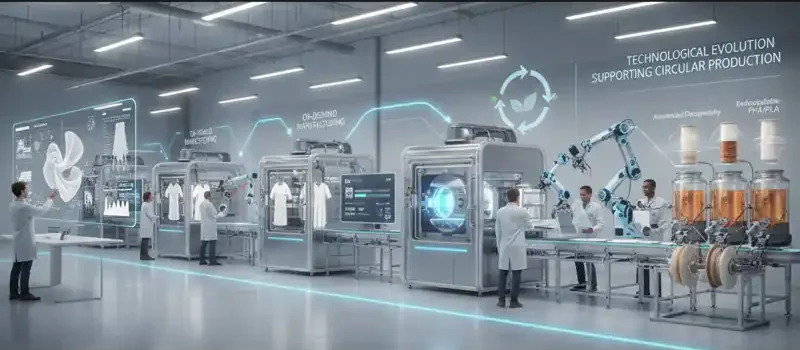
Technical textiles are fabrics designed for function over fashion—used in industries like aerospace, agriculture, healthcare, and construction. This guide covers what they are, their types, materials, applications, advantages, and how they’re shaping the future.
Introduction: When Textiles Are More Than Just Clothes
For most people, the word “textile” instantly brings to mind clothing—soft fabrics, fashion, and colors. But there’s a whole other side to textiles that has little to do with runway looks or seasonal collections.
Welcome to the world of technical textiles—fabrics designed for function over fashion. Here, performance, durability, and special properties take priority over patterns and prints. These are the textiles that make aircraft lighter, cars safer, buildings stronger, crops more productive, and medical treatments more effective.
Whether you’re sitting in a car seat with built-in airbags, wearing a waterproof hiking jacket, or walking on a geotextile-covered path, you’re interacting with technical textiles—often without realizing it.
In this guide, we’ll break down what technical textiles are, why they matter, where they’re used, and how they’re shaping the future of industries worldwide.
1. Definition: What Exactly Are Technical Textiles?
A technical textile is any textile material manufactured primarily for its technical performance and functional properties rather than for decorative or aesthetic purposes.
Unlike traditional textiles—designed mostly for clothing, comfort, or fashion—technical textiles are engineered to perform specific tasks. These tasks could include:
- Providing mechanical strength
- Offering thermal insulation or flame resistance
- Withstanding harsh chemicals
- Protecting against UV radiation
- Allowing controlled permeability to air, moisture, or liquids
- Acting as a medical barrier against bacteria
ISO Definition:
The International Organization for Standardization (ISO) defines technical textiles as “textile materials and products manufactured primarily for their technical performance and functional properties rather than their aesthetic or decorative characteristics.”
Key Point: In technical textiles, form follows function—meaning the appearance is secondary to the functional goal.
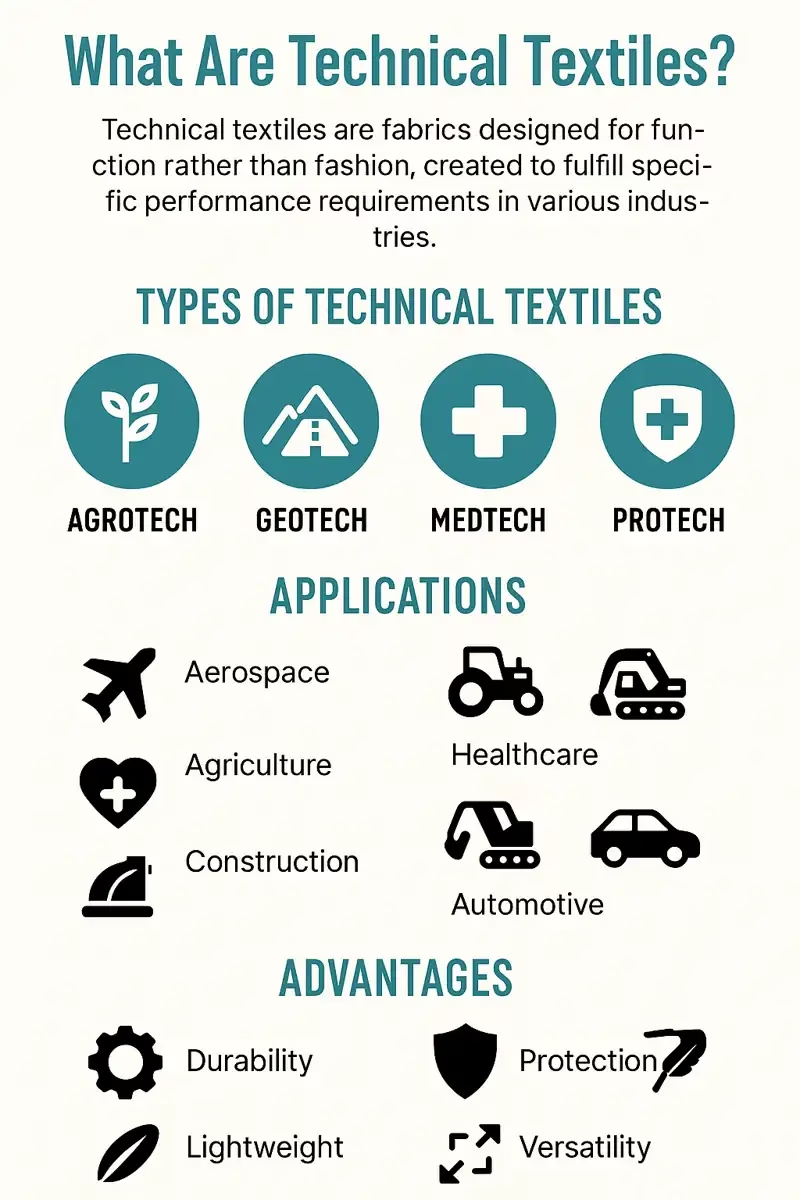
Download this infographic as a printable PDF
2. How Are Technical Textiles Different from Regular Textiles?
| Aspect | Traditional Textiles | Technical Textiles |
|---|---|---|
| Purpose | Aesthetics, comfort, fashion | Performance, protection, durability |
| Design Focus | Colors, textures, patterns | Strength, resistance, technical function |
| End Use | Clothing, home furnishings | Industry, engineering, medical, defense |
| Materials Used | Natural fibers (cotton, wool, silk) | Advanced fibers (Kevlar, carbon fiber, aramids, composites) |
| Performance Testing | Limited (shrinkage, colorfastness) | Extensive (tensile strength, fire retardancy, UV stability) |
Example: A polyester shirt is made to be lightweight and comfortable, while a polyester geotextile fabric is made to be strong, porous, and UV-resistant for road construction.
3. Classification of Technical Textiles
Technical textiles are often classified by application sector rather than by raw material. The most widely accepted classification is by Techtextil, a leading trade fair in Germany, which groups technical textiles into 12 categories:
1. Agrotech (Agriculture)
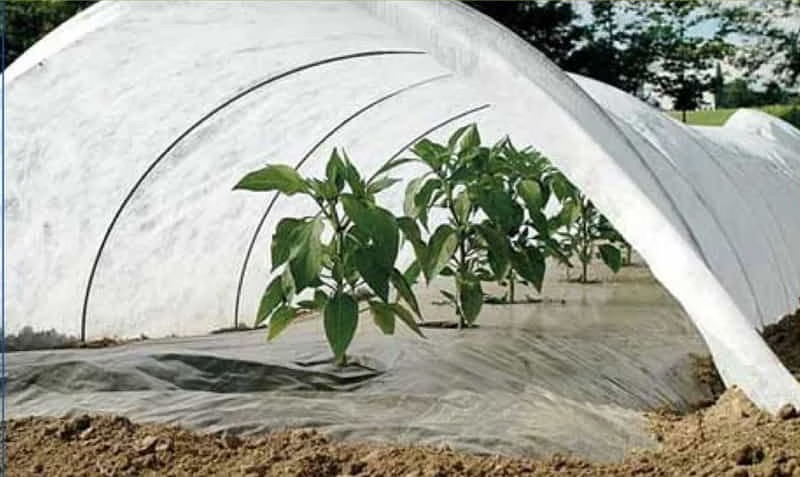
Textiles used in farming, horticulture, and forestry.
Examples: Shade nets, crop covers, mulch mats, fishing nets.
2. Buildtech (Construction)
Textiles for building and construction.
Examples: Scaffolding nets, roofing membranes, concrete reinforcement fabrics.
3. Clothtech (Clothing Components)
Technical components in clothing.
Examples: Interlinings, sewing threads, zip tapes, padding.
4. Geotech (Geotechnical)

Textiles used in soil, rock, or water engineering.
Examples: Geogrids, geonets, erosion control mats.
5. Hometech (Home Textiles with Functional Use)
Function-oriented home textile products.
Examples: Fire-retardant curtains, mattress protectors.
6. Indutech (Industrial)
Technical textiles for industrial applications.
Examples: Filter fabrics, conveyor belts, insulation materials.
7. Medtech (Medical)

Textiles for healthcare and hygiene.
Examples: Surgical gowns, bandages, artificial ligaments.
8. Mobiltech (Transport)

Textiles used in vehicles (land, sea, air).
Examples: Airbags, seat belts, car upholstery.
9. Oekotech (Environmental)
Textiles for environmental protection.
Examples: Oil spill booms, landfill liners.
10. Packtech (Packaging)
Textiles for packaging solutions.
Examples: FIBC (Flexible Intermediate Bulk Containers), woven sacks.
11. Protech (Protection)
Protective textiles for safety and defense.
Examples: Bulletproof vests, fire-resistant clothing.
12. Sporttech (Sports)
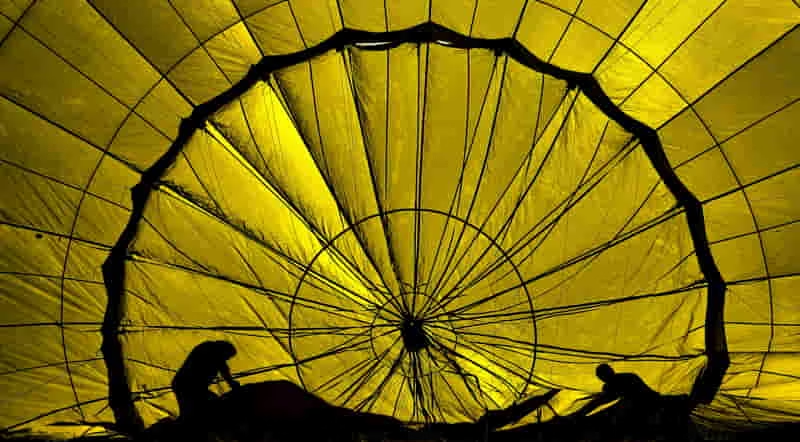
Textiles for sports and leisure.
Examples: Parachutes, sportswear, climbing ropes.
4. Types of Materials Used in Technical Textiles
Technical textiles can be made from a wide range of fibers—both natural and synthetic. The choice depends on the performance required.
Natural Fibers
- Cotton (for absorbency and comfort)
- Wool (for insulation)
- Jute, coir (for geotextiles, packaging)
- Silk (for surgical sutures in some cases)
Synthetic Fibers
- Polyester (versatile, durable)
- Polyamide (nylon—high strength, abrasion resistance)
- Polypropylene (lightweight, chemical resistance)
- Aramids (Kevlar, Nomex—for high strength and fire resistance)
- Carbon fiber (high stiffness and thermal resistance)
Specialty Fibers
- Glass fibers (fire resistance, reinforcement)
- Metallic fibers (conductivity, shielding)
- Ultra-high-molecular-weight polyethylene (UHMWPE) for ballistic applications
5. Manufacturing Techniques for Technical Textiles
While weaving and knitting are still widely used, technical textiles often require specialized manufacturing techniques:
- Weaving – For strength and dimensional stability (e.g., industrial filters, conveyor belts).
- Knitting – For flexibility and stretch (e.g., sportswear, medical bandages).
- Nonwovens – Bonded fiber webs (e.g., surgical masks, geotextiles).
- Braiding – For ropes, cables, and hose reinforcement.
- Coating & Laminating – Adding protective layers (e.g., waterproof fabrics).
- 3D Weaving – For composite materials in aerospace and automotive.
6. Applications of Technical Textiles by Industry
Let’s look at some real-world examples:
Automotive (Mobiltech)
- Airbags made from high-strength woven nylon
- Seat belts from polyester with high tensile strength
- Sound-absorbing fabrics for noise reduction
Construction (Buildtech)
- Membranes for waterproof roofing
- Reinforcement fabrics for concrete
- Erosion control mats
Healthcare (Medtech)
- Antimicrobial wound dressings
- Compression garments for blood circulation
- Disposable surgical drapes and gowns
Aerospace
- Carbon fiber composites for lightweight structures
- Thermal insulation blankets
- Parachute fabrics
Sports (Sporttech)
- Lightweight yet durable climbing ropes
- Moisture-wicking sportswear
- Inflatable boats and sails
7. Testing and Quality Standards
Technical textiles must meet stringent testing requirements depending on their intended use. Examples include:
- Tensile Strength – Resistance to breaking under tension
- Abrasion Resistance – Ability to withstand wear
- Flammability Tests – Fire resistance and burning behavior
- UV Resistance – Performance under sunlight exposure
- Chemical Resistance – Stability when exposed to acids, alkalis, solvents
Standards bodies such as ISO, ASTM International, and BIS (Bureau of Indian Standards) set the benchmarks.
8. Advantages of Technical Textiles
- Enhanced Safety – From airbags to bulletproof vests
- Durability – Long life even under extreme conditions
- Cost Efficiency – Reduces maintenance and replacement costs
- Special Properties – Fireproof, waterproof, breathable, conductive
- Sustainability – Some are made from recycled materials or biodegradable fibers
9. Market Overview and Growth Potential
The global technical textile market is growing rapidly due to demand in infrastructure, healthcare, defense, and automotive sectors.
- Global Market Size (2024) – Estimated over US$ 220 billion
- Growth Rate – Projected CAGR of 4–5% through 2030
- Top Producers – China, USA, Germany, India
India’s Technical Textile Mission aims to boost domestic production and innovation, making it a future hotspot for global supply.
10. Future Trends in Technical Textiles
- Smart Textiles – Fabrics embedded with sensors for health monitoring.
- Sustainable Technical Textiles – Use of biodegradable fibers, recycling.
- Nanotechnology – Enhancing performance at the molecular level.
- 3D Printing with Textile Composites – For rapid prototyping.
- Lightweight Composites – For automotive and aerospace fuel efficiency.
11. Challenges in the Industry
- High R&D Costs – Innovation requires significant investment.
- Specialized Skills – Need for trained workforce.
- Raw Material Availability – Some fibers are costly or limited.
- Standardization Issues – Lack of uniform regulations in emerging markets.
Conclusion: Why You Should Care About Technical Textiles
Technical textiles may not make headlines in fashion magazines, but they quietly power the modern world. They’re in the car you drive, the hospital you visit, the sports you play, and even the soil that grows your food.
Understanding them isn’t just for engineers—it’s for anyone curious about how innovation in materials science shapes the way we live, work, and stay safe.
As industries evolve and demands for efficiency, safety, and sustainability grow, technical textiles will become even more essential—making this a field worth watching, investing in, and maybe even working in.
FAQ – Technical Textiles
Technical textiles are fabrics designed for performance and function rather than decorative purposes. They are engineered to meet specific requirements such as strength, durability, fire resistance, chemical resistance, or moisture control, and are used in industries like aerospace, agriculture, construction, and healthcare.
Examples include geotextiles for road construction, airbags in cars, fire-resistant clothing for firefighters, medical gowns, crop protection nets, parachutes, filter fabrics, and carbon fiber composites.
According to the Techtextil classification, there are 12 categories: Agrotech, Buildtech, Clothtech, Geotech, Hometech, Indutech, Medtech, Mobiltech, Oekotech, Packtech, Protech, and Sporttech.
They can be produced using weaving, knitting, nonwoven bonding, braiding, coating, laminating, and advanced processes like 3D weaving or nanotechnology.
They are used for reinforcement, insulation, filtration, protection, medical treatment, packaging, and environmental control.
They enhance safety, improve durability, reduce maintenance costs, and provide specialized properties such as waterproofing, UV protection, and fire resistance.
Trends include smart textiles, sustainable materials, nanotechnology-enhanced fabrics, lightweight composites, and 3D-printed structures.
Traditional textiles focus on aesthetics, comfort, and style, while technical textiles prioritize performance, functionality, and durability.