loom

Home » loom
power loom weaving

Weaving Loom Types

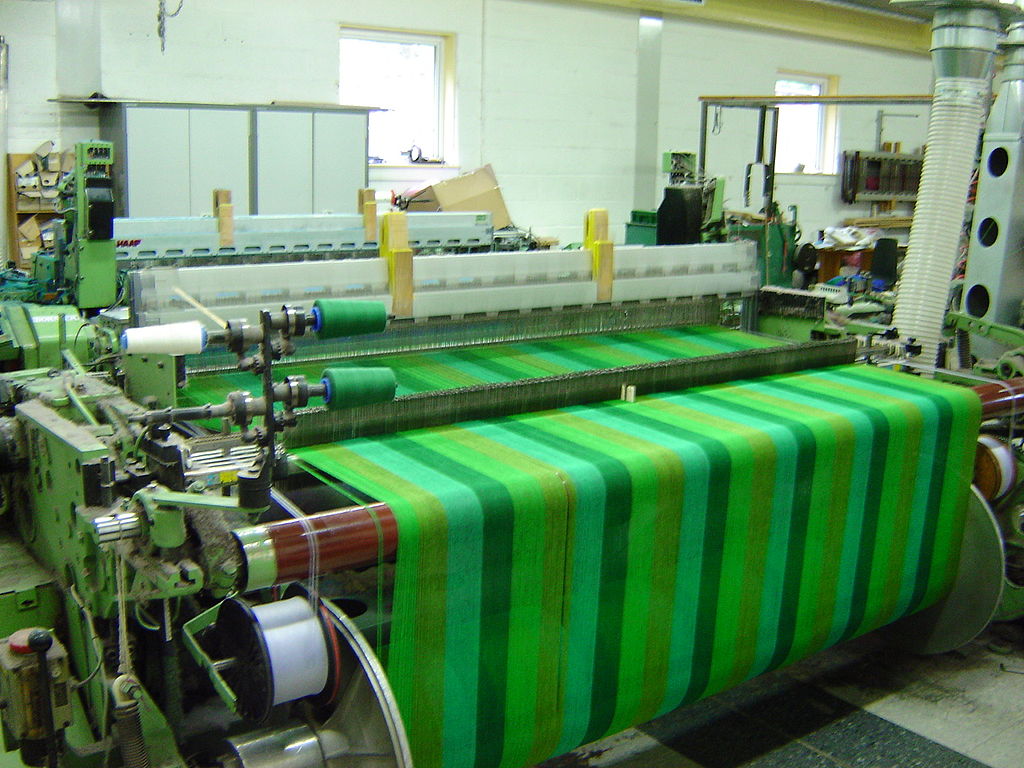
The earliest art of hand weaving along with hand spinning remains a popular craft. There are different types of weaving looms and these include handloom, frame loom, and backstrap loom. A loom is a mechanism or tool used for weaving yarn and thread into textiles. Looms vary in a wide assortment of sizes. They come in huge freestanding handlooms, tiny hand-held frames, with vast automatic mechanical tools. A loom can as well pertain to an electric line construction like that of a wiring loom.

Weaving Loom Types Read More »
weaving loom

Weaving Loom Mechanisms

The basic mechanisms in any type of looms can be classified into Primary (shedding, picking & beat up), secondary and Auxiliary motions. Shedding opens the warp sheet into layers. The picking causes the shuttle carrying weft to be propelled from one end of the loom to another. The beat-up motion lays the previously laid weft to the fell of the cloth. The secondary motion comprises of take-up and let-off motions. The auxiliary motions consist of the warp stop, weft stop, and warp protector motions.

Weaving Loom Mechanisms Read More »

fabric weaving machine

Types of Fabric Weaving Looms

Weaving is the process of making fabrics by interlacing the threads lengthwise and widthwise commonly known as warp and weft in a regular order. The operation is performed in a machine called a loom. Two sets of yarns are interlaced, almost always at right angles to each other. One, called the warp, runs lengthwise in the loom; the other, called the filling, weft or woof, runs crosswise. The raising and lowering sequence of warp threads in various sequences give many possible weave structures.

Types of Fabric Weaving Looms Read More »

Scroll to Top