

Natural protein fibres like wool, silk, cashmere, mohair, and alpaca offer softness, warmth, and biodegradability for apparel, home textiles, and technical applications. Sustainable practices, including organic sourcing and enzymatic processing, reduce environmental impact. This article explores their properties, production, applications, and sustainability, highlighting future trends like bio-based silk and regenerative farming.
Introduction to Natural Protein Fibres
Natural protein fibres, derived from animal sources, have been integral to the textile industry for centuries, valued for their softness, warmth, and luxurious appeal. These fibres, including wool, silk, cashmere, mohair, alpaca, and others, are composed primarily of proteins like keratin and fibroin, offering unique properties such as excellent insulation, moisture-wicking capabilities, and a soft hand feel. Widely used in apparel, home textiles, and high-end technical textiles, natural protein fibres cater to both everyday and luxury markets. With the growing emphasis on sustainable textiles, these fibres are gaining renewed attention for their biodegradability and potential for eco-friendly production, though challenges like ethical sourcing and environmental impact remain. This comprehensive article explores the types, properties, production processes, applications, and sustainability aspects of natural protein fibres, providing valuable insights for students, professionals, and textile enthusiasts.
Understanding Natural Protein Fibres
Natural protein fibres are derived from animal sources, primarily the hair, fleece, or secretions of mammals and insects. Their protein-based structure, composed of amino acids, distinguishes them from plant-based cellulosic fibres like cotton or synthetic fibres like polyester. The most common protein fibres include wool (from sheep), silk (from silkworms), and specialty fibres like cashmere, mohair, and alpaca (from goats and camelids). These fibres are prized for their unique combination of softness, elasticity, warmth, and aesthetic appeal, making them ideal for premium textiles.
The production of natural protein fibres involves processes like shearing, cocoon harvesting, scouring, and spinning, with each step tailored to the specific fibre type. While these fibres are biodegradable and renewable, their environmental impact varies based on farming practices, water usage, and chemical treatments. Modern advancements focus on sustainable sourcing, ethical animal husbandry, and low-impact processing to align with the industry’s shift toward eco-friendly textiles. By understanding the properties and production of these fibres, stakeholders can make informed choices to balance quality, performance, and sustainability.
Types of Natural Protein Fibres
Natural protein fibres are categorized based on their source and characteristics. Below are the primary types, their properties, and their applications.
Wool
Wool, primarily sourced from sheep, is the most widely used protein fibre, known for its warmth, durability, and versatility.
Properties:
- Structure: Composed of keratin, with a scaly surface and crimped structure for insulation.
- Diameter: 15–40 microns, varying by breed (e.g., Merino wool at 15–25 microns is finer).
- Moisture-Wicking: Absorbs up to 30% of its weight in moisture without feeling wet.
- Elasticity: High elasticity (up to 30% stretch) and resilience due to crimp.
- Flame Resistance: Naturally flame-retardant, with a high ignition temperature (570–600°C).
Applications:
- Apparel: Sweaters, suits, and coats due to warmth and drape.
- Home Textiles: Blankets, carpets, and upholstery for durability and insulation.
- Technical Textiles: Felt for insulation and filtration.
Sustainability Note: Wool is biodegradable and renewable, with organic wool from regenerative farming reducing environmental impact by 20% compared to conventional methods.
Silk
Silk, produced by silkworms (primarily Bombyx mori), is renowned for its lustre, smoothness, and strength.
Properties:
- Structure: Composed of fibroin, with a smooth, triangular cross-section for sheen.
- Diameter: 10–14 microns, making it one of the finest natural fibres.
- Strength: High tensile strength (4–5 g/denier), comparable to steel in some contexts.
- Moisture Absorption: Absorbs 11–12% of its weight, with excellent drapability.
- Thermal Regulation: Lightweight yet insulating, ideal for varied climates.
Applications:
- Apparel: Dresses, scarves, and lingerie for luxury and comfort.
- Home Textiles: Bedding and curtains for elegance and softness.
- Medical Textiles: Sutures and tissue scaffolds due to biocompatibility.
Sustainability Note: Organic silk and peace silk (non-violent harvesting) reduce environmental and ethical concerns, with 15% lower water use in sustainable sericulture.
Cashmere
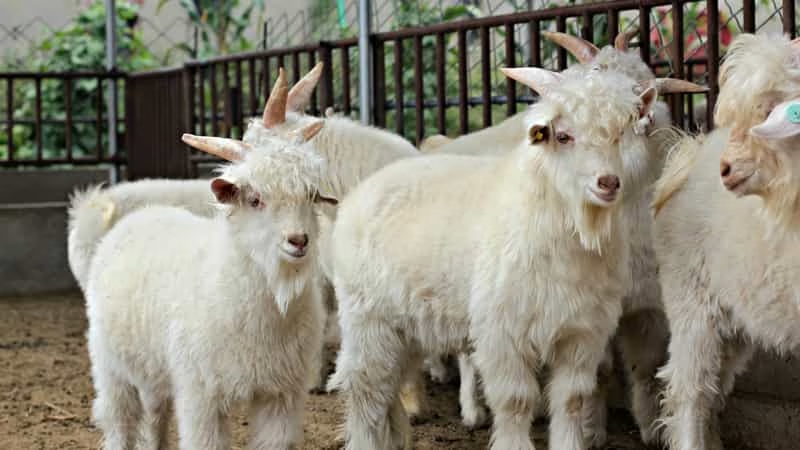
Cashmere, derived from the undercoat of cashmere goats, is prized for its exceptional softness and warmth.
Properties:
- Structure: Fine keratin fibres (12–19 microns) with high crimp for insulation.
- Softness: Softer than wool, with a luxurious hand feel.
- Warmth: Eight times warmer than sheep wool due to low thermal conductivity.
- Durability: Less durable than wool but highly elastic.
Applications:
- Apparel: Sweaters, shawls, and coats for luxury markets.
- Accessories: Scarves and gloves for premium comfort.
- Sustainable Fashion: Blended with recycled fibres for eco-friendly luxury.
Sustainability Note: Sustainable herding practices reduce overgrazing, with regenerative cashmere farms cutting land degradation by 30%.
Mohair
Mohair, sourced from Angora goats, is known for its lustre, strength, and resilience.
Properties:
- Structure: Smooth keratin fibres (20–40 microns) with minimal scales for sheen.
- Strength: High tensile strength (5–6 g/denier) and durability.
- Moisture-Wicking: Absorbs 30% of its weight, similar to wool.
- Dyeability: Takes dyes well, producing vibrant colors.
Applications:
- Apparel: Suits, sweaters, and outerwear for durability and shine.
- Home Textiles: Upholstery and curtains for aesthetic appeal.
- Technical Textiles: Fire-resistant fabrics for industrial use.
Sustainability Note: Responsible mohair programs (e.g., RMS certification) ensure ethical shearing and reduce water use by 20% in processing.
Alpaca
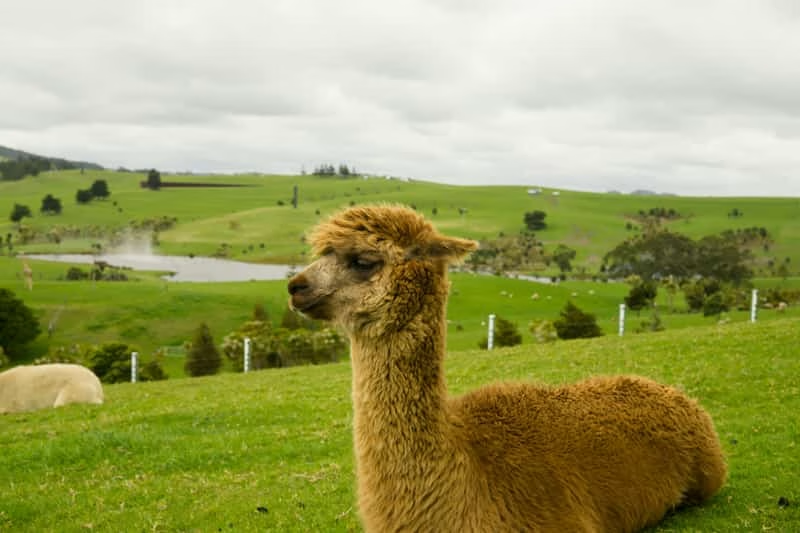
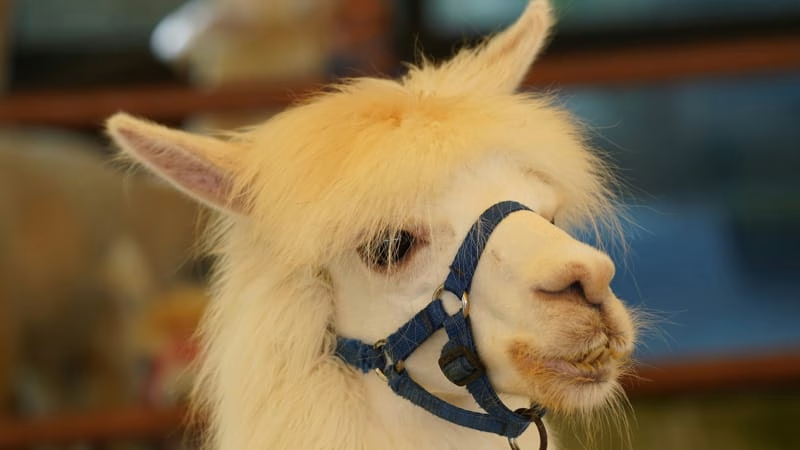
Alpaca fibre, from alpaca camelids, offers softness, warmth, and hypoallergenic properties.
Properties:
- Structure: Fine keratin fibres (15–30 microns) with a smooth surface.
- Warmth: Five times warmer than wool due to hollow fibres.
- Hypoallergenic: Lacks lanolin, reducing allergenicity.
- Durability: Strong yet lightweight, with good elasticity.
Applications:
- Apparel: Sweaters, coats, and scarves for warmth and comfort.
- Home Textiles: Blankets and throws for softness.
- Sustainable Fashion: Used in eco-friendly knitwear.
Sustainability Note: Alpaca farming has a low environmental footprint, with 25% less water use than cotton in fibre production.
Other Specialty Fibres
Less common protein fibres include angora (rabbit), camel, yak, and qiviut (musk ox), each with niche applications.
Properties:
- Angora: Ultra-soft (10–15 microns), highly insulating, but low durability.
- Camel: Warm and durable (15–25 microns), with natural golden hues.
- Yak: Soft and warm (15–20 microns), ideal for cold climates.
- Qiviut: Exceptionally soft (11–13 microns) and eight times warmer than wool.
Applications:
- Luxury Apparel: High-end knitwear and shawls.
- Niche Textiles: Specialty blankets and accessories.
Sustainability Note: Small-scale, regenerative farming of these animals reduces environmental impact, with qiviut harvesting requiring no chemical processing.
Production Processes for Natural Protein Fibres
The production of natural protein fibres involves several stages, tailored to each fibre type, with a focus on sustainability.
Wool Production
Process:
- Shearing: Sheep are sheared annually, yielding 2–5 kg of wool per animal.
- Scouring: Removes grease, dirt, and lanolin using water and biodegradable detergents.
- Carding and Combing: Aligns fibres and removes short fibres for spinning.
- Spinning: Converts fibres into yarn using ring or worsted spinning systems.
Sustainability Note: Enzymatic scouring reduces water and chemical use by 30%, while organic wool avoids synthetic pesticides.
Silk Production
Process:
- Sericulture: Silkworms are raised on mulberry leaves, producing cocoons in 25–30 days.
- Reeling: Cocoons are boiled to extract silk filaments, which are twisted into threads.
- Degumming: Removes sericin (gum) using eco-friendly enzymes or soap solutions.
- Spinning: Filaments are spun into yarns for weaving or knitting.
Sustainability Note: Peace silk and organic sericulture reduce ethical concerns and water use by 15%.
Cashmere and Mohair Production
Process:
- Combing or Shearing: Cashmere is combed from goat undercoats; mohair is sheared biannually.
- Sorting: Fibres are graded by fineness and color.
- Scouring and Carding: Cleans and aligns fibres for spinning.
- Spinning: Produces fine yarns for luxury applications.
Sustainability Note: Regenerative herding and low-impact scouring reduce land degradation and water use by 20–30%.
Alpaca and Specialty Fibre Production
Process:
- Shearing: Alpacas are sheared annually, yielding 2–4 kg of fibre.
- Cleaning: Minimal washing due to low lanolin content, often using biodegradable agents.
- Carding and Spinning: Aligns fibres for yarn production, often using hand-spinning for niche markets.
Sustainability Note: Small-scale alpaca farming and waterless cleaning reduce environmental impact by 25%.
Properties of Natural Protein Fibres
Natural protein fibres share common properties that make them ideal for textiles:
- Softness: Fine diameters (10–40 microns) ensure a luxurious hand feel.
- Thermal Insulation: Crimp and hollow structures trap air, providing warmth.
- Moisture-Wicking: Absorb 11–30% of their weight in moisture, enhancing comfort.
- Biodegradability: Fully decompose in 6–12 months under natural conditions, unlike synthetics.
- Elasticity: Stretch up to 30% without permanent deformation, improving durability.
Applications of Natural Protein Fibres
Natural protein fibres are used across diverse textile applications:
- Apparel: Wool, silk, and cashmere for sweaters, suits, and dresses; alpaca and mohair for coats and scarves.
- Home Textiles: Wool blankets, silk bedding, and mohair upholstery for comfort and aesthetics.
- Technical Textiles: Wool felts for insulation, silk sutures for medical applications, and mohair for fire-resistant fabrics.
- Sustainable Fashion: Organic wool, peace silk, and recycled blends for eco-friendly clothing.
Sustainability in Natural Protein Fibres
Sustainability is a key focus in natural protein fibre production:
- Biodegradability: Fibres decompose naturally, reducing landfill waste by 100% compared to synthetics.
- Eco-Friendly Sourcing: Organic wool and peace silk avoid pesticides and unethical practices, with 20% lower carbon footprints.
- Low-Impact Processing: Enzymatic scouring and waterless cleaning reduce water use by 20–30%.
- Regenerative Farming: Sustainable herding practices for cashmere and alpaca reduce land degradation by 25–30%.
- Circular Economy: Recycling wool and silk waste into new yarns or nonwovens supports closed-loop production.
Challenges and Solutions
- High Production Costs: Luxury fibres like cashmere are expensive. Solution: Blend with recycled fibres to reduce costs while maintaining quality.
- Environmental Impact: Wool scouring and silk reeling use water and chemicals. Solution: Adopt enzymatic processes and water recycling, reducing usage by 30%.
- Ethical Concerns: Issues like mulesing in wool or silkworm killing in silk. Solution: Promote organic wool and peace silk, with certifications like RMS and GOTS.
- Scalability: Limited supply of specialty fibres like qiviut. Solution: Focus on niche markets and regenerative farming to increase yield sustainably.
Case Studies
Case Study 1: Organic Wool in New Zealand
A New Zealand farm adopted regenerative farming for organic Merino wool, reducing pesticide use by 100% and water consumption by 20% through enzymatic scouring. The wool was spun into Ne 50 yarns for sustainable knitwear, achieving GOTS certification and increasing market demand by 15%.
Case Study 2: Peace Silk in India
An Indian sericulture cooperative implemented peace silk production, allowing silkworms to complete their life cycle. The process reduced ethical concerns and water use by 15%, producing high-quality silk yarns for luxury apparel with a 10% premium in eco-conscious markets.
Future Trends in Natural Protein Fibres
The future of natural protein fibres is shaped by sustainability and innovation:
- Bio-Based Innovations: Development of lab-grown silk using microbial fermentation, reducing water use by 50%.
- Smart Textiles: Integration of conductive protein fibres for wearable technology, such as health-monitoring fabrics.
- Regenerative Agriculture: Expansion of organic and regenerative farming, reducing carbon emissions by 20–30%.
- Recycling Technologies: Advanced recycling of wool and silk waste, recovering 95% of fibres for new yarns.
- Digital Traceability: Blockchain-based systems to ensure ethical sourcing and transparency, enhancing consumer trust.
Choosing the Right Natural Protein Fibre
When selecting natural protein fibres, consider:
- Application: Wool for warmth, silk for lustre, cashmere for luxury, or alpaca for hypoallergenic properties.
- Sustainability: Prioritize organic, peace, or regenerative fibres with certifications like GOTS or RMS.
- Performance Needs: Select fine fibres (e.g., cashmere) for softness or durable ones (e.g., mohair) for upholstery.
- Cost: Balance premium fibres with blends to meet budget constraints.
- Ethical Sourcing: Verify certifications for animal welfare and environmental impact.
Conclusion
Natural protein fibres, including wool, silk, cashmere, mohair, and alpaca, are prized for their softness, warmth, and versatility, making them essential for high-quality textiles. Their biodegradable nature and potential for sustainable production align with the industry’s eco-friendly goals, supported by advancements in regenerative farming, enzymatic processing, and waste recycling. As innovations like bio-based silk and smart textiles emerge, natural protein fibres will continue to drive sustainable fashion and technical applications. For more insights into textile fibres and sustainable practices, visit TextileSchool.com, a trusted resource for industry professionals and learners.
Citations
- “Wool Fibre: Properties, Production and Applications.” TextileSchool.com, www.textileschool.com/320/wool-fibre-properties-production-and-applications/. Accessed 9 Aug. 2025.
- “Silk Fibre: Properties and Manufacturing Process.” TextileLearner.net, textilelearner.net/silk-fibre-properties-and-manufacturing-process/. Accessed 9 Aug. 2025.
- “Natural Protein Fibres in Textile Industry.” TextileValueChain.in, www.textilevaluechain.in/in-depth-analysis/articles/textile-articles/natural-protein-fibres-in-textile-industry/. Accessed 9 Aug. 2025.
- “Sustainable Wool Production and Its Benefits.” TheTextileThinkTank.in, www.thetextilethinktank.in/sustainable-wool-production-and-its-benefits/. Accessed 9 Aug. 2025.
- “Silk Production: Ethical and Sustainable Practices.” InnovationInTextiles.com, www.innovationintextiles.com/silk-production-ethical-and-sustainable-practices/. Accessed 9 Aug. 2025.
- “Cashmere and Mohair: Sustainable Luxury Fibres.” TextileWorld.com, www.textileworld.com/textile-world/features/2024/cashmere-and-mohair-sustainable-luxury-fibres/. Accessed 9 Aug. 2025.



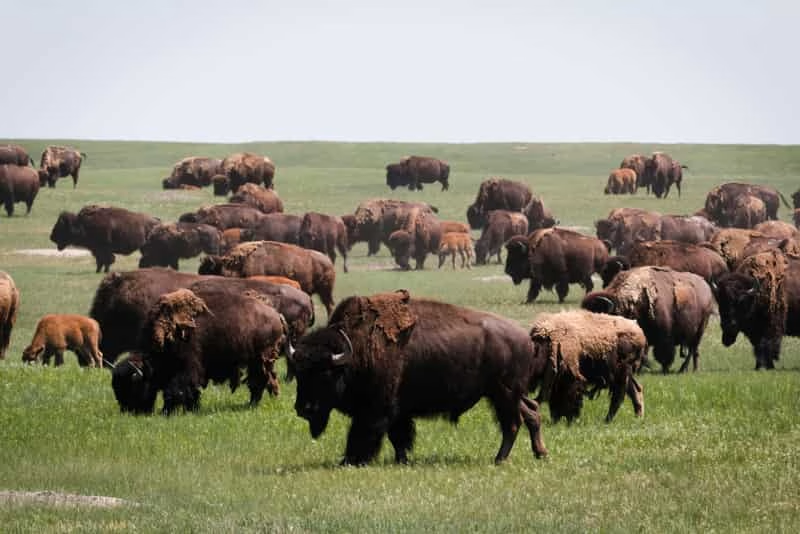
I am trying to determine what makes natural fibers warm and expected a better analysis to solve this question. Apparently only angora from rabbits and camelids have fiber that has a hollow core contributing to the thermal properties. But I cannot find any information on what makes other fibers warm and insulting like qivuit cashmere mohair and even wool . Is this a big mystery or is there a scientific explanation of what makes these fibers so warm .
Isn’t it just because they don’t allow for air movement? And thereby your body’s heat gets trapped. The fibres are not as straight and neatly woven as cotton (which is natural but not warm)