Drafting, traveler selection, ring size, breakage reduction, and compact spinning trade-offs. This section explains practical decision criteria, typical test methods, and failure modes that matter in real production. Readers get checklists, calculation steps, and case examples connecting specifications to cost, reliability, and compliance. Links map core concepts to upstream inputs and downstream processes so choices remain consistent across sourcing, manufacturing, and end-use performance. Each article includes definitions, diagrams where helpful, and plain-language notes to help newcomers ramp quickly while giving experienced professionals the depth needed to troubleshoot and optimize. Standards references are cited with context, and whenever trade-offs exist, we make them explicit so you can defend decisions. The coverage also includes metrics, data tables, and example calculations so results are reproducible. Where regulations apply, we highlight jurisdiction, scope, and verification pathways. Tools and templates are provided to speed up daily work without sacrificing rigor.
Classification of winding machines broadly based on package, winding, drive, and type of yarn used.Also, the various faults of the winding are specified. Some common causes of the faulty winding are also discussed.
There are two types of winding machines: precision winders and drum winders. Precision winders, used primarily for filament yarn, have a traverse driven by a cam that is synchronized with the spindle and produces packages with a diamond-patterned wind. Drum winders are used principally for spun yarns; the package is driven by frictional contact between the surface of the package and the drum.
There are various commonly used popular Yarn Formation Systems.Some of them are Cotton woolen or worsted, staple, Filament yarn formation systems. Also some of the common types of yarns like mercerized, dyed, grindle or twisted, yarns are discussed in this page.
In order to obtain the specifc energy consumption of any yarn, each an every machine in the spinning operations right from the bale opener and the approach should be repeated for the rest of the machine/step.
In order to obtain the necessary information about energy consumption of a specific spinning mill, one which is able to spin every kind of staple fiber (i.e. cotton, linen, polyester, viscose) in a wide count range using both ring and open-end systems to be chosen.
Two types of energy can be used in a specific spinning mill; electrical energy and thermal energy. Machines, air conditioning, lamps used for illumination and compressors consume electrical energy while the thermal energy is consumed by air conditioning and processes such as fixation of yarns.
The cost of yarn consists of several factors such as raw material energy or power, labor, capital etc. The cost of yarn excluding raw material is termed manufacturing cost. The share of the factors in manufacturing cost changes according to the yarn properties, machine operational properties and economical situation of the spinning mill.
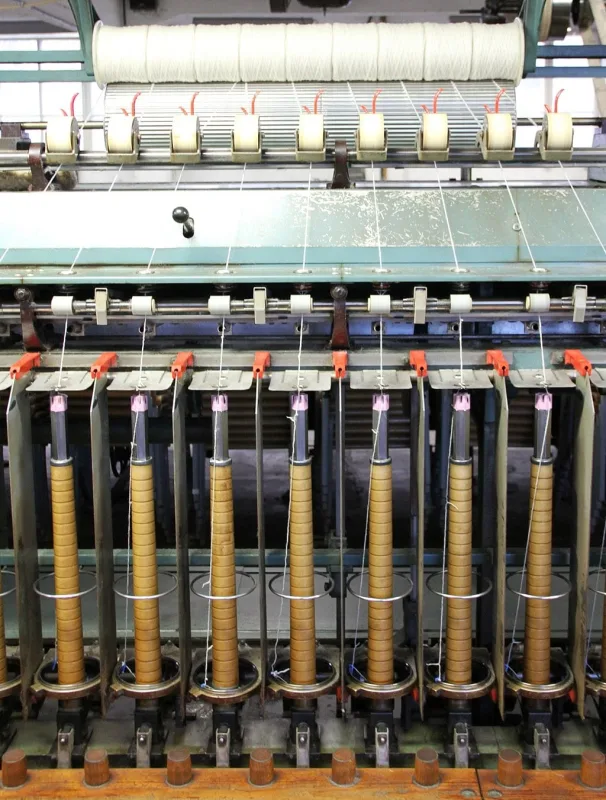
The chief function of the simplex frame is the attenuation of sliver. Insertion of protective twist in order to hold the fine strand of silver. Winding of roving into a package that can be transported, sorted, donned on ring spinning machine.After carding the cotton is passed through draw frames. The draw frame draws the cotton into thick strands.These are then spun into thinner strands on the simplex frame spindles. The output of the simples frame is fed to the ring frame spindles which complete t