
Natural Cellulosic Bast Fibres
Natural Cellulosic Bast Fibres
Natural Cellulosic Bast Fibres Read More »
Natural Cellulosic Bast Fibres
Natural Cellulosic Bast Fibres Read More »

Cellulose is the substance that makes up most of a plant’s cell walls. Since it is made by all plants, it is probably the most abundant organic compound on Earth.Many varieties of plant fibers exist such as hairs (cotton, kapok), fiber-sheafs of dicoltylic plants or vessel-sheafs of monocotylic plants (e.g. flax, hemp, jute, and ramie), and hard fibers (sisal, henequen, and coir), not to mention a large number of fibers obtained from trees.
Natural Cellulosic Seed Fibres Read More »

Fibres have traditionally been used in all cultures of the world to meet basic requirements of clothing, storage, building material, and for items of daily use such as ropes and fishing nets.
History of Fibres Natural and Manmade Fibres Read More »
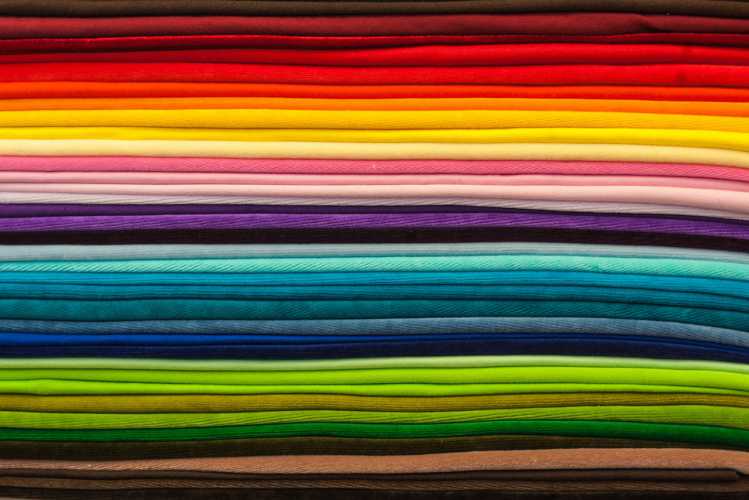
Generally, a set number of yarns are used for the formation of fabrics. Also, a number of techniques are used for producing fabrics such as weaving, knitting, and felting. The type of fabrics varies by the fibers, the fabric formation techniques, machinery used for producing them, and finishing techniques. Fabrics can also be made differently based on the application.
Textile Fabric Types – different types of fabrics and their patterns Read More »

Natural cellulose fibers originated from plants and trees such as cotton, flax, hemp, jute, ramie, kapok, coir, bamboo etc. are termed as Plant fibers.
Plant Fibers – the oldest and most used textile fibers Read More »

Cellulose is a fibrous material of plant origin and the basis of all natural and man-made cellulosic fibers. The natural cellulosic fibers include cotton, flax, hemp, jute, and ramie. Cellulose is a polymeric sugar polysaccharide) made up of repeating 1,4-8-an hydro glucose units connected to each other by 8-ether linkages. Strong intermolecular forces between chains, coupled with the high linearity of the cellulose molecule, account for the crystalline nature of cellulosic fibres.
Natural Cellulose Fibers – natures own fibers Read More »

All fibers which come from natural sources (animals, plants, etc.) and do not require fiber formation or reformation are classed as natural fibers. The natural fibers are vegetable, animal, or mineral in origin. Some of the natural fibers like vegetable fibers are obtained from the various parts of the plants. They are provided by nature in ready-made form. It includes the protein fibers such as wool and silk, the cellulose fibers such as cotton and linen, and the mineral fiber asbestos.
Natural Fibers – fibers from the nature Read More »

Fiber is a hair-like strand of material. It is flexible and can be spun or twisted for weaving, braiding, knitting, crocheting, etc. to make desired products. Fibers can be obtained in natural form from plants and animals as well as in synthetic form. Man-made or synthetic fibers are either made up of chemicals or by processing natural fibers to create new fiber structures/properties.
Textile Fibers – the building blocks of the textile industry Read More »