

The research purpose is to learn about the machinery used in various processes i.e., Production Preparatory Process, Production Process and Post-Production Process of garment manufacturing industry and the level of technologies used by different countries in different processes. It is important to know the advancement in the industry so that the implementation of new technology can be proposed.
This research paper will cover the importance of technology in the garment industry. Study of the apparel industry in India, China, Bangladesh, Vietnam, and Sri Lanka. Defining various production preparatory process, production process and post-production process used in the garment manufacturing industry and the level of technology that can be used for each process. Different countries adopting the different technological methodology.
This research article is different from previous related research as it gives the overview of all the process used in the industry with the information of the level of technology being used in each process and how other countries are using different techniques for the same process. The research is done with the help of studying data from various published and related websites about the technologies being used in the garment industry.
Contributors: Aryan Rathore, Prince, Sneha Mahto, Somya, Suyash Prakash, Nilima Regina Topno
Introduction to Apparel Industry
The apparel industry includes companies that operate by manufacturing, producing, and supplying apparels for several purposes. Garment production is a systematic activity comprising of sequential operations such as laying, marking, cutting, stitching, checking, finishing, pressing and packaging. It is a procedure of converting raw materials into finished products.
Garment manufacturing comprises many processing steps, starting with the design concept and ending with a finished product. The apparel manufacturing process involves various processes, broadly divided into production preparatory process, production process, and post-production.
Production preparatory is a collection of work carried out before mass production. It involves fabric inspection, shade segregation, preparing GRN, pattern making, cut order plan, fabric Spreading, lay marking, lay cutting and relay of check fabrics.
The production process includes sewing of fabric panels with the help of a single needle machine, double-needle machine, overlock machine and feed of arm, fusing, embroidery and button attached.
The post-Production process includes garment pressing, folding, carton packing and thread cutting.
Apparel Industry in India
India is one of the world’s leading textile manufacturers. The Indian textile and textile industry is characterized by its strong vertical integration and presence in almost every sub-sector of the industry from fibre to export and export garments.
India’s ability to produce both man-made textiles and textiles, its availability of workers in line with the spirit of business reflects a strong environment thus guaranteeing long-term growth prospects in the Indian textile and clothing industry. In 2016, the textile industry accounted for 10% of the manufacturing sector, 2% of India’s GDP and 13% of total exports.
India is the seventh-largest economy after the United States, China, Japan, Germany, the UK and France. The gross domestic product (GDP) for 2015 at current prices stands at USD 2.095 trillion which accounts for 3% of the global economy. Critical economic factors such as oil prices, foreign investment, the government’s goal of reform, etc. have become commonplace in the economy. India has been the fastest-growing global economy with a GDP growth rate of 7.6% in 2015 and an expected growth rate of 6.6%, 7.2% and 7.7% in 2016, 2017 and 2018 respectively. GDP per capita in India was regularly recorded at the US $ 15983 in 2015.
India lags behind other emerging economies such as Brazil, China, and Russia etc on per capita income, however with the change in the social and economic framework in India capita revenue is expected to increase. And the number of middle-aged people making up a large chunk of private use is expected to increase. According to the World Bank population, the emerging middle class is expected to reach about 60% of the country’s population by 2025, making India the fifth largest consumer market in the world.
Apparel Industry in China
China is known for its apparel industries. It’s the second-largest in the world after the USA. The gross domestic product (GDP) for 2015 at current prices stands at USD 11.008 trillion accounting for 15% of the global economy. It is one of the most powerful emerging economies in the world and recorded real GDP growth of 6.9% 9 in 2015. China’s GDP is expected to grow by 6.7% in 2016, 6.5% in 2017 and 6.0% in 2018.
China’s clothing market remains one of the fastest in the world. The GDP per capita in 2015 in China was USD 8027.7010 and private consumption accounted for 37% of the country’s GDP. International brands and independent labels enter tier-II cities such as Dalian (Liaoning province), Jinan, Qingdao, Nanjing, Wuhan, etc., in addition to the four fashion destinations Shanghai, Beijing, Guangzhou and Hong Kong.
China is the largest supplier of clothing at ~ 37% (USD 162.3 Bn) of exports in 2015. Shipping of goods is ~ 7% of total export nationwide. Exports have grown at a CAGR of ~ 6% during 2010-15. It is noteworthy that there has been a 6.4% decline in exports in 2014-15, which has led to rising labour costs, a decline in the Yuan and a global recession. The leading export partners for clothing are the USA, Japan, the U.K, Germany and South Korea accounting for ~ 44% of the exports.
China has dominated the textile and clothing industry for decades; however, it has recently faced challenges. China’s rising wages have led to the withdrawal of business from China to emerging markets in South and South-East Asia. The purchasing power of the commodity is changing around the world with new trade agreements that favour emerging markets with cheaper labour and relatively low production costs.
Apparel Industry in Bangladesh
Bangladesh stands at the 2nd position in Readymade Garment Exporter (RMG), after China. 81% of the total exports of the country comes from this sector. 20%of GDP is contributed by the Apparel sector. 20million people are given employment in the apparel industry which can be seen as the major driving force of the country’s economy.
With the help of the RMG sector, the country intends to take the title of a middle-income country by 2021. They are trying to catch the goal of achieving apparel exports worth $50 billion by the end of the year. The Export Promotion Bureau showed a tally about the overall export of the country which stated a 5.18% growth in the financial year 2018, which added the sum to $36.67 billion owing to the Apparel sector. And in this year, it rose by 8.76% which was said to be 1.51% higher than the set target.
The hardworking labour force is the main reason leading the apparel industry in Bangladesh. To complete the target the worker, try to put extra effort into the system. Eventually, the per capita income of the country is improved which in turns improving the living standards of the citizens. Also, the country acquired an opportunity to trade with American and European countries.
Many global retail brands look up to this country because of the technology and quality compliance parameter in its apparel manufacturing systems. They have built excellent vertical capacities, which previously was offered only by China. It also helps global brands to more transparency in their supply chains.
Apparel Industry in Vietnam
Vietnam’s major industries are the textile and garment industry. The textile and garment industry produces the second-largest export turnover in the country. Vietnam saw a continuous growth of an average rate of 17% annually in its textile industry in the last 5 years.
The garment and textile industry of Vietnam includes three sub-sectors
- Upstream sector i.e., fibre production
- Midstream sector i.e., fabric production and dyeing
- Downstream sector i.e., garment manufacturing
Low-quality production of the fabric and fibre by the sub-sectors leads to only domestic consumption. Around 70 per cent of the total garment sector is accounted for by the garment manufacturing sector that is downstream, the main activity in this is cut make trim activity. Vietnam exports its garment products mainly to the US, Japan, Europe and South Korea. Despite having great cotton cultivation potential Vietnam imported cotton in 2019.
COVID-19 pandemic harshly hit Vietnam’s garment and textile industry. Vietnam had a raw material shortage because the industry suspended the input production from china along with the pause on exports to the US and Europe led to revenue loss and job loss. The industry faced a loss of about US$508 million by June 2020.
The country decided to produce a face mask to solve the problem of suspended orders and raise demand in the domestic and international market. Vietnam’s local manufacturers produced 40 million face masks per day on average and the whole garment sector produced 100 million face masks per day.
Vietnam is one of the top textile producer and apparel exporters.
Apparel Industry in Sri Lanka
Sri Lanka’s biggest industries are design, manufacture and textile exports and apparel production. They play a key role in improving the country’s economy.15% of the country’s workforce gets employment from Sri Lanka’s apparel industry. Half of Sri Lanka’s exports consist of its apparel exports. One of the top apparels producing countries in the world relative to its population in Sri Lanka.
- The apparel industry is Sri Lanka’s largest foreign exchange earner.
- Sri Lanka employed 338,704 employees in 2021 of which 80% were female.
- Sri Lanka is highly supported by the multi-national companies introduced to it through globalisation.
Importance of Technology in the Apparel Industry
Nowadays, more and more technologies are being introduced in the world. From retailing to trendspotting, it is hard to overlook the influence of technology. The real-time information about the customer’s demand, factory equipment, operation time, etc now being monitored with the help of technology.
The apparel industry is all about time management. Manufacturers try to figure out reducing each operation time. Even a small amount of time saved can add up to a significant amount that can be utilised elsewhere. It can only happen when technology is introduced to this field. From spreading & cutting to packaging, everywhere new technologies are emerging which are trying to reduce each operation time. For example, a factory using manual spreading technology can opt for a semi-automatic or automatic spreading machine. It is more efficient, more work is done in less time, a single machine can operate in different modes as per requirement.
New technologies help the apparel industry to move from labour-intensive production to capital-intensive production. The objectives of the new technology include faster production, less waste and localisation of production nearer to market and lower carbon footprints. New manufacturing technology solutions include:
- A new form of sewing machines, such as laser-cutting machines, fusing machines, buttonhole machines, and seam bonding machines;
- Sewbots (robotic sewing machines)
- Clothing that is stitch-free
- Garments involving multilayers are being introduced to 3D printing technology
- digital textile printing
Technology is essential for the doing of business. In a situation where real-time information is required, it cannot be done without any application. Some IT tools used in garment industries are: –
- CAD/CAM systems for pattern making, plotting etc
- Computerized cutting machine
- Online FIT approval,
- ERP for inventory tracking, production management,
- Mailing solution,
- Preparation of MIS reports
- Voice chatting,
- Semi-automatic and fully automatic sewing machines and
- Real-time communication with buyer through online solutions like Skype.
- PLM software
Two types of technologies are used in this sector. One in which machines are used to reduce the time for the operations and another in which product management planning is done. This management is done by the software having real-time information about every operation, providing a calculated data about what and how a factory needs to manage to increase its total productivity. Examples of planning software are given below.
Material Requirements Planning (MRP): Manages manufacturing processes based on the information provided for production planning and inventory control system. It ensures the availability of production materials at the right time optimizing the level of inventory so that each operation is scheduled accordingly to prevent any production hindrance. It uses some form of database to store all the data required to analyse the store lead time and order quantity.
Firstly, it checks how many components of a product is required, secondly, it checks with the inventory that how many needs to be ordered and finally schedule the production activities according to the inventory time and component requirement.
Levels of Technologies Employed
What is Automation?
Automation means the mechanization and integration for the sensing of the environmental variables. These advancements have been made possible due to the rise and availability of computers, artificial intelligence, sensors etc which is helping the industries to rise further in terms of technological fulfilment.
Benefits of Automation
- Increased Capacity: Due to automation industries can improve their output speeds hugely by reducing the overall production time spent on manufacturing a piece of
- Improved Quality: The QC departments of the manufacturing industries have a vast opportunity for automation. With the use of different sensors, AI can give these industries a huge upper hand in maintaining the quality of their products in less time and less manual
- Reduced Cost: As automation reduces the overall production time spent on a good, this can lead to an overall reduction of resources spent on making a particular
- Skilled Trade Gap: As companies automate, they will require fewer employees to manufacture tools due to the efficiencies gained and the ability for the machines to run operator
Basic Level Technology
As the name suggests basic level technology implies that where maximum human intervention is required to operate a piece of machinery. These machines are pretty much manually driven and require a human hand to guide through the operation or key decision-making points so that it can function properly for the task it was devised for.
Example: A manual sewing machine having no automation needs to be operated completely manually in all the operations.
Advantage: These machines are easy to operate and the operators don’t require any kind of training to operate these machines. These machines are easily fixable in case of a breakdown due to their popularity and abundance in the whole industry.
Disadvantage: There are many disadvantages in the machines having this level of technology such as increased production time, huge manual labour required, more use of resources comparatively than its counterparts.
Intermediate Technology
Intermediate Technology implies that the machines which are intermediately fulfilled have some or a decent level of automation. These machines are partially able to function on their own in some stages of production however they can’t make a proper decision or no decision at all on their own in key decision-making points due to the limitation in the extent of automation as this type of automation is only present to play as a helping hand and to reduce the overall time spent on producing on a piece of article marginally to the operator operating these machines
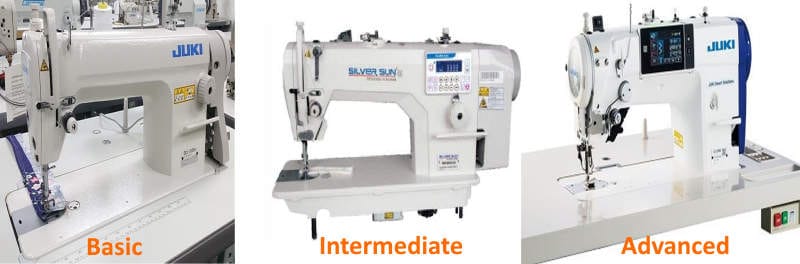
Example: A semi-automatic sewing machine is fitted with a UBT, stitch setter and servo motor which provides some level of help to the operator so that the operator doesn’t need to do everything on their own which consumes more time.
Advantage: These machines are somewhat able to do some functions on their own which helps the producer to increase their output speeds, reduce total production time, reducing the overall cost adjoined with a good due to less usage of resources and labour.
Disadvantage: One of the major disadvantages is that in case of a breakdown these machines take much longer and are more complex to resolve than their basic counterparts, also the operator operating these machines needs to be aware of the functionalities which leads to a one-time huge cost overhead on the manufactures and which some manufactures may not be willing to do so.
Advanced Technology
These are the most technologically fulfilled machines that require minimal to no human intervention at any point of their functionality and are more than capable to make key decisions at the time of production, these can also adapt according to any adversaries which may arise during production and fix it and move on. These machines are self-sufficient and are hugely faster than their other two counterparts.
Example: A completely automatic fabric inspection machine doesn’t require any human intervention as these machines are fitted with state-of-the-art sensors and cameras which are sufficient to do this particular task nth time faster than a human eye or any other means while producing zero to negligible errors.
Advantage: The advantages of using a completely automatic machine is huge in number such as fastest output speeds, least time spent on producing an article, least usage of resources, labour etc.
Disadvantage: A huge disadvantage is that these machines are leading to unemployment because of no the minimal requirement of human labour. The cost of fixing these machines due to breakdown is expensive and in some areas, these services may not be available which further complicates the overall practicality and usage of completely automated machines.
PRODUCTION PREPARATORY PROCESSES
Fabric Inspection
Fabric inspection in an apparel manufacturing setup is the visual analysis of raw materials. It takes place at various steps of production to check if they meet required standards or specifications in terms of nature of fabric, measurement, colour, count and other quality parameters.
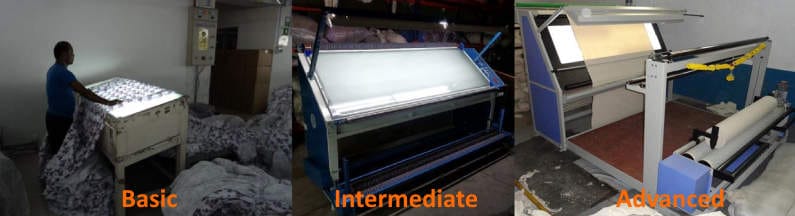
Machines Used by Different Countries
India
India uses semi-automatic fabric inspection machines that are power-driven with variable frequency drive inverter for accurate speed control and proximity sensors to regulate the uniformity of edges, with an auto-stop selection. The machine is fitted with a metre counter to inspect the quantity of fabric being examined as well as a fabric holding tray to ease out the fabric handling.
China
China has a mid-level technology; it uses a semi-automatic fabric inspection machine.
Bangladesh
Most industries in Bangladesh use base-level technology. Fabric is inspected manually.
Vietnam
Vietnam mostly has a mid-level technology, uses semi-automatic inspection.
Sri Lanka
Sri Lanka also has a mid-level technology, uses the semi-automatic machine for fabric inspection.
Shade Segregation
Fabric from different lots may have variations in the shade (batch-to-batch colour variation). Shade variation in a garment occurs when different garment components have a varied depth of colours (shade) or mismatch of shades in garment parts of the same garment. The bundles should be checked for shade variations before putting into the production line.
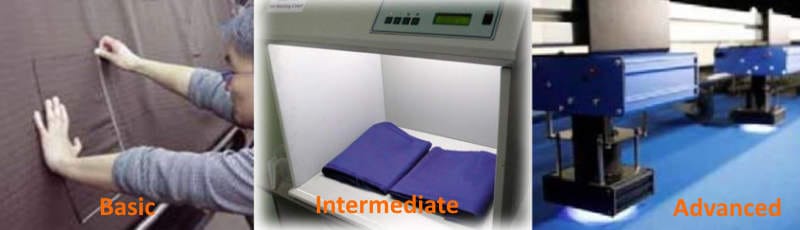
Machines Used by Different Countries
India
India uses a lightbox for shade segregation. Fabric light box is equipped with multiple light sources, i.e.,
- D65 (Artificial daylight)
- White fluorescent light
- Tungsten filament light
- Ultraviolet light
- TL84 (store light)
This device is capable of matching different types of samples like leather, rexine, natural and synthetic fabrics.
China
Industries in China have mid-level technology and mostly use lightbox.
Bangladesh
Bangladesh also has an intermediate level of technology; it also uses a lightbox for shade segregation.
Vietnam
Vietnam has a mid-level technology; it uses a lightbox under designated light sources.
Sri Lanka
Most industries in Sri Lanka also uses a lightbox to ensure accurate colour matching.
Preparing Goods Receipt Note (GRN)
Goods Received Note is a document used to list the inward entry of any goods received at the premises of the organization. To facilitate effective inventory control management, GRN plays a significant role. Preparation of GRNs is important since it facilitates proper inventory control and constrains the entry of undesirable and unauthorized goods into the organization.
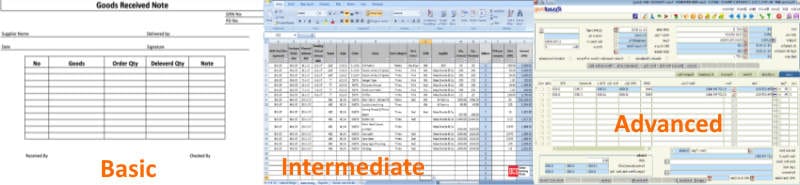
Machines Used by Different Countries
India
India uses advanced level technology; it uses ERP generated Goods Received Note. ERP makes it easier to share GRN information to all concerned departments simultaneously including end-users and/or quality/inspection departments, via email, SMS, alerts or notifications as per the workflow specified in ERP. It provides easier, faster, real-time information sharing and saves a lot of paperwork and efforts in manual distribution.
China
China has an advanced level technology for GRP. It uses ERP generated GRN (Goods Received Note)
Bangladesh
Industries in Bangladesh has a mid-level technology; it uses excel based GRN.
Vietnam
Vietnam has an advanced level technology; it uses ERP generated GRN which helps in real-time data sharing.
Sri Lanka
Sri Lanka also has an advanced level technology; it uses ERP generated GRN.
Pattern Making
Pattern making is the process of creating a two-dimensional design representation of a garment using specific equipment, measurement charts and tailoring techniques. It is a design blueprint for apparel before putting the design to implementation and constructing a new garment out.
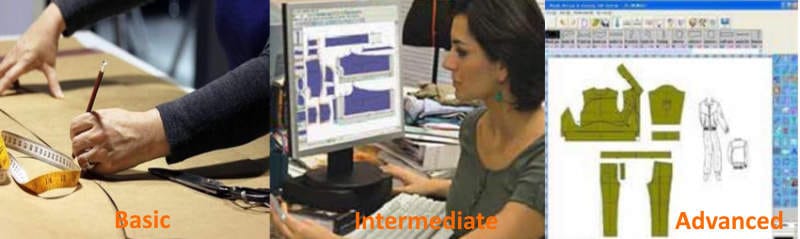
India
India has a mid-level technology; it uses CAD (computer-aided design). A computer-aided design system is a pattern maker which helps in transforming a sketch into a digital image and then it can be printed out through a plotter. Further, this software pattern maker can justify image efficiency before print out through 2D / 3D special visual effects. It helps in improving accuracy and productivity.
China
China has a mid-level technology; it uses CAD for increasing cutting room productivity.
Bangladesh
Bangladesh has a base level technology; it makes the patterns manually.
Vietnam
Vietnam has a mid-level technology; it uses CAD for accuracy in pattern making.
Sri Lanka
Industries in Sri Lanka also has a mid-level technology; it uses CAD for pattern making.
Cut Order Plan
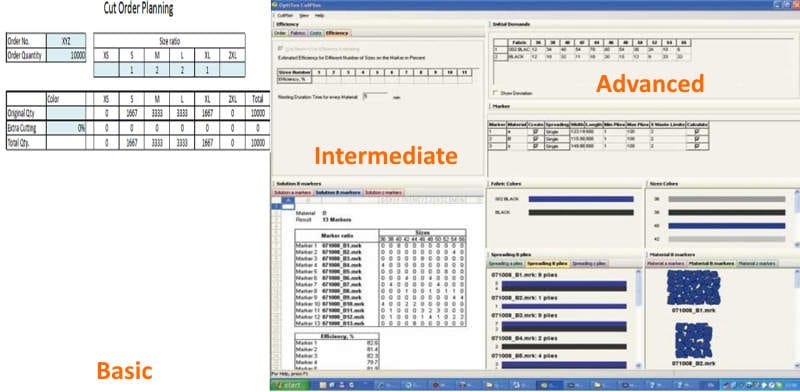
Cut order planning converts customer orders into cutting order. The fabric for cutting the order is arranged on the cutting table in such a manner as to reduce the total production cost of the order. Cut order planning can be performed manually or by computer.
Machines Used by Different Countries
India
In India, a cut order plan is generally made on an excel sheet. In excel, the number of plies and the sizes on each layer is defined. With the help of formulae, the required number of pieces in every size keeps updating after every entered value in plies and sizes.
China
China has a mid-level technology; it uses excel-based planning and lay slips.
Bangladesh
Bangladesh has a base level technology; it uses manual planning and lay slips
Vietnam
Vietnam has a mid-level technology; it uses excel-based planning and lay slips
Sri Lanka
Sri Lanka has a mid-level technology; it uses excel-based planning and lay slips
Fabric Spreading
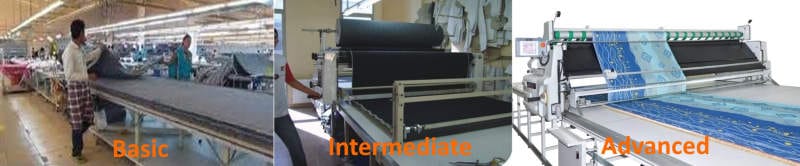
Fabric spreading is the method of unfolding large rolls of fabric into long, wide tables in preparation for cutting each piece of a garment. The number of layers of fabric depends on the number of garments desired and fabric thickness. Spreading can be done manually or by machine.
Machines Used by Different Countries
India
In India generally, semi-automatic laying machines are used for spreading. The semi-automatic spreading machine is a versatile piece of the device for spreading all fabric types. The spreading head is moved manually along the table. The machine is provided with an electronic tension control that enables the spreading of elastic fabrics. The machine is monitored by a touchscreen panel.
China
China has a mid-level technology; it uses semi-automatic laying machines. Some industries also use the fully automatic spreading machine.
Bangladesh
Most industries in Bangladesh has a base level technology, uses manual spreading.
Vietnam
Industries in Vietnam also has a base level technology, uses manual spreading.
Sri Lanka
Sri Lanka has a mid-level technology; it mostly uses semi-automatic laying machines for fabric spreading.
Lay Marking and Plotting
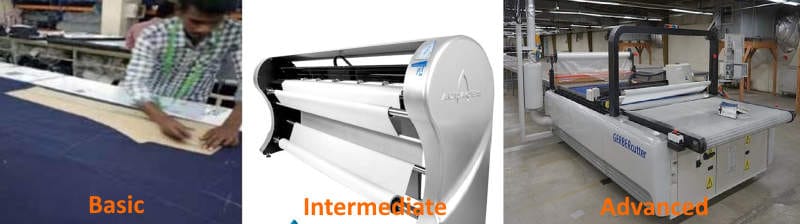
In this process, the various pattern pieces are kept on a layer of fabric in the most efficient way possible in order to maximize the utilization of fabric and then it is marked on the topmost layer of the lay.
Machines Used by Different Countries
India
Most of the industries in India use mid-level CAD marking machines for pattern making and its related jobs such as pattern making, pattern grading and the making of the marker. Using CAD over manual laying drastically reduces the time and manpower required to do these tasks. Another major advantage of using CAD for these purposes is that these files can be remotely accessed from anywhere to work upon it, also these files can be saved for an indefinite period of time.
China
Industries in China also uses the Mid- Level CAD marking machines with an exception of few advanced or high-level machines used by some producers.
Bangladesh
Industries in Bangladesh mostly use base-level technology: i.e., manual laying and marking methods.
Vietnam
Industries in Vietnam mostly use mid-level CAD marking machines although there is a scattered presence of manual laying too.
Sri Lanka
Sri Lanka has mid-level technology and mostly use mid-level CAD marking machines.
Lay Cutting
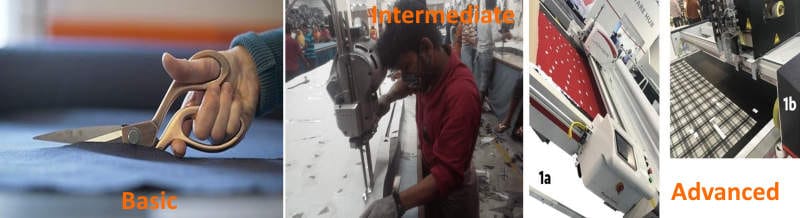
After lay planning and marking the multiple layers of fabric are cut at a time through various methods as mentioned below:
Machines Used by Different Countries
India
Most industries in India use mid-level technology for lay cutting i.e., flotation tables equipped with straight knives which are operated manually. The main reason for using these machines for cutting is that these machines are portable, versatile, cheaper, more accurate on curves, easy to handle and has low maintenance cost for operating them. Also, the operators don’t need much training in order to operate these machines compared to their counterparts such as Automatic or Computer operated machines.
China
China also uses mid-level technology i.e., flotation tables fitted with straight knives in order to fulfil their cutting needs.
Bangladesh
Most Industries in Bangladesh uses flotation table fitted with straight knives for their cutting needs.
Vietnam
Vietnam also uses mid-level technology methods to fulfil their cutting needs.
Sri Lanka
Sri Lankan industries use mid-level technology for their cutting needs.
Relay of Check Fabrics
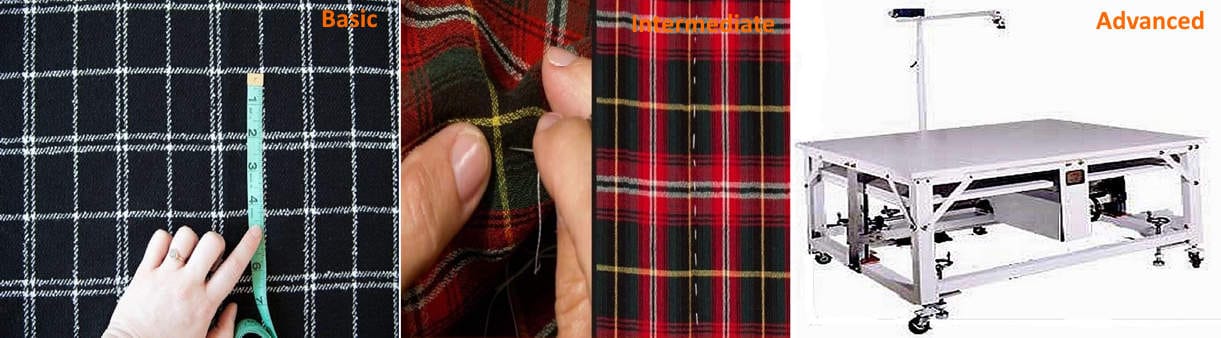
Relaying of fabric is an extra precautionary process done for checking any type of bowing or skewing present in the fabric which occurs because of the irregular tension in yarns during the weaving process.
Machines Used by Different Countries
India
In India most industries use mid-level technology for this process: i.e., pintables. The fabric is then laid upon these tables which hold the fabric into place and then an operator checks onto the fabric for any disorientation, mismatch of pattern or designing which was sanctioned by the design department. This process is time-consuming but due to its low cost in operation when compared to its counterparts such as laser-guided pin tables, this method is vastly used in this country due to the aforementioned reasons.
China
China also uses these semi-automatic pin tables for relaying fabrics.
Bangladesh
Bangladesh also uses this mid-level technology for relaying and checking the design of the fabric.
Vietnam
Industries in Vietnam also use semi-automatic pin tables for relaying and checking purpose.
Sri Lanka
Sri Lanka also vastly uses these semi-automatic pin tables for relaying purpose.
Fusing of Panels
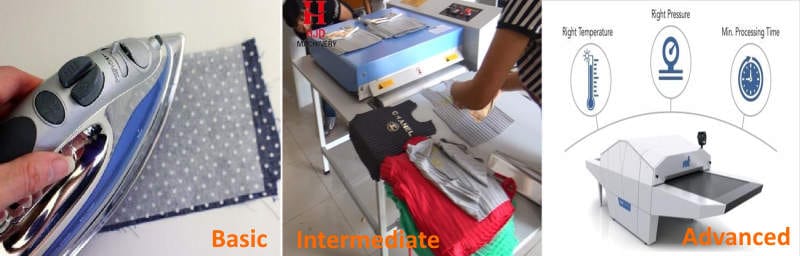
In this process, different types of fusing material are sandwiched between the fabrics to reinforce them with the help of temperature and pressure. This process is done to provide structural support to the garment.
Machines Used by Different Countries
India
Most industries in India used the advanced level of machines available for fusing. These machines have various components which can be changed upon will; these are temperature, pressure, speed of the rollers/ belts which can be set upon the type or based upon the property of the fabric. These machines are very much self- capable of operating and at the same time, it minimizes the overall time consumption spent infusing with minimum human intervention. The aforementioned facts are the main reasons these types of machines are vastly popular in the country.
China
Industries in China use these advanced machines to fulfil their fusing purpose for the fabric.
Bangladesh
Industries in Bangladesh also use these high-level Automatic Fusing machines however the use of the semi-automatic machine is scattered.
Vietnam
Vietnam also uses these high-level Automatic machines for the fusing purpose of their fabric.
Sri Lanka
Industries in Sri Lanka also use these high-level Automatic Fusing Machine although just like Bangladesh, the use of Semi-Automatic fusing machine can also be seen.
PRODUCTION PROCESSES
Single Needle Machine
In this process, the Single Needle Machines are used to stitch two layers of the fabric against each other. There are many varieties of this type of machine such as overlock, lockstitch etc. Due to these feature-rich prospects, these machines give a dynamic functionality.
Machines Used by Different Countries
India
Industries in India use semi-automatic Single Needle Machine for sewing purposes because of the more effective cost to performance ratio. These machines are semi-automatic so the operators don’t require a lot of training to operate these machines; also, these machines drive cost reduction further down because of much lower time consumption, low maintenance cost, faster output speed, less breakdown etc are some of the reasons these types of machines are widely accepted in the country. The UBT, stitch setter and servo motor give further dynamism to the overall functionality of these machines.
China
China also uses these mid-level stitching machines because of the dynamics it provides at a low cost.
Bangladesh
Industries in Bangladesh also use these mid-level machines mostly because of the serviceability and low cost of the machine.
Vietnam
Vietnam also uses similar mid-level machines because of the advantages it possesses over its counterparts.
Sri Lanka
Industries in Sri Lanka use similar mid-level machines for stitching purposes.
Double-Needle Machine
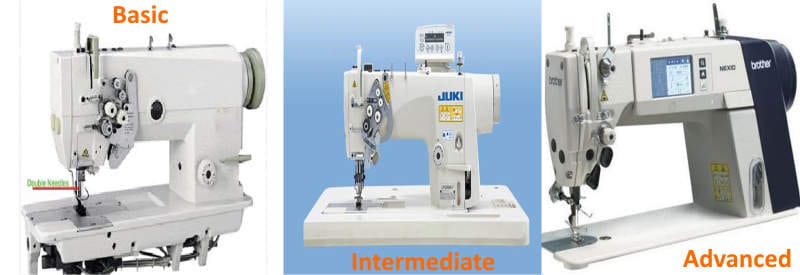
A Double Needle Machine works on the same principle as that of a Single Needle Machine with the only difference being that this machine uses two needles and bobbins which leads to two parallel rows of stitch on the fabric.
Machines Used by Different Countries
India
Most industries in India use the mid-level/ semi-automatic Double Needle Machine for stitching purpose because of its faster output speeds and low maintenance cost. These machines are easy to operate as the operator requires only a few hours of training to understand and operate these machines easily. When compared to its counterparts this mid-level machine has a major advantage of pan India serviceability and availability which makes it a popular choice for the manufactures. These machines also have UBT & Servo Motors attached to them which gives further dynamism to these mid-level machines.
China
Industries in China also use similar mid-level machine although there is a scattered presence of completely automatic machine as well in the country.
Bangladesh
Industries in Bangladesh also use these mid-level machines mostly because of the serviceability and low cost of the machine.
Vietnam
Vietnam also uses similar mid-level machines because of the advantages it possesses over its counterparts.
Sri Lanka
Industries in Sri Lanka use similar mid-level machines for stitching purposes.
Overlock Machine
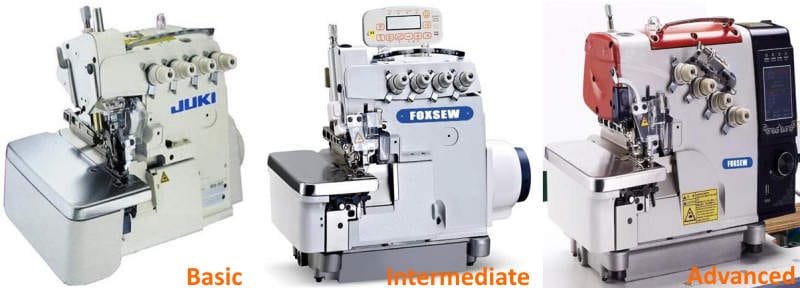
This machine is used for seaming, edging, and hemming purpose in order to finish a garment piece. These machines are different from Single and Double Needle Machines as the threads in this machine are fed with the help of loops instead of the bobbins.
Machines Used by Different Countries
India
Industries in India mostly use Mid – Level/ Semi-Automatic Overlock Machines. These machines are easy to operate when compared to their advanced counterparts. The operators operating these machines only require few hours of training to handle these machines easily. This type of machine also comes with a pneumatic attachment for the suction of excess materials. These machines also feature ridden and adaptive in nature because of the types of stitch and thread types it provides which comes to a lot handy with different fabric. Other advantages include low-cost maintenance, faster output speeds etc.
China
Industries in China also use similar sort of Mid – Level machines for the overlock stitching purpose although some industries also use fully automated ones.
Bangladesh
Bangladesh also uses the same mid-level of machines because of their better serviceability and availability throughout the country.
Vietnam
Vietnam also uses similar sort of machines for overlock stitching purposes because of the low overall cost involved in this type of machine.
Sri Lanka
Industries in Sri Lanka also uses the same Mid – Level machines because of their better serviceability and availability throughout the country.
Feed of Arm
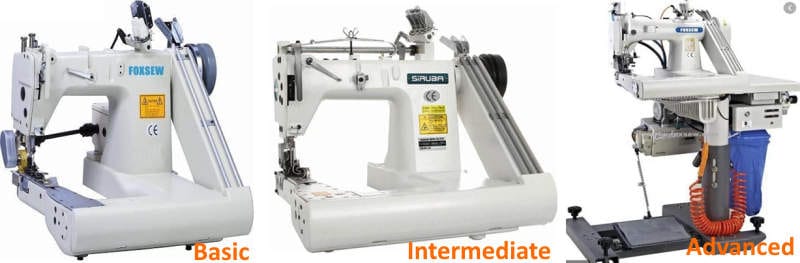
These machines are used wherever close loops of fabrics are present. Ex: Side Seam in Men’s T-Shirt, Inseams in Trousers etc. The hand-like design is intentional which makes it a very useful machine in production.
Machines Used by Different Countries
India
Industries in India mostly use Mid – Level/ Semi-Automatic Feed of Arm machines. These machines are very versatile and dynamic in functionalities it provides such as it is fitted with puller mechanism and servo motor which makes it a popular choice for the manufacturers. These machines are faster than their counterparts while having a low cost of operation and maintenance costs. The operation of this machine is also quite easier for the operators as it requires minimal training to handle when compared to its higher counterparts. The aforementioned qualities of the machine were some of the reasons which justify the popularity of these machines.
China
China also uses similar Mid – Level/ Semi-Automatic machines although completely automatic machines are also present in some industries.
Bangladesh
Industries in Bangladesh also have Mid – Level/ Semi-Automatic machine because of their availability and lower costs of procurement.
Vietnam
Vietnam also uses the same Mid – Level Machines although some smaller-scaled industries still do these operations manually.
Sri Lanka
Industries in Sri Lanka similar to others also use the same sort of Mid – Level Machine for closing the loops in the fabric because of its availability and serviceability in the whole country.
Welt Pocket Making
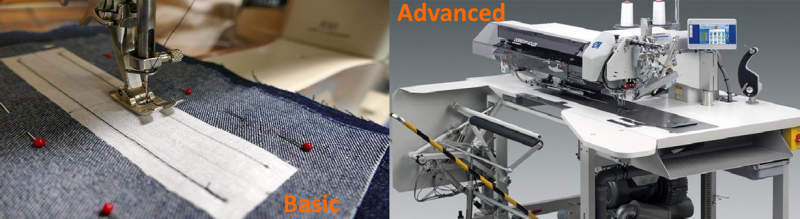
A welt pocket is generally found on the front of a man’s tailored jacket/blazer or on the reverse of a trouser. These pockets are finished with a welt or reinforced border at the edge of a piece of fabric.
Machines Used by Different Countries
India
India uses the method which follows the marking and turning the welt pocket by hand and stitching it with a double-needle/single needle lockstitch machine afterwards. We also know that Indian garment is a labour driven industry so, workers find the base level more efficient as they have been practising it for a very long time.
China
China has an advanced level technology, uses automatic welt pocket machine
Bangladesh
Bangladesh has a base level technology, uses single/double needle
Vietnam
Vietnam has an advanced level technology, uses automatic welt pocket machine
Sri Lanka
Sri Lanka has an advanced level technology, uses an automatic welt pocket machine
Button Attach
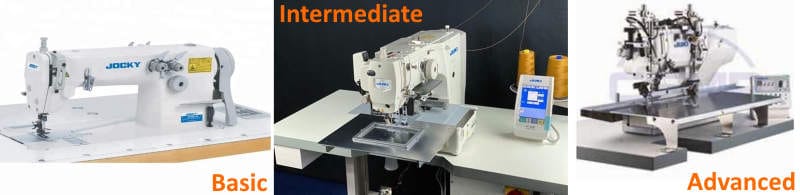
Button attach is the process in which the garment is equipped with different types of buttons where needed. It can be done both manually and by machines.
Machines Used by Different Countries
India
India uses a Mid-level Programmable, Multi stitch capability (No of Passes, designs, X and Y axis setting) machine. The workers just need to position the button just above the mark where it is to be attached. Skilled operators can go up to 10-15 buttons per minute.
China
China has a mid-level technology
Bangladesh
Bangladesh has a mid-level technology,
Vietnam
Vietnam has a mid-level technology
Sri Lanka
Sri Lanka has a mid-level technology
Collar Run
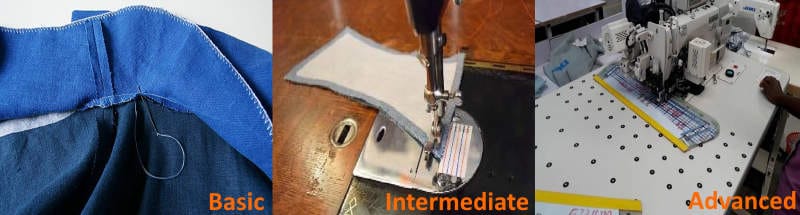
Run stitch done on the inside of collar after fusing it with fusing material. It attaches both panels to form a single structure which when later turned, gives a sturdy collar.
Machines Used by Different Countries
India
India uses a mid-level semi-automatic sewing machine to prepare collar and collar band before attaching them to the garment. Marking is done by the worker according to the pattern and then with the help of template and roller presser foot, the collar is prepared under the sewing machine
China
China has a mid-level technology, Manual sewing using collar template and roller presser foot
Bangladesh
Bangladesh has a mid-level technology, Manual sewing using collar template and roller presser foot
Vietnam
Vietnam has a mid-level technology, Manual sewing using collar template and roller presser foot
Sri Lanka
Sri Lanka has a mid-level technology, Manual sewing using collar template and roller presser foot
Collar Turn and Run
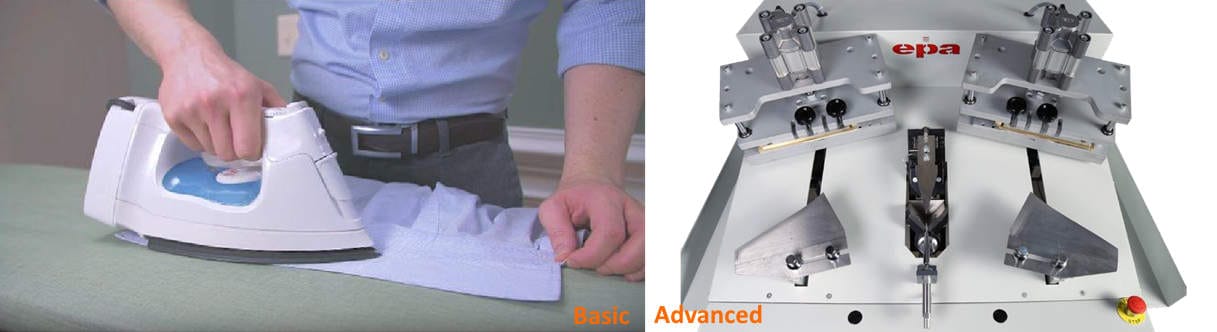
Collar turn and press is the process that is done just after doing a run stitch on the inside. Pressing the collar after turning provides sharp edges which results in a sturdy structure.
Machines Used by Different Countries
India
India uses a manual method of collar turn and press. The worker turns the collar to the right side by hand and then press it with a steam iron, keeping in mind that the structure must show sharp edges for a sturdy structure.
China
China has a base-level technology, uses semi-automatic inspection
Bangladesh
Bangladesh has a base-level technology, uses semi-automatic inspection
Vietnam
Vietnam has a base-level technology, uses semi-automatic inspection
Sri Lanka
Sri Lanka has a base-level technology, uses semi-automatic inspection
Cuff Run
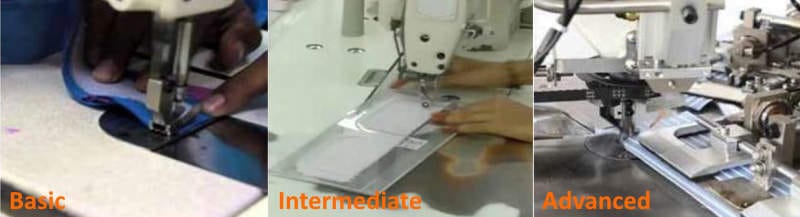
Run stitch done on the inside of cuff after fusing it with fusing material. It attaches both panels to form a single structure which when later turned, gives a sturdy collar.
Machines Used by Different Countries
India
India uses mid-level technology for this purpose. Workers mark the cuff for the stitch line and afterwards, a single needle lockstitch machine is used to stitch on those lines, joining the panels of the cuff. China has a mid-level technology, use of template
China
China has a mid-level technology, use of template
Bangladesh
Bangladesh has a base level technology, use of template
Vietnam
Vietnam has a mid-level technology, use of template
Sri Lanka
Sri Lanka has a mid-level technology, use of template
Cuff Turn and Press
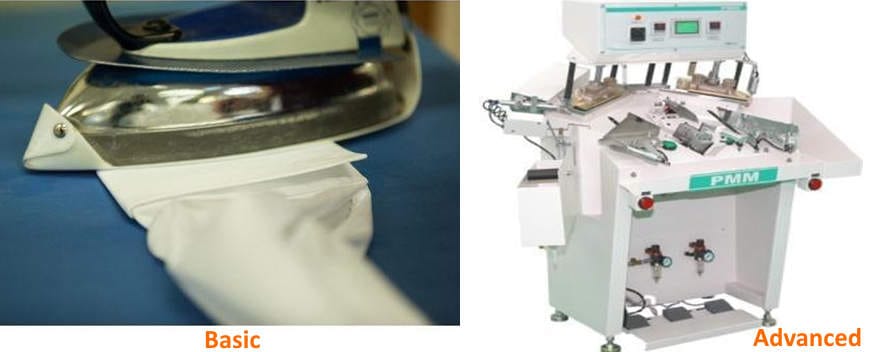
After stitching of cut panels of a cuff, it is turned to the right side and the fusing side is inside.
Machines Used by Different Countries
India
India uses a steam iron to press the cuff panels after preparation. A helper is kept at the ironing station who handles all the turn and press operation in a garment factory. Several stations are present in each department
China
China has a base level technology, uses manual ironing
Bangladesh
Bangladesh has a base level technology, uses manual ironing
Vietnam
Vietnam has a base level technology, uses manual ironing
Sri Lanka
Sri Lanka has a base level technology, uses manual ironing
Sleeve Placket Creasing
Some parts of a garment required to be creased so that when attaching it to the main piece there is no difficulty faced for folding or turning the piece.
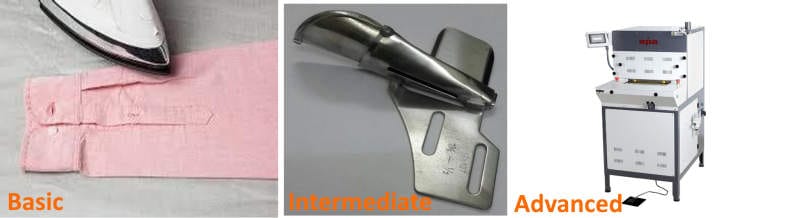
Machines Used by Different Countries
India
India uses the intermediate level of sleeve placket creasing. Pressing is done via a folder attached to the fusing machine. In a folder, the placket piece is inserted in which is turned inside according to the requirements. The folders have a specific angle in which the placket is turned and made
China
China has a mid-level technology, uses a folder attached to the fusing machine
Bangladesh
Bangladesh has a base level technology, uses manual ironing
Vietnam
Vietnam has a mid-level technology, folder attached to the fusing machine
Sri Lanka
Sri Lanka has a mid-level technology, uses a folder attached to the fusing machine
Back Pocket Creasing
It is done only for denim fabric. It is a method to increase efficiency because when the pocket is attached to the garment, the worker has to give extra attention to the correct stitch line and folding of the pocket.
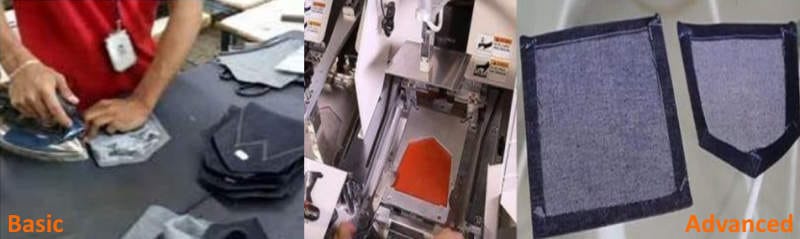
Machines Used by Different Countries
India
India uses bases level technology for creasing and folding. Steam iron for manual creasing of the back pocket. Patterns are placed on the pocket pieces and according to the seam lines, the piece is folded and ironed.
China
China has a base level technology, using iron box and pattern
Bangladesh
Bangladesh has a base level technology, using iron box and pattern
Vietnam
Vietnam has a mid-level technology, using Automatic pocket creaser
Sri Lanka
Sri Lanka has a mid-level technology, using an Automatic pocket creaser
Back Pocket Attach
Pocket attachment is a two-step process – first to clean and compress the edges, followed by attaching the bag pocket to the correct position. The use of special sewing machines to do this work can help achieve high quality and high productivity. Due to automation standards, the performance of backpack attachment has been discussed under three technical levels – base, intermediate, and advanced.
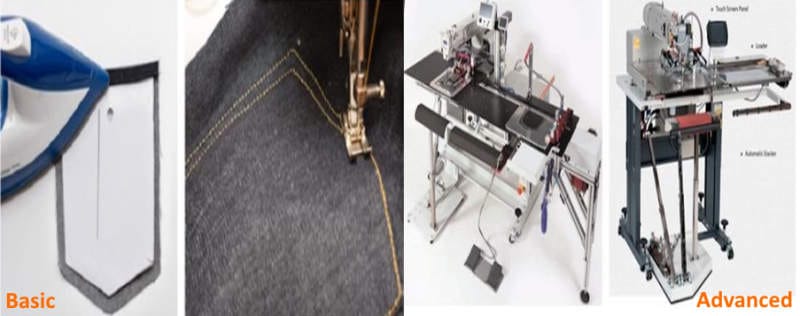
Machines Used by Different Countries
India
In India Back Pocket Attach in jeans is usually done with a double sewing line, but not the same sewing lines. So even though pocket and topstitch sticker jobs can be done by stitching with a double-needle sewing machine, they cannot be used to get the same look. When sewing using a single needle stitching machine, quality depends on the operator’s ability and any inconsistencies between the lines between the sewing lines will be noticeable. Secondly, the achievement of the operator will be slow at the basic level. Operator efficiency is about 65- 70%.
China
China has a base level technology; it uses a single needle machine and does manual attaching.
Bangladesh
Bangladesh has a base level technology; it uses a single needle machine and does manual attaching
Vietnam
Vietnam has a base level technology; it uses a single needle machine and does manual attaching
Sri Lanka
Sri Lanka has a base level technology; it uses a single needle machine and does manual attaching
Embroidery
The embroidering of fabrics or other material in an artistic way with the help of a needle for inserting threads or a thread is called Embroidery. Other appealing items include pearls, beads, sequins and quails. Every embroidery machine will depend on its capabilities to learn user input and embroider different types of designs.
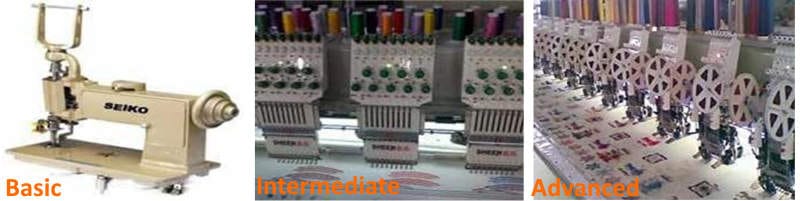
Machines Used by Different Countries
India
India has advanced level technology, it uses multicolour, multi-needle and multi-head embroidery machine.
These high-end machines come with pre-loaded designs, which can adorn designs up to 7 “x 12”, and can be sewn up to 650 stitches per minute. Advanced machines also provide multiple needles to increase machine flexibility.
China
China has an advanced level technology, it uses multicolour, multi-needle and multi-head embroidery machine
Bangladesh
Bangladesh has an advanced level technology, it uses multicolour, multi-needle and multi-head embroidery
machine
Vietnam
Vietnam has an advanced level technology, it uses multicolour, multi-needle and multi-head embroidery
machine
Sri Lanka
Sri Lanka has an advanced level technology, it uses multicolour, multi-needle and multi-head embroidery
machine
Loop Attach
There are different types of loops used in pants, trousers, shorts, skirts etc. Mostly four types of loops are widely used in denim, knit or woven products. These are Green / standard lock, single-needle / clean finish, single/standard needle, single/ standard needle. It varies with customer requirement, product type, fabric type, designer requirement or customer requirement.
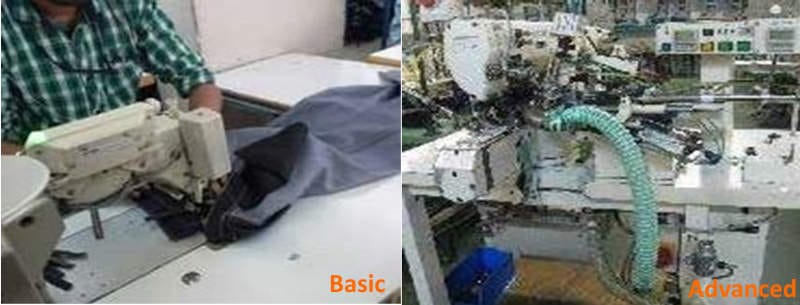
Machines Used by Different Countries
India
India has a base level technology; it uses manual marking and manual attaching. The basic level of technology uses the electronic lock belt loop bar tackers. The operator puts a pre-cut loop on the clamp and then puts the trouser belt under the fence and presses the pedal to start the machine. The operator then reset and inserted another end of the same loop. The performance cycle is repeated in the next line. One operator operating on a single machine takes about 0.90 minutes to install 5 belt loops on just one pair of pants.
China
China has a base level technology; it uses manual marking and manual attaching
Bangladesh
Bangladesh has a base level technology; it uses manual marking and manual attaching
Vietnam
Vietnam has a base level technology; it uses manual marking and manual attaching
Sri Lanka
Sri Lanka has a base level technology; it uses manual marking and manual attaching
Material Handling
The methods used to transport work (such as textiles, cuts, bundles, finished clothes and common items) from one place to another, to store goods and to protect property from damage, are called system management. It can be tools, equipment or processes.
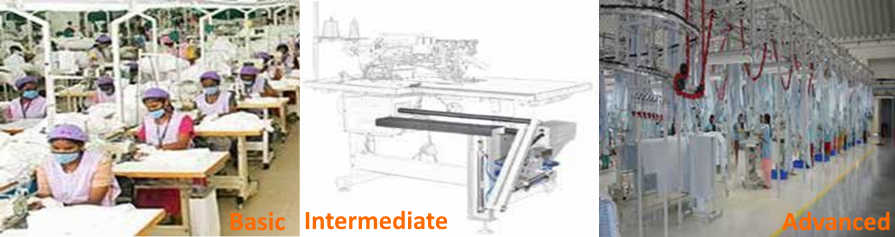
Machines Used by Different Countries
India
India has a base level technology, it uses centre tables and hanger systems. Handling of Material can be done in a number of ways such as a standard table where a side bench is placed or a separate table for cutting and disposing of sewn clothes, while at the centre table a bench is placed between two rows of equipment, and in some carts, bags or drums are used. In many units above the rail and hanger are also used for moving objects. The hanger system reduces labour force, personnel to improve production efficiency using the full production industry space. Very bright and flexible; fork formation is easy with product transfer.
China
China has a base level technology; it uses centre tables and hanger systems.
Bangladesh
Bangladesh has a base level technology; it uses centre tables and hanger systems.
Vietnam
Vietnam has a base level technology; it uses centre tables and hanger systems.
Sri Lanka
Sri Lanka has a base level technology; it uses centre tables and hanger systems.
POSTPRODUCTION PROCESSES
Garment Pressing
Pressing is done when pressure is applied by pressing the fabric between two flat or curved surfaces (no related movement between the areas); and although pressing is a batch-like process of ironing, compression is applied mainly to large areas (as it is a faster process than ironing) or 3D forming of part of the garment (e.g., by pressing convex and concave surface together).
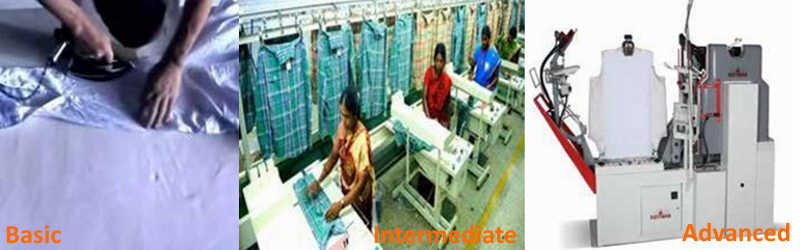
Machines Used by Different Countries
India
India has a base level technology; it uses manual pressing. It is the use of heat, humidity and pressure to maintain real-time standing, shaping, or dropping of fabrics, clothing, or clothing components in geometric forms. Pressing is done to make the fabric smooth or to give it the right form. It’s important for the process of finishing in the clothing industry. The basic tools are metal, ironing board and pressure cloth. The metal is light but the dry metal used in the fabric of the machine and the moisture sometimes gives the machine more satisfaction. The ironing board should match your height, smoothness and tightness.
China
China has a base level technology; it uses manual pressing
Bangladesh
Bangladesh has a base level technology; it uses manual pressing
Vietnam
Vietnam has a base level technology; it uses manual pressing
Sri Lanka
Sri Lanka has a base level technology; it uses manual pressing
Packing
Packing means packing, crowding, filling or creating goods for the purpose of protecting goods and their easy handling. Packing is an important part of a product, which should get a lot of attention from people. It pertains to the design and production of appropriate product packages. Packing also refers to the process of construction, testing, and production of packages. Packing can be defined as a systematic process of transporting goods, storing goods, selling goods, and finishing.

Machines Used by Different Countries
India
India has a base level technology; it uses manual counting and size-wise segregation.
After the final inspection & folding of the garments, the garments are poly-packed with twelve ingenuity, colour intelligence, smart size, assembled and packed in a box. The box is marked with important details in a printed form that can be easily seen outside the box. In particular, it is necessary to ensure the correct placement of the sticker.
China
China has a base level technology; it uses manual counting and size-wise segregation.
Bangladesh
Bangladesh has a base level technology; it uses manual counting and size-wise segregation
Vietnam
Vietnam has a base level technology; it uses manual counting and size-wise segregation
Sri Lanka
Sri Lanka has a base level technology; it uses manual counting and size-wise segregation
Thread Cutting
In the traditional production system, sewing operators are used only for sewing clothes, not for cutting the tail tails after sewing. Sewed garments with threads are sent to the finishing stage and upon completion, the stage assistants are hired to cut the thread.
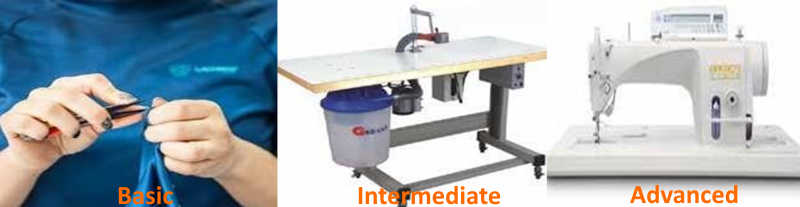
Machines Used by Different Countries
India
India has a mid-level technology; it uses auto trimmer.
In recent years it is understood by many manufacturers of ready-made garments that cutting the thread is a costly process and this process can be eliminated. So, they started the job of cutting the thread by sewing the operator and enjoyed many benefits by introducing the cutting of the thread at the sewing station. When cutting the thread is done by the operator himself within the sewing line, the process is known as ‘cutting the thread in a row.
China
China has a mid-level technology; it uses auto trimmer.
Bangladesh
Bangladesh has a base level technology; they do a manual trimming
Vietnam
Vietnam has a mid-level technology; it uses an auto trimmer
Sri Lanka
Sri Lanka has a mid-level technology; it uses an auto trimmer
Generation of Steam
The boiler is equipped with a fuel box or furnace to heat the fuel and generate heat. The heat generated is transferred to water to form a vapour, a boiling process. This produces a full volume of smoke that can vary depending on the pressure above boiling water.
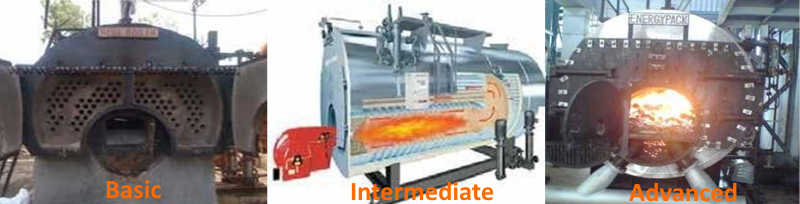
Machines Used by Different Countries
India
India has a mid-level technology; it uses briquette. In the textile and textile industries, thermal energy is used to produce steam, while emissions are used to produce fibre, weaving, dyeing, drying, printing, ironing, washing, heating equipment, and maintaining system temperature. A standard steam generator called a steam generator.
China
China has a mid-level technology; it uses briquette.
Bangladesh
Bangladesh has an advanced level of technology, it uses CNG.
Vietnam
Vietnam has a mid-level technology, it uses briquette.
Sri Lanka
Sri Lanka has a mid-level technology, it uses briquette.
Conclusion
This research paper is all about the apparel industries of the different countries which are India, China, Sri Lanka, Vietnam and Bangladesh in detail while reflecting the importance and the impact of technology had on the particular industry right from the Industrial Revolution till this date. This research paper goes to an extent where one can get an idea about the boons and banes about the technological advancements with their disadvantages and how is it leading to job cuts and the other downsides while it also helps to understand the different types of methodologies the garment industry is using in these countries such as the challenges and opportunities they have got in their hands.
These include a different kind of technologies used in different countries and the factors associated with them such as examples shown in details respect to those particular countries and the different advantages and disadvantages of these technological advancements and this research paper also thoroughly discusses the old technologies which are still used by the majority of industries in some countries and the possible reasons of doing so which further shines a light upon the reasons these industries are clinging on to the old school methods.
This study ranges and covers all the aspects i.e., Pre – Preparatory, Pre-Production, Production, and Post Production processes of a garment right from the beginning to the end. This research paper further shines light upon the importance of Automation and the different types of levels of Automation such as Basic, Intermediate and Advance level. These are shown with the help of different examples of machines which are used in the aforementioned countries such as the Sewing Machines, Fabric Inspection Machine etc.
Overall, the opportunities are huge for these countries for improving their garment industries by perfectly balancing the different aspects of technological advancements and that is what this research paper shines a light upon by making aware our readers that what are the different current scenarios of the garment industries in these different countries.
Contributors: Aryan Rathore, Prince, Sneha Mahto, Somya, Suyash Prakash, Nilima Regina Topno
References
- Mishra, A. (2021). India’s GDP grows at 7.1% in Q1 FY17, slowest pace in six quarters. Retrieved 27 April 2021, from https://www.livemint.com/Politics/LQv0H78dfVzyxcZXlgsJ4J/India-firstquarter-growth-slows-to-71.html
- WIRE, B. (2021). Global $1,182.9 Billion Clothing and Apparel Market Analysis, Opportunities and Strategies to 2022 – ResearchAndMarkets.com. Retrieved 27 April 2021, from https://www.businesswire.com/news/home/20191025005178/en/Global-1182.9-Billion-Clothing- and-Apparel-Market-Analysis-Opportunities-and-Strategies-to-2022—ResearchAndMarkets.com
- Indian Textile and Apparel Market: Industry Trends, O. (2021). Indian Textile and Apparel Market Growth and Analysis 2021-2026 | IMARC Group. Retrieved 27 April 2021, from https://www.imarcgroup.com/indian-textiles-apparel-market
- Camera Based Visual Fabric Inspection | Apparel Resources. (2021). Retrieved 27 April 2021, from https://apparelresources.com/technology-news/manufacturing-tech/technology-levels-for-fabric-inspection/
- REXEL – Cutting, Upholstery, Roller Blinds Machines. (2021). Retrieved 27 April 2021, from https://www.rexelpoland.com/en/product/semiautomatic-fabric-spreading-machine-ul-4
- planning, C. (2021). Cut order planning. Retrieved 27 April 2021, from https://apparelmerchandisinglearner.blogspot.com/2019/11/cut-order-planning.html
- Cut Order Planning Software – Apparel Resources. (2021). Retrieved 27 April 2021, from https://apparelresources.com/technology-news/manufacturing-tech/cut-order-planning-software/
- Essential Pattern and CAD Software for Garment Industry – Goldnfiber | Apparel Merchandising Blog. (2021). Retrieved 27 April 2021, from https://www.goldnfiber.com/2016/10/essential-pattern-making-software-garment-industry.html
- How Goods Receipt Note is handled in Roadmap supply chain management. (2021). Retrieved 27 April 2021, from https://roadmapit.com/blog/posts/10/how-goods-receipt-note-is-handled-in-roadmap-supply-chain-management
- Goods Received Note | Delivery Note Processing. (2021). Retrieved 27 April 2021, from https://www.cleardatagroup.co.uk/goods-receipt-delivery-note-processing-whats-it-costing-your-business/#%3A~%3Atext%3DYour%20GRN%20acts%20as%20internal%2Cyour%20supplier%20invoices%2Fpurchase%20orders.%26text%3DThe%20goods






Thank you for sharing all of the information; it’s fantastic. I’m very grateful for all of the details.