Yarn

Count systems, twist, hairiness, strength, evenness. Spinning routes and quality economics. This section explains practical decision criteria, typical test methods, and failure modes that matter in real production. Readers get checklists, calculation steps, and case examples connecting specifications to cost, reliability, and compliance. Links map core concepts to upstream inputs and downstream processes so choices remain consistent across sourcing, manufacturing, and end-use performance. Each article includes definitions, diagrams where helpful, and plain-language notes to help newcomers ramp quickly while giving experienced professionals the depth needed to troubleshoot and optimize. Standards references are cited with context, and whenever trade-offs exist, we make them explicit so you can defend decisions. The coverage also includes metrics, data tables, and example calculations so results are reproducible. Where regulations apply, we highlight jurisdiction, scope, and verification pathways. Tools and templates are provided to speed up daily work without sacrificing rigor.

Home » Fiber & Yarns » Yarn » Page 4
muratec-vortex-machine

Yarn formation using Air-Jet Spinners

The Air-Jet spinning is very sensitive to the fiber length and fiber length distribution(short fiber content) of the material being processed. The amount of wrapping twist varies depending upon the length of the wrapping fibers as only a part of the total extent is utilized to wrap the core fibers. Wrapping the fibers shorter 12.5 mm practically do not make a significant contribution to the strength of the yarn.Air-jet Spinning is suitable for processing medium and long staple comber cotton fibers a

Yarn formation using Air-Jet Spinners Read More »

spinning-mill

Standard Staple Yarn Spinning Procedures

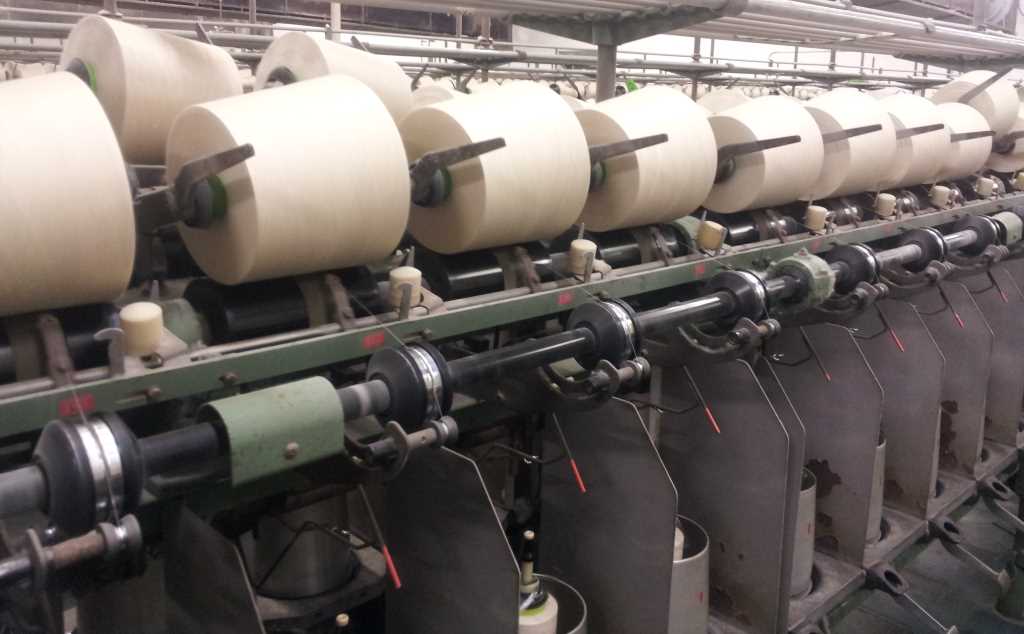
Yarn making from staple fibers involves picking (opening, sorting, cleaning, blending), carding and combing (separating and aligning), drawing (re-blending), drafting (drawing into a long strand) and spinning (further drawing and twisting). Silk and synthetic filaments are produced by a less extensive procedure. Current high-production yarn-making operations are performed on integrated machines that perform this entire sequence as one combined operation.

Standard Staple Yarn Spinning Procedures Read More »

spun yarns

Spun Yarns: Characteristics, Production, and Applications

Spun yarns, formed by twisting staple fibers together, are a cornerstone of textile manufacturing, valued for their versatility, texture, and strength. This article provides a comprehensive exploration of spun yarns, detailing their characteristics, production methods, types, and applications. By examining the spinning processes, fiber properties, and practical uses, the article equips textile professionals with insights to optimize yarn selection and production for diverse textile applications.

Spun Yarns: Characteristics, Production, and Applications Read More »

spun yarn

Twist Insertion and Different Spinning Techniques in Textile Manufacturing

Twist insertion is a fundamental process in yarn production, imparting strength, cohesion, and structural integrity to fibers. Various spinning techniques, such as ring spinning, rotor spinning, air-jet spinning, and friction spinning, employ different methods of twist insertion to produce yarns with distinct properties. This article explores the mechanics of twist insertion, its significance in yarn formation, and the characteristics, advantages, and applications of major spinning techniques, providing a comprehensive resource for textile professionals seeking to optimize yarn production.

Twist Insertion and Different Spinning Techniques in Textile Manufacturing Read More »

lap-former

Lap Former Process in Yarn Spinning

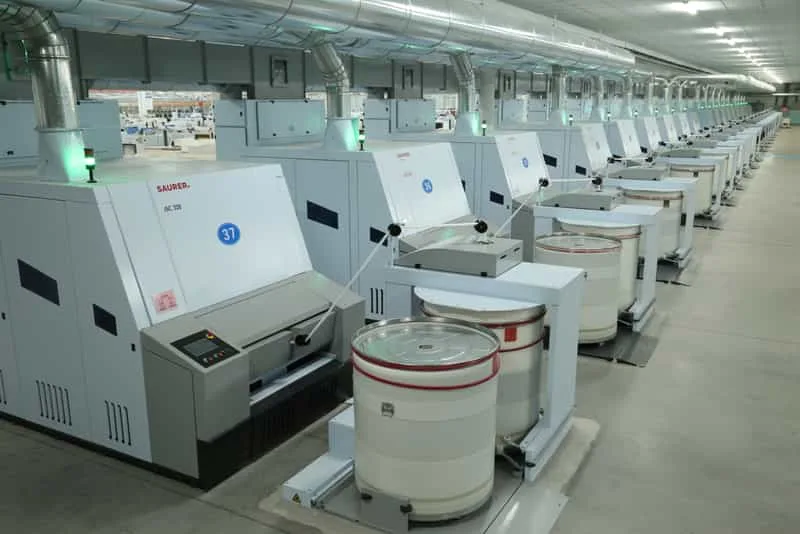
The lap former process transforms carded slivers into a consistent lap for combing in yarn spinning. By consolidating slivers, ensuring uniformity, aligning fibers, and controlling quality, this process enhances yarn strength and quality. Specialized lap former machines achieve these objectives, making it a critical step in textile production.

Lap Former Process in Yarn Spinning Read More »

Scroll to Top