The textile industry pulses with energy and innovation. Its backbone lies in robust standards and regulations. These rules shape how fabrics are produced, traded, and certified. This article digs into the core of global textile standards. It explains how frameworks like ISO and ASTM drive the industry. In addition, it details market compliance, certification processes, and the regulatory impacts on production and trade. Textile professionals, students, and enthusiasts will discover a wealth of insights that blend historical context, technological evolution, and future trends.
At TextileSchool.com, our mission is to educate and inspire. We bring you in-depth content that transforms complex regulations into engaging narratives. Our detailed exploration of textile standards and regulations offers practical guidance and vivid real-world examples. Along the way, we highlight interactive visuals, diagrams, and charts to support your understanding.
Introduction
The world of textiles rests on a framework of standards and regulations that ensure quality, safety, and innovation. Every fabric that enters the market carries a legacy of rigorous testing and evaluation. In this article, we peel back the layers to show you how these rules affect production and trade worldwide. We discuss the evolution of standards, the impact of new technologies, and the regulatory challenges that shape market compliance.
Textile standards are not mere guidelines. They are the lifeblood of an industry that spans continents and cultures. Companies must navigate a maze of global frameworks and local regulations. They strive for certifications that guarantee quality and environmental safety. Through internal processes and external audits, the textile sector thrives on accountability and continuous improvement.
History of Textile Standards and Regulations
The evolution of textile standards mirrors the growth of the global industry. In the early days, textile production was a localized craft. Artisans passed knowledge from generation to generation. With the advent of industrialization, production scaled up and trade networks expanded. This growth demanded a formal system to ensure consistent quality and safety across borders.
Historically, each region developed its own criteria for evaluating fabrics. National standards provided the groundwork for quality control. As international trade increased, there emerged a need for harmonized guidelines. Organizations such as the International Organization for Standardization (ISO) and ASTM International (ASTM) played pivotal roles. They established benchmark protocols that unified diverse practices. Today, these standards facilitate global cooperation and fair competition.
Global Standards: ISO, ASTM, and Beyond
Global standards form the backbone of textile quality and safety. The ISO standards cover diverse aspects such as performance, environmental impact, and testing methods. They offer a universal language that manufacturers use to meet customer expectations. Meanwhile, ASTM standards emphasize material properties and product reliability. Together, these frameworks build trust among producers, buyers, and regulators.
ISO standards evolve with technology. They incorporate innovations and adapt to market needs. ASTM standards, in contrast, often focus on rigorous testing protocols. Both organizations engage experts and stakeholders in periodic reviews. This process ensures that the standards remain current and reflect industry advancements.
For instance, ISO 9001 focuses on quality management systems. It ensures that every step in textile production meets high standards. ASTM D5034 sets guidelines for fabric strength, durability, and performance. Companies worldwide rely on these standards to design products that excel in quality and safety. Additionally, industry-specific standards such as Oeko-Tex emphasize eco-friendly production methods. These guidelines help manufacturers meet consumer demands for sustainable textiles.
By following these standards, companies gain market credibility. They build trust with consumers and regulators alike. Compliance with ISO and ASTM protocols often becomes a decisive factor in international trade. For further reading on these frameworks, explore our detailed discussions on global textile standards and their impact on the industry.
Market Compliance: Requirements for Exporting to the EU and US
Exporting textiles to international markets demands a firm grasp of market compliance. The European Union and the United States impose stringent standards that ensure safety and quality. Manufacturers must adhere to these rules to access lucrative markets and maintain competitive advantage.
In the EU, regulations emphasize environmental sustainability and consumer safety. Textiles must comply with REACH and the Registration, Evaluation, Authorization, and Restriction of Chemicals standards. These regulations restrict hazardous chemicals in fabric production. They drive innovation by pushing companies to develop safer alternatives. Moreover, the EU market values eco-labels and fair-trade certifications.
The US market, on the other hand, demands transparency and quality assurance. The Consumer Product Safety Improvement Act (CPSIA) sets limits on harmful substances. Manufacturers must also ensure that labeling meets federal guidelines. Compliance with these regulations is not optional; it is essential for market entry. Manufacturers must invest in testing and documentation to secure necessary certifications.
Meeting these requirements is no small feat. Manufacturers must integrate regulatory checks throughout the production process. They must conduct rigorous internal testing and engage external labs for quality assurance. This dual approach minimizes risks and strengthens brand reputation.
Certification Processes: How Fabrics Earn Quality and Eco-Labels
Certification plays a crucial role in textile production. It signals that a product meets or exceeds industry standards. Quality certifications such as ISO 9001 and eco-labels like Oeko-Tex Standard 100 are highly coveted. They communicate to consumers that a fabric has undergone stringent evaluations. Companies use these certifications as competitive differentiators.
The certification process typically involves several steps. First, manufacturers prepare detailed documentation of their processes. Next, they undergo a series of internal audits and tests. Once they are confident in their quality systems, they invite independent auditors. These auditors verify compliance with established standards. The process concludes with certification, which opens doors to international markets and boosts consumer confidence.
Eco-labels further enhance a fabric’s marketability. They attest to the sustainable practices adopted during production. These certifications involve evaluating raw materials, manufacturing processes, and waste management. Consumers increasingly value eco-friendly products. Companies that earn these labels enjoy a competitive edge in both domestic and international markets.
Notably, the journey to certification is rigorous but rewarding. Manufacturers must remain agile and proactive. They must continuously update their practices to comply with evolving standards. This approach leads to better products, improved safety, and reduced environmental impact. For more detailed guidance on certification, check out our article on textile certification processes.
Regulatory Impacts: How Laws Affect Production and Trade
Regulations shape the textile industry in profound ways. They influence every aspect of production, from raw material sourcing to the final product. Governments impose these rules to protect consumers, workers, and the environment. The effects of these regulations extend far beyond compliance; they drive innovation and market evolution.
Legislation such as the EU’s REACH and the US CPSIA pushes manufacturers to adopt safer practices. These laws compel companies to invest in advanced testing methods and cleaner production processes. The result is a textile industry that is safer and more sustainable. Moreover, strict regulations level the playing field for companies of all sizes. They prevent underhanded practices and encourage transparency in production.
In addition to domestic regulations, international trade laws also influence textile standards. Free trade agreements and export requirements necessitate strict compliance with global frameworks. Non-compliance can lead to hefty fines or market bans. Manufacturers must navigate a complex landscape of local, national, and international regulations. This regulatory environment forces constant adaptation and improvement.
Real-world examples abound. Consider the case of a mid-sized textile manufacturer in Asia that revamped its processes to meet EU standards. The company invested in advanced lab equipment and retrained its workforce. As a result, it secured a significant export contract with European retailers. Such stories illustrate the tangible benefits of adhering to regulations.
Technological Evolution in Textile Compliance
Technology revolutionizes how the textile industry adheres to standards. Innovations in automation, data analytics, and material science have transformed production processes. Modern sensors and Internet of Things (IoT) devices monitor quality in real time. Manufacturers now detect defects early and reduce waste. This proactive approach ensures that every fabric meets regulatory benchmarks.
Digital transformation also streamlines certification. Blockchain technology enhances transparency in supply chains. It allows manufacturers, auditors, and regulators to track every step of production. These digital tools create an immutable record of compliance. They build trust among stakeholders and streamline audit processes.
Advanced software tools now integrate with production lines. They offer predictive analytics and quality control dashboards. Manufacturers use these systems to forecast issues before they occur. The result is a leaner production process that meets global standards. This technological integration reduces downtime and improves overall efficiency.
In addition, innovative testing equipment speeds up the certification process. Devices now simulate extreme conditions to test fabric durability and performance. These tools ensure that products withstand rigorous market conditions. Companies benefit from faster turnaround times and increased consumer confidence. The evolution of technology in textile compliance continues to drive industry success.
Production Process: Integrating Standards into Every Step
The production process in textiles incorporates standards at every phase. From raw material selection to final finishing, manufacturers implement rigorous quality controls. Each step must comply with established benchmarks. This approach minimizes errors and ensures consistency. Manufacturers often design their workflows with regulatory compliance in mind.
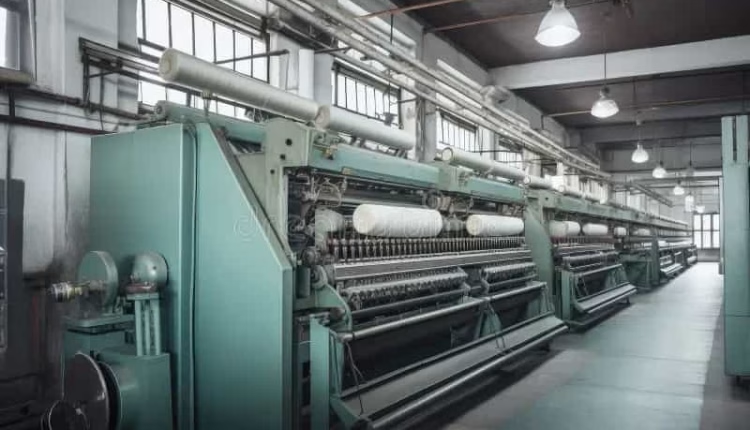
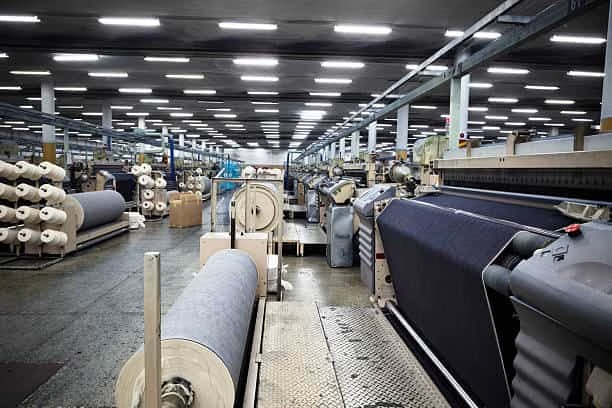
Raw materials undergo stringent checks before entering the production line. Quality and origin are verified. Manufacturers then process these materials using advanced machinery. Automated systems maintain consistency and monitor quality continuously. Each phase generates data that informs quality control. The information guides adjustments to maintain high standards.
During production, in-house labs run tests to ensure fabrics meet performance criteria. These tests measure tensile strength, colorfastness, and durability. Advanced equipment records every measurement, creating detailed reports. The data then feeds into quality management systems. Companies use these insights to refine their processes and reduce waste.
Quality assurance teams play a critical role. They perform regular audits and inspections. Their efforts ensure that every batch meets the required specifications. The production process also includes final checks before products are shipped. These measures safeguard the reputation of manufacturers and secure consumer trust. For more details on production processes, visit our guide on textile manufacturing processes.
Innovations and Future Trends in Textile Standards
The textile industry never stands still. Innovations continuously reshape how standards and regulations are applied. New materials, production techniques, and digital tools have emerged in recent years. Companies experiment with eco-friendly fibers and sustainable dyes. They also explore smart textiles that adapt to environmental changes. These innovations signal a future where textiles are both functional and sustainable.
Future trends include the integration of artificial intelligence (AI) in quality control. AI systems analyze production data and predict defects. These insights help manufacturers make real-time adjustments. The technology improves efficiency and reduces production costs. Additionally, AI-powered visual inspection tools detect imperfections that escape the human eye. This evolution is transforming quality assurance practices.
Another exciting trend is the rise of bio-based fibers. Researchers are developing textiles from renewable resources. These fibers promise lower environmental impact and improved sustainability. Companies invest in research and development to integrate these innovations into their products. The future of textiles looks promising as eco-friendly practices become the norm.
Digital transformation continues to drive change. Blockchain technology enhances traceability in the supply chain. Smart contracts automate compliance checks and certification renewals. These digital tools reduce administrative overhead and ensure transparency. As technology evolves, manufacturers will benefit from faster processes and increased consumer trust.
Industry experts predict that standards will become more adaptive. Regulatory bodies will update criteria as new innovations emerge. This dynamic approach ensures that regulations keep pace with technological advancements. Manufacturers who invest in cutting-edge technologies position themselves as leaders in the market.
Real-World Applications: Case Studies and Success Stories
Real-world examples highlight the practical impact of textile standards and regulations. Companies worldwide transform their operations to meet strict compliance guidelines. These case studies illustrate the benefits of embracing robust standards and innovative practices.
One notable example is a leading textile firm in Southeast Asia. The company overhauled its production process to meet EU regulations. It invested in state-of-the-art testing equipment and retrained its workforce. The result was a significant increase in export contracts and market share. The transformation underscored the value of regulatory compliance.
Another success story comes from a mid-sized manufacturer in Eastern Europe. Faced with stiff competition, the firm sought eco-certification. It adopted sustainable practices and achieved the coveted Oeko-Tex label. The certification boosted its brand image and attracted new clients. The company’s journey offers actionable insights for other manufacturers. These narratives demonstrate that compliance leads to growth and innovation.
Furthermore, companies in North America are leveraging digital tools for better quality management. They integrate IoT sensors and real-time analytics into their production lines. These innovations reduce errors and ensure that products meet stringent regulatory standards. The success stories from these companies highlight the importance of continuous improvement and technological adoption.
These real-world examples reveal that regulatory compliance is not a hurdle; it is an opportunity. Companies that embrace change and invest in innovation secure long-term success.
Challenges in Textile Regulations and Compliance
The path to regulatory compliance is not without obstacles. Manufacturers encounter many challenges during the certification and standardization processes. Rapid changes in technology and evolving market demands add to the complexity. Navigating these hurdles requires agility, investment, and constant learning.
One significant challenge is the cost associated with compliance. High-quality testing equipment, rigorous audits, and certification fees create financial pressures. Small and medium-sized enterprises (SMEs) often struggle to meet these demands. However, many innovative companies overcome these challenges by partnering with industry associations and investing in technology that reduces long-term costs.
Another challenge is the dynamic nature of regulations. Governments periodically update standards to reflect new scientific findings and market trends. Manufacturers must continuously adapt their processes to stay compliant. This ongoing evolution demands flexibility and a proactive approach to change management. Companies that maintain open lines of communication with regulatory bodies tend to fare better.
Training and workforce development also present challenges. Employees must learn new procedures and master advanced technologies. This learning curve can slow production and lead to temporary setbacks. However, companies that invest in continuous training build a skilled workforce capable of driving innovation.
Despite these challenges, the benefits of compliance outweigh the costs. Companies that invest in robust quality control enjoy improved product reliability, increased consumer trust, and greater market access. The challenges become opportunities for growth and innovation.
End-Users and Market Dynamics
The ultimate impact of textile standards and regulations reaches the end-users. Consumers demand high-quality, safe, and sustainable products. Regulations ensure that textiles meet these expectations. This focus on quality drives market dynamics and influences purchasing decisions.
Consumers today are savvy and informed. They value transparency and want to know that their fabrics are produced ethically. Certifications and eco-labels serve as a mark of trust. This demand for quality creates a ripple effect throughout the supply chain. Manufacturers invest in better technologies, improved processes, and more rigorous testing.
Market dynamics shift as consumer preferences evolve. There is an increasing trend toward sustainable and eco-friendly textiles. Retailers prioritize brands that emphasize environmental responsibility. This shift pushes manufacturers to adopt green technologies and adhere to strict environmental standards.
The end-user plays a pivotal role in the industry. Their feedback drives innovation and continuous improvement. Manufacturers who engage with consumers build stronger brands and secure lasting market positions. The narrative of textile standards is not complete without acknowledging the consumer. Their preferences shape the evolution of industry regulations.
Innovative Diagrams, Charts, and Data Visualizations
Visual aids help simplify complex regulatory frameworks. Diagrams, charts, and tables clarify relationships between different standards. For example, a flowchart can illustrate the certification process from raw material selection to final product approval. Data visualizations help stakeholders understand market trends, compliance rates, and regulatory impacts.
Consider a diagram that maps the interplay between ISO, ASTM, and eco-label certifications. Such visuals depict how different frameworks overlap and support each other. Charts comparing compliance costs across regions provide clear insights into market dynamics. Manufacturers benefit from these tools as they plan and refine their processes.
Interactive tables also enhance the narrative. They allow readers to compare regulatory requirements across regions. For example, one table might detail the differences between EU and US export requirements. Another table could list key performance indicators for textile quality. These visual elements transform abstract data into actionable insights.
Future Trends in Textile Industry Standards
Looking forward, the textile industry will continue to evolve. Future trends indicate a deeper integration of digital technologies and sustainable practices. Regulatory bodies will adopt more agile frameworks to keep pace with innovations. Manufacturers must anticipate these changes and adapt proactively.
One emerging trend is the use of artificial intelligence (AI) in compliance monitoring. AI tools offer real-time analysis and predictive maintenance. These systems can flag potential non-compliance issues before they escalate. As a result, manufacturers achieve higher efficiency and reduce downtime. This trend underscores the importance of investing in digital transformation.
Sustainability will remain at the forefront of textile standards. Consumers and regulators alike push for greener production methods. Innovations in bio-based materials and renewable energy will shape the future of textile manufacturing. Companies that embrace sustainable practices not only comply with regulations but also gain a competitive edge. For more on these trends, visit our forward-thinking article on sustainable textile practices.
Furthermore, the integration of blockchain in supply chains will enhance traceability. Every step of the production process can be recorded, verified, and shared transparently. This innovation builds consumer trust and streamlines regulatory audits. Manufacturers who adopt blockchain will lead the industry in both transparency and efficiency.
In addition, international collaboration will drive the evolution of standards. Regulatory bodies and industry leaders will work together to create harmonized frameworks. These collaborations simplify trade, reduce costs, and promote innovation. The future of textile standards looks bright as the industry moves toward greater unity and technological integration.
Case Study: Transforming Compliance in a Global Textile Enterprise
In one striking example, a global textile enterprise revamped its operations to align with new international standards. The company faced a competitive market and rising regulatory demands. Its leadership decided to invest in advanced quality control systems. They integrated IoT sensors and automated testing equipment throughout their production lines.
The transformation began with an in-depth audit of the entire supply chain. The company identified areas for improvement and implemented targeted changes. They modernized their raw material inspection processes and retrained staff on the latest safety protocols. These efforts paid off quickly. The enterprise secured key export contracts in the EU and US, thanks to its newfound compliance and efficiency.
The case study illustrates that technological innovation can overcome regulatory challenges. By embracing change, the company not only met but exceeded industry standards. This success story inspires other manufacturers to invest in smart technologies and sustainable practices. It also highlights how regulatory compliance drives long-term business growth.
Economic and Environmental Benefits of Robust Standards
Robust textile standards yield significant economic benefits. Companies that invest in quality control and regulatory compliance often enjoy increased market access and higher profit margins. Consumers trust products that meet stringent standards. This trust drives demand and supports premium pricing. In turn, companies reinvest in technology and innovation.
Environmental benefits also emerge. Eco-labels and green certifications encourage sustainable practices. Manufacturers reduce waste and lower emissions. They adopt renewable energy sources and optimize water usage. Such measures not only protect the environment but also reduce operational costs. This synergy between economic and environmental benefits is a win-win for the industry.
Industry reports reveal that companies with robust quality systems experience fewer recalls and lower liability risks. They build a reputation for reliability that spans generations. In markets where trust is paramount, these companies secure long-term success.
Regulatory Frameworks and Their Global Impact
Regulatory frameworks extend their influence far beyond local boundaries. International standards drive global trade. Countries harmonize their regulations to facilitate cross-border commerce. This alignment creates a level playing field for manufacturers worldwide. It fosters trust, reduces friction, and promotes innovation.
Global trade agreements often include clauses related to textile standards. These provisions ensure that products crossing borders meet a minimum quality threshold. Companies must understand and adapt to these frameworks. In doing so, they mitigate risks and seize new market opportunities. This global impact underscores the interconnected nature of today’s textile industry.
Furthermore, regulatory frameworks drive research and development. They create demand for innovative solutions that meet new criteria. Manufacturers invest in cutting-edge technology and sustainable materials. These investments spur growth and benefit the entire ecosystem.
Integrating Storytelling into Textile Compliance
Behind every fabric lies a story of craftsmanship, innovation, and relentless pursuit of quality. Manufacturers share tales of transforming raw materials into high-performance textiles. These narratives create a connection between producers and consumers. They humanize the complex processes behind compliance and certification.
Consider the story of a small artisan cooperative in South America. They combine traditional weaving techniques with modern quality controls. Their fabrics meet international standards while preserving cultural heritage. Such stories resonate with consumers and inspire trust. They also demonstrate that compliance can coexist with creativity and local tradition.
These stories matter. They illustrate how adherence to standards drives both quality and cultural preservation. Narratives add a human dimension to the technical world of regulations.
Future-Proofing Your Textile Business: Strategies for Compliance
Manufacturers must future-proof their operations in an ever-changing regulatory environment. Proactive strategies include investing in research and technology. Companies that monitor regulatory trends adapt faster than their competitors. They leverage advanced analytics to predict changes and adjust processes accordingly.
Future-proofing also means fostering a culture of continuous improvement. Manufacturers train employees regularly and invest in the latest quality control systems. They create feedback loops that inform process improvements. This dynamic approach ensures that companies remain competitive and compliant.
Embracing technology, fostering innovation, and maintaining open communication with regulators form the foundation of a future-ready textile business. These strategies not only secure compliance but also drive operational excellence and market success.
Charting the Road Ahead: Innovations and Policy Reforms
Policymakers and industry leaders continuously shape the future of textile regulations. Emerging policies focus on sustainability, technological integration, and consumer safety. These reforms aim to modernize existing standards and address new challenges. Manufacturers and regulators work side by side to create a resilient framework that supports growth.
Recent policy proposals emphasize transparency in supply chains and stricter environmental standards. These reforms encourage manufacturers to adopt renewable resources and digital monitoring tools. The result is a more responsible and innovative industry. These changes promise to enhance consumer trust and open new market opportunities.
In parallel, industry associations and research institutions play a vital role. They conduct studies, develop best practices, and propose policy reforms. This collaboration ensures that regulatory frameworks evolve in tandem with technological advances.
Interactive Tools and Resources for Compliance Management
Modern manufacturers benefit from a suite of interactive tools and resources. Digital dashboards, compliance management software, and real-time monitoring systems streamline the regulatory process. These tools provide instant feedback on quality metrics and identify potential issues early. As a result, manufacturers can make informed decisions quickly.
Interactive resources also empower companies to compare compliance metrics. They access databases that track certification statuses and audit results. These tools help managers benchmark their performance against industry standards. They foster a culture of transparency and continuous improvement.
Incorporating these digital solutions into everyday operations not only boosts efficiency but also supports long-term compliance. Manufacturers enjoy reduced downtime, lower operational costs, and improved product quality. The integration of technology with compliance management stands as a testament to the industry’s commitment to excellence.
Conclusion and Summary
Textile standards and regulations shape an industry that is both dynamic and complex. Global frameworks like ISO and ASTM set the stage for quality and safety. Market compliance ensures that textiles meet stringent criteria for exporting to regions like the EU and US. Certification processes signal that fabrics meet rigorous benchmarks for quality and sustainability.
The regulatory environment drives manufacturers to innovate. New technologies and digital tools transform production processes and quality assurance. Real-world success stories demonstrate that compliance is not a hurdle; it is a pathway to growth. Manufacturers who embrace change, invest in technology, and adopt sustainable practices secure lasting competitive advantages.
This article has explored the evolution of textile standards, the impact of regulations on production, and the future trends that promise to redefine the industry. It has provided actionable insights, real-world case studies, and interactive tools that empower manufacturers and stakeholders. The textile industry stands at the crossroads of tradition and innovation, where robust standards and creative solutions merge to build a sustainable future.
In summary, the journey of textile standards and regulations is a narrative of continuous improvement. Manufacturers, regulators, and consumers work together to create a dynamic ecosystem. Embracing global standards, investing in technology, and fostering sustainable practices pave the way for a resilient and vibrant textile industry.
Citations
- International Organization for Standardization (ISO). Available at https://www.iso.org.
- ASTM International. Available at https://www.astm.org.
- European Commission – REACH Regulations. Available at https://ec.europa.eu.
- United States Consumer Product Safety Commission – CPSIA. Available at https://www.cpsc.gov.